Language laws raised at international forum
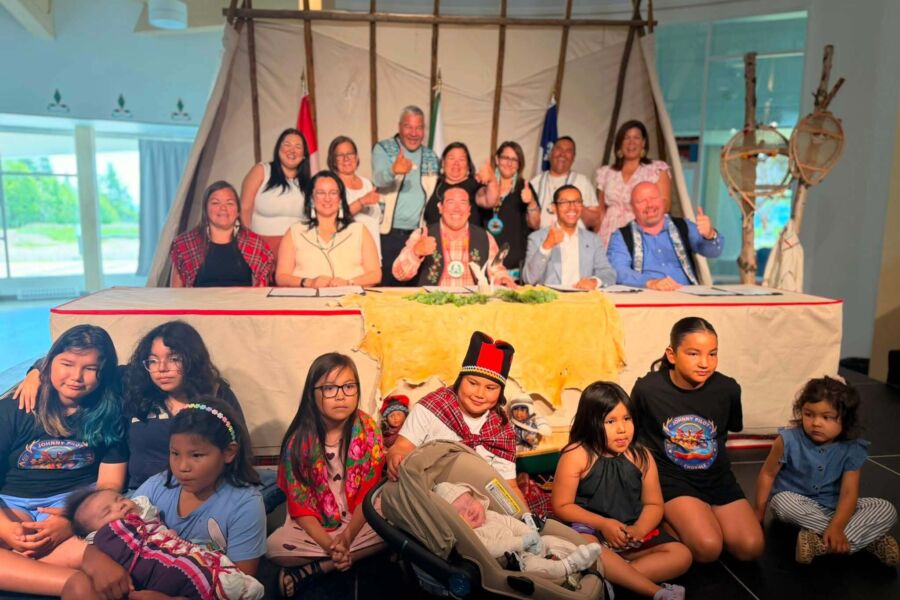
Courtesy Melanie Morrison
The Mohawk Council of Kahnawake (MCK) has turned to the international community for support in combatting Quebec’s language laws, which community leaders worry could inhibit the resurgence of Kanien’kéha.
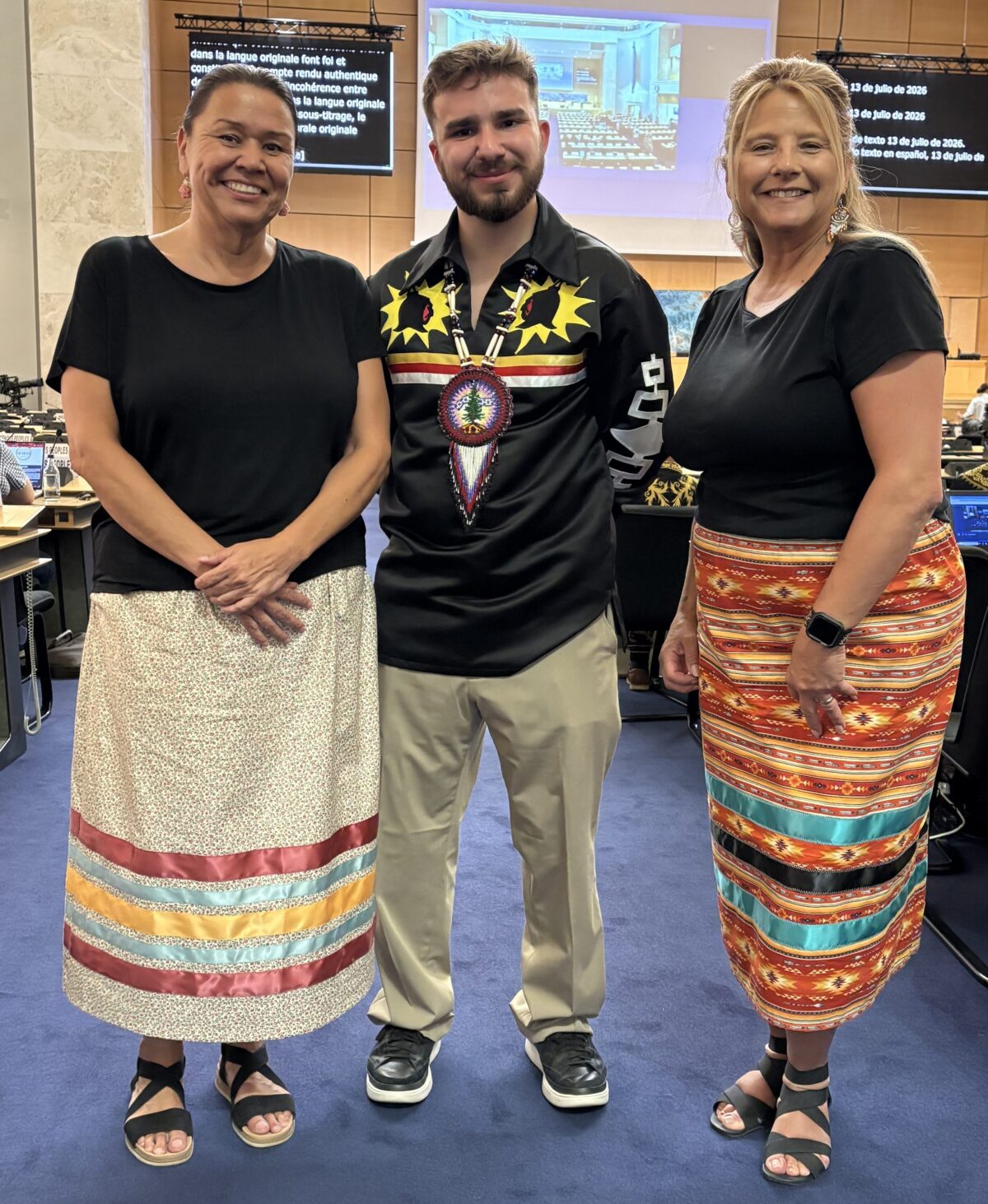
The written submission was made as MCK chiefs Tonya Perron and Melanie Morrison, alongside MCK strategist Patrick Zachary, attended the 19th session of the United Nations (UN) Expert Mechanism on the Rights of Indigenous Peoples (EMRIP) in Geneva, Switzerland, last week.
The sessions touched on a number of topics, including the UN-declared International Decade of Indigenous Languages, which runs from 2022-2032.
The MCK chiefs chose to bring attention to Law 14, better known as Bill 96. That legislation incensed the community when it was tabled and ultimately passed in 2022, with many still concerned about its effects. The law entrenched new restrictions to fortify French in the province, including new French requirements in English CEGEPs.
Council’s submission at the international forum called on EMRIP to conduct a study on the legislation, offer technical guidance, and facilitate dialogue with Canada and Quebec to ensure Kahnawake’s language and consultation rights are respected. The submission will now be considered by EMRIP.

“Canada does have an act for the protection of Indigenous languages, the Indigenous Languages Act, and Canada also has an action plan for the International Decade of Indigenous Languages, but it doesn’t really help to prevent the creation of provincial language legislation without Indigenous consultation,” said Perron.
That needs to change, the chiefs believe, arguing that the failure to intervene conflicts with Canada’s obligations under the United Nations Declaration on the Rights of Indigenous Peoples (UNDRIP).
“What’s happening is by forcing the use of French and prioritizing it in pretty much every sphere of life in Quebec, our younger generation have to make a choice at a certain point - sacrifice learning their own language of Kanien’kéha to focus on learning French just for the purpose of higher education, for employment, and this undermines UNDRIP,” said Perron.
This point is echoed by Morrison, who said community youth are being forced to prioritize French over Kanien’kéha.
“We’re at a critical state where we’re losing a lot of first-language speakers, which is putting pressure on the community because once they’re gone, they’re gone,” she said.




“We had nothing to do with any of the language decisions. There was no consultation, as far as we know, with any First Nations here in Quebec when Quebec was coming up with all this legislation for the French language to be first and foremost, but we feel the most impact from these decisions.”
It’s an example of one area where the international community could potentially be leveraged to support Kahnawake in its struggles against the provincial and federal governments, Morrison said. She also believes this kind of forum provides a valuable networking opportunity for Indigenous leaders so they can learn from each other’s experiences defending Indigenous rights.
Morrison attended EMRIP prior to her election as an MCK chief in her capacity as a board member of the National Family and Survivors Circle, part of her advocacy work for missing and murdered Indigenous women and girls. When she was elected, she proposed that the MCK get involved in attending the annual session.
“I said it’s a great way to bring the issues that Canada is not respecting here for First Nations and our community to a higher level, where more spotlight can be put on Canada and the fact they’re not following UNDRIP or their commitments to First Nations,” Morrison said.
“Of course, we all thought that was a great idea,” said Perron, “so her and I attended last year just to learn about it. We went to a training session last year to find out how you can make submissions, how you can present your positions, the whole procedure,” said Perron.
Sign up for email updates from The Eastern Door
In fact, Morrison is currently doing preliminary work for the creation of an international advocacy file at Council that would be among the Council portfolios.
“It’s definitely something that we’re going to put more effort into because of the fact this is a better way to put pressure on Canada,” she said. “Canada moves at a snail’s pace. It’s very hard to get them to abide by UNDRIP. It’s a really good mechanism for the next step of trying to hold Canada accountable.”
Marcus Bankuti, Local Journalism Initiative Reporter