Community steps up for victims
Marcus Bankuti The Eastern Door
Helen Paavola, chief of the small community of Namaygoosisagagun First Nation, flew into her homelands this week, finding nothing left but ashes. Not even the road bridges are left standing.
“My members barely escaped with the clothes on their backs. My community was left to evacuate without notice and support,” she said.
Images taken from a tin boat show a goliath wildfire, dwarfing the forest below, but videos, pictures, and words do no justice to the reality on the ground, she said.
As wildfires raged in northern Ontario, Namaygoosisagagun, also known as Collins, was not the only community left to manage its own escape.
“If you’ve never been to Whitewater Lake,” said Pauline Drake, chief of that First Nation, “it was very beautiful.”
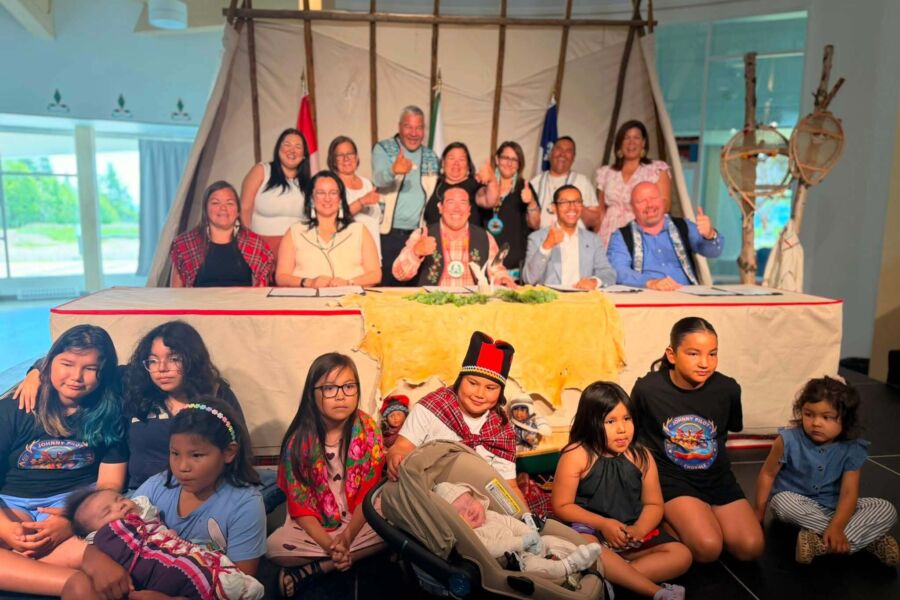
The community was aware of an isolated fire on July 8. On July 15, they got a phone call to evacuate - one fire had turned to two, to five, to 100, she told a press conference this week, where First Nations leaders gathered to draw attention to their plight and call for a public inquiry amid a provincial response they characterized as shoddy and insincere.
“I wish things were different,” Drake said. “I wish we could turn back time and go back and be notified: ‘There’s a fire in your area. Please be ready.’”
The crisis enveloping over 10 First Nations in northern Ontario brings together issues as diverse as jurisdiction, status, the environment, and infrastructure.
Namaygoosisagagun, which has been completely destroyed, is not considered a First Nation by the federal government, despite fighting for the designation for decades, and its members, who are part of the Anishinabek Nation, having Indian status. This has limited the community’s ability to access resources, those in attendance at the press conference heard, and Paavola said now is the time to bring her community into the fold.
Meanwhile, other affected First Nations are alleging they have been left out of decision-making and insufficiently warned. Some communities depend on planes to leave their territory, but don’t have airports that can accommodate planes big enough to evacuate members effectively.

Meanwhile, human-driven climate change, and the wildfire it brings, hangs over the catastrophe, ushering in a future that looks dire and suggests a need for more effective emergency management.
“The bottom line is this: Doug Ford fell asleep in his tractor on his way to the Ring of Fire,” said Alvin Fiddler, grand chief of Nishnawbe Aski Nation, about the Ontario premier. “In their haste to extract our resources in our territories, both Ontario and Canada are ignoring the immediate threats our communities are facing because of climate change.
“Climate change is real. All you have to do is step outside and smell the air. It’s playing out in real time. And it’s our communities that are most vulnerable.”
He referred to the story of Chance Paavola of Namaygoosisagagun, a 13-year-old who turned his tin boat back to help his neighbours as flames swallowed his community.
“We should not allow our communities to fend for themselves to try to keep themselves safe,” Fiddler said.
He pledged support for the communities of Namaygoosisagagun and Whitewater Lake, emphasizing that they are not alone, that their fellow First Nations communities will be there to help them.
Here in the Kahnawake area, Timothy Armstrong was having similar thoughts of solidarity, shocked by what he was seeing. “The picture where they were leaving in the boats, I couldn’t believe how high the flames were,” he said.
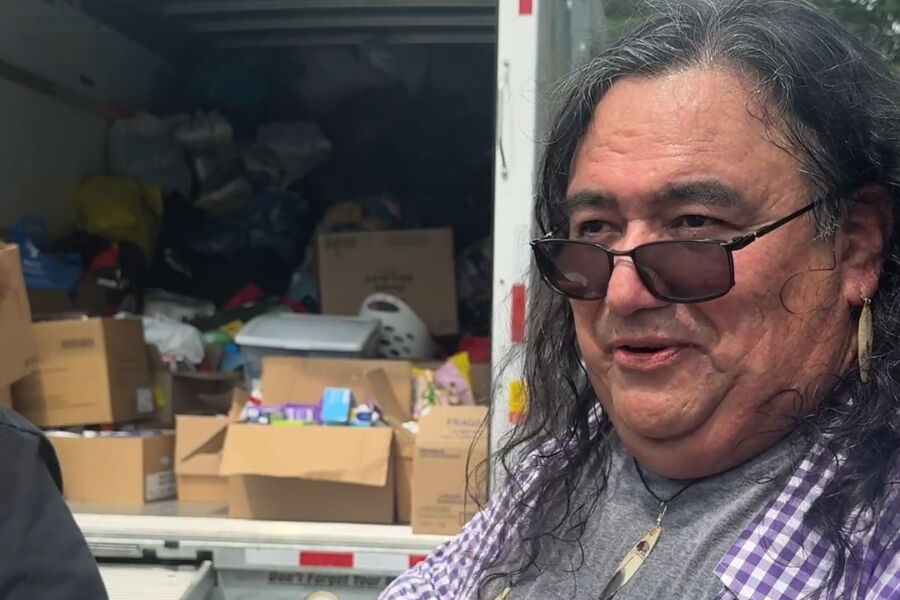
Armstrong has been in the Kahnawake area for decades, working in the community for at least 20 years, even living in the community for a time. He hails from the community of the Brokenhead Ojibway Nation in Manitoba, meaning he is Anishinaabe, like members of Namaygoosisagagun and Whitewater Lake.
He was talking to an Anishinaabe friend about the fires, and she said she wished she could do something - she’s in the bush for the summer. That’s when she said something to Armstrong that sparked action: “If not you, who? If not now, when?”
He took to Facebook, and his callout for donations to Kahnawa’kehró:non quickly began to snowball.
“I know how generous the community is,” he said. “I knew if I put out the call, people would come.”
For now, members of the affected First Nations are marooned in Thunder Bay, where a warehouse, staffed with dozens of volunteers, is being used as a donation centre to provide necessities to the victims, many of whom have lost everything.
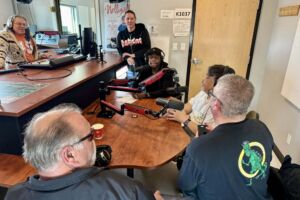
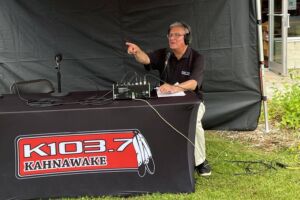
He drove the donations he collected to Thunder Bay in his Nissan Pathfinder, an 18-hour trip each way. Meanwhile, a massive haul of everything from clothes, to diapers, to medication turned up from community members. There were so many donations, Armstrong had to search for somewhere to store them - finally settling upon the conference room at K1037 Radio, where Armstrong has worked.
“Tim had a really great idea, and he approached me to see what we could do to help. I said immediately, yes, let’s do something,” said Dennis Stacey, station manager at K1037.
“It’s important because we’re all brothers and sisters across Turtle Island,” he said.
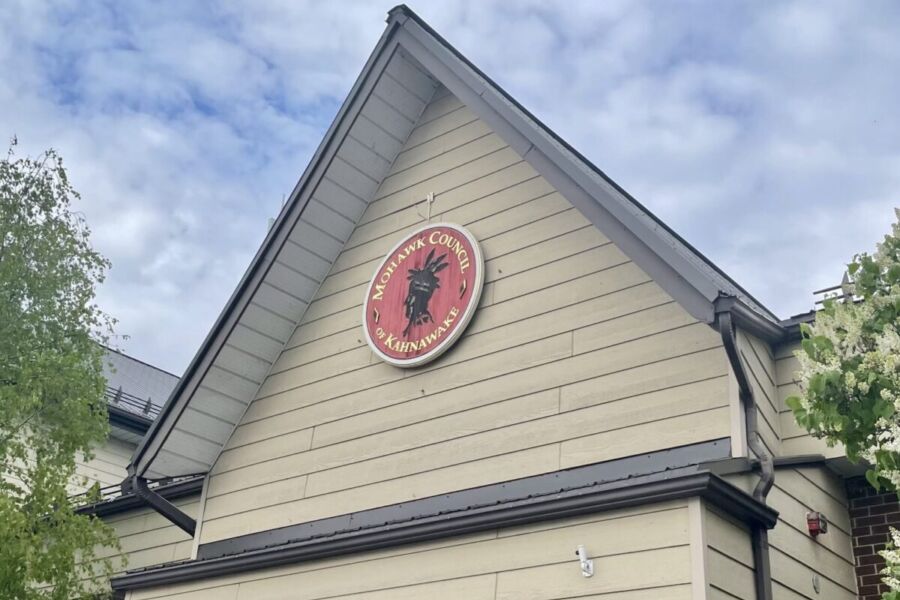
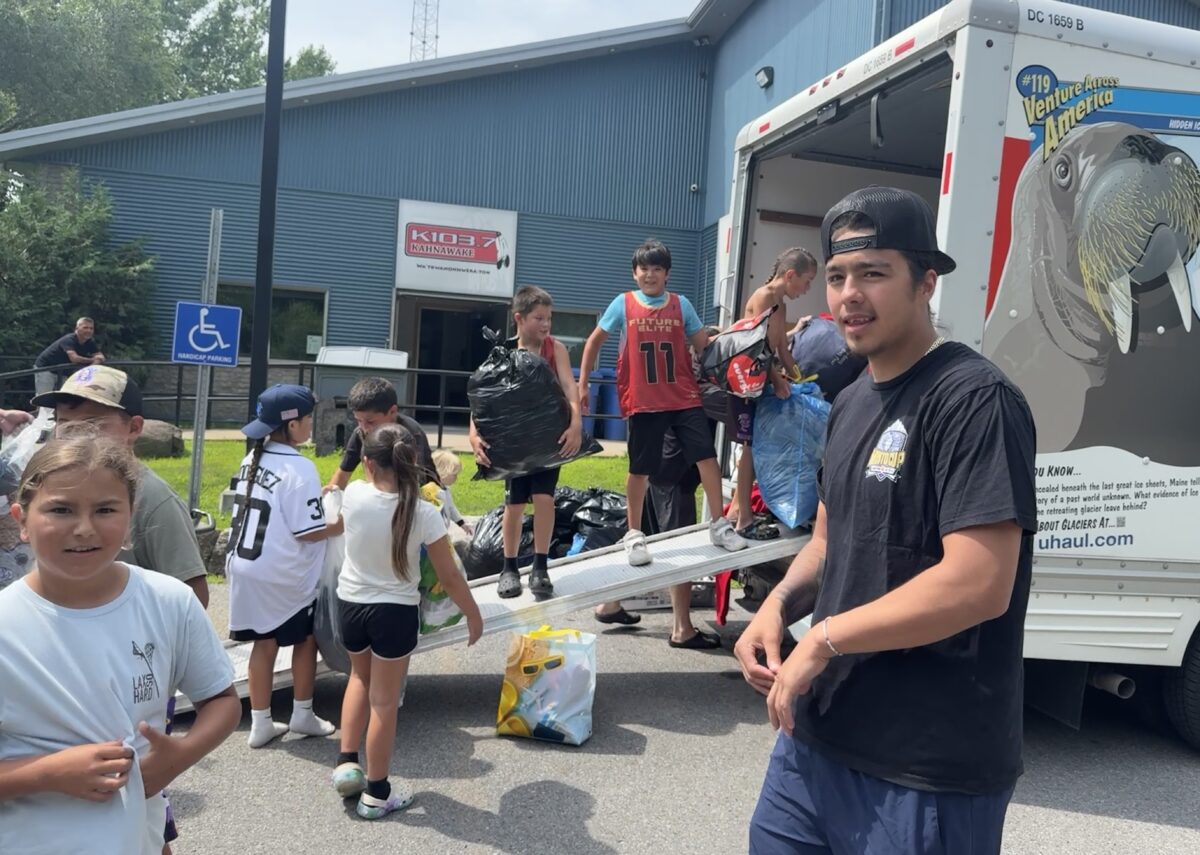
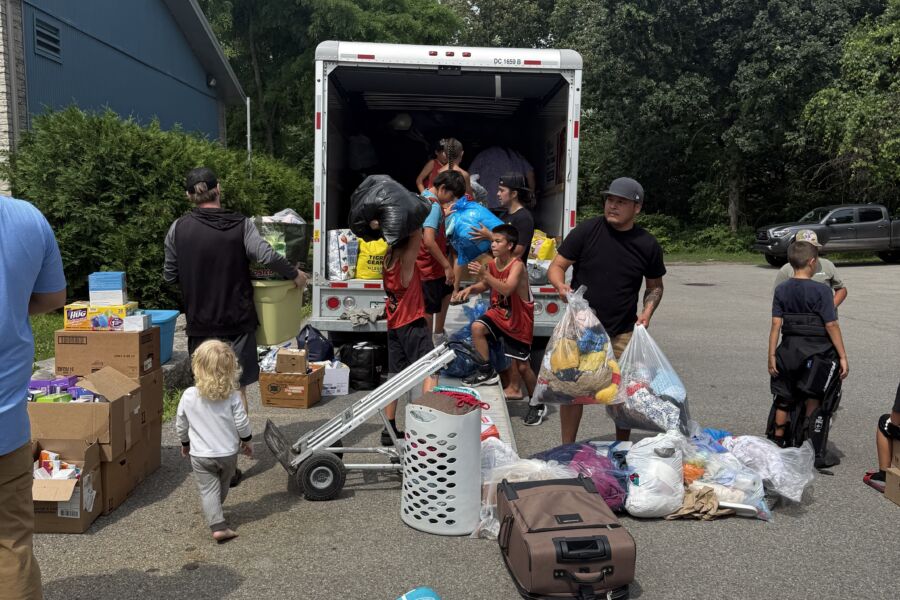
But it quickly became clear that the Pathfinder wouldn’t cut it. Stacey reached out to the Mohawk Council of Kahnawake (MCK), which agreed to rent a U-Haul and provide gas money for the voyage, the conference room filled to the brim.
“Thank goodness for Timothy Armstrong and his own initiative to call for a donation drive here in Kahnawake and personally drive the stuff up to Thunder Bay, where the community has been relocated for the moment,” said MCK chief Ross Montour, who emphasized the role of climate change and a government that routinely fails to respect the rights of Onkwehón:we.
When the U-Haul was procured - after crawling through traffic on the Mercier Bridge, which is down to only one lane because of maintenance - the community spirit was still buzzing, with the lacrosse coaches for the U11 Mohawks recognizing an opportunity to impart a lesson on their younger players after practice.
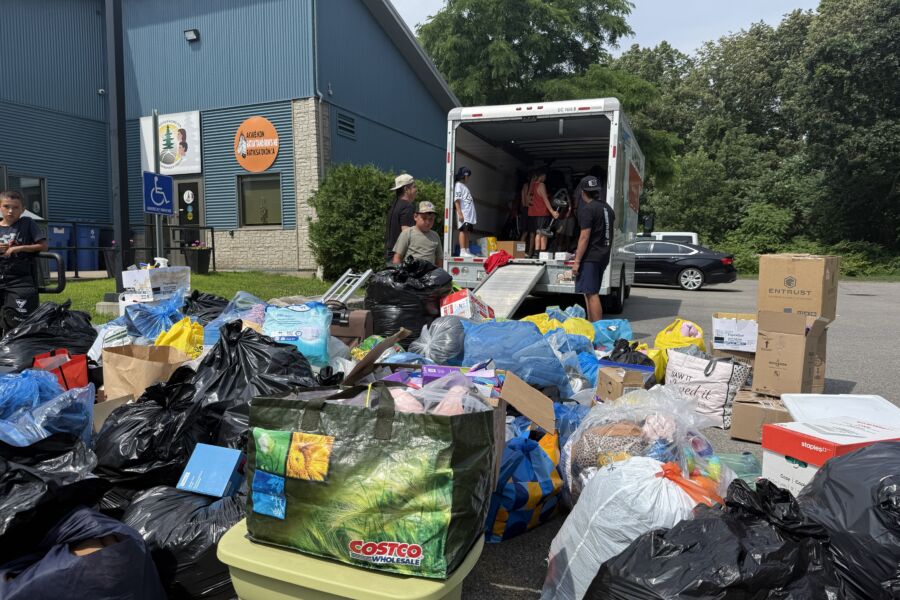
Some were still in their equipment as they loaded the truck.
“Lacrosse is a medicine game, and when we’re playing, it’s for other people,” said assistant coach Trey Deere. “It’s important that we help people on the floor and off the floor. It’s bigger than us, and I’m hoping that’s what they take from it.”
Sign up for email updates from The Eastern Door
Armstrong is encouraging community members to make monetary donations to organizations and communities collecting funds to support the Onkwehón:we affected by the wildfires, such as the Whitesand First Nation or the Anishinabek Nation 7th Generation Charity, which is collecting for Namaygoosisagagun.
“It’s incredible the outpouring, the generosity. But I knew it was going to happen,” Armstrong said.
But it’s a tough road ahead for the First Nations that have been devastated by the fires.
“I cannot express enough sadness and despair for everybody that’s affected, that’s impacted, that’s continuing to be impacted by the evacuations,” Drake said.
“We are here for each other in the time of need. There are so many people that have lost so much.” She criticized a lack of resources for the Indigenous communities. A failure to engage with First Nations leadership was emphasized by Chiefs of Ontario regional chief Abram Benedict, who is Kanien’kehá:ka from Akwesasne.
“Lots of decisions have been made without our community leadership being at the table, and that’s completely unacceptable,” said Benedict.
He called for systemic change and an end to what he called jurisdictional football as the communities look toward recovery.
“It’s going to be difficult on our people,” he said. “Many of our elders, our children have been traumatized.”
Marcus Bankuti, Local Journalism Initiative Reporter