Language mentorship program a boon for Montour
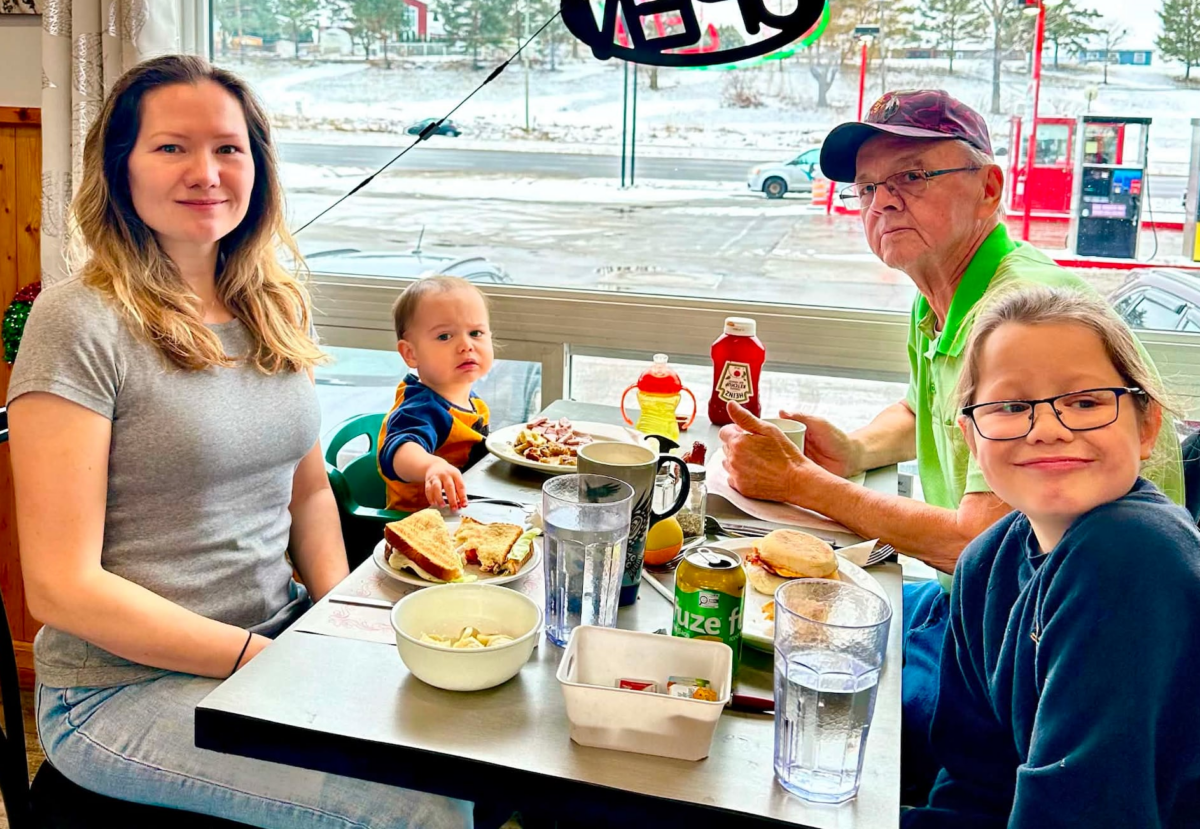
Karihwiióstha (left), her sons Rohsohkotáhsion and Tsohtsó:ron, and one of her mentors, Tehaiáhse Earl Gilbert, at Sunnyside Diner. Courtesy Karihwiióstha Callie Montour
As a single mother raising two young boys to be first language Kanien’kéha speakers, Karihwiióstha Callie Montour found that there were not many options in Kahnawake for advanced speakers like herself to continue her learning.
A lot of the programming is designed for beginners or those with an intermediate amount of knowledge - as someone who graduated from the Kanien’kéha Ratiwennahní:rats immersion program in 2014, she felt like she needed something more.
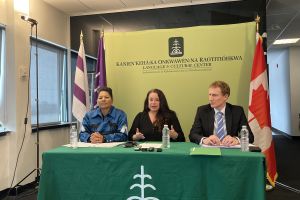
That’s why she was happy to take part in the year-long Shatiwennakarí:tats Mentorship Program, offered by the Kanien’kehá:ka Onkwawén:na Raotitióhkwa Language and Cultural Center (KOR).
“It’s a great program to help you network, get over any shyness, and meet elders and other learners,” said Montour.
The full-time program is 25 hours per week, where the student is matched with an elder to continue the language education past the intermediate levels; monthly workshops with others working in language revitalization also take place. There is also financial support for both the mentor and the mentee.
“The program basically was my job for the school year, and I loved the flexibility in schedule and the freedom they gave for us to plan out our own curriculum. It helped out a lot as a single parent of two who already does a lot of running around,” said Montour.
“You’re essentially being paid to learn your language on your own terms, to hang out with elders, and contribute to the revitalization of our language by recording elders.”

Since the birth of her second child Rohsohkotáhsion in 2024, Montour has not had another full-time job. For her, Shatiwennakarí:tats was a way to get out of the house and combat isolation on top of earning money for her family.
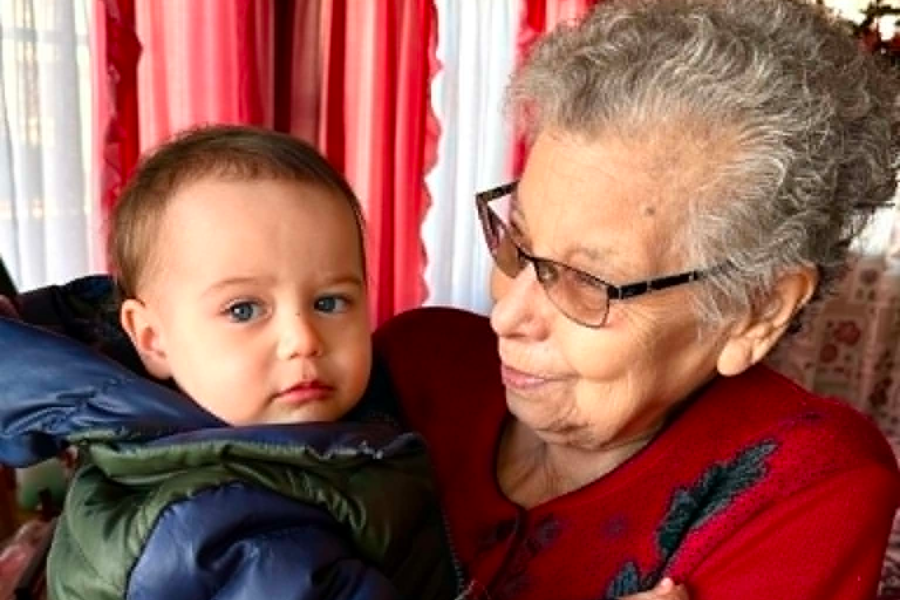
“This was my main way of socializing,” said Montour.
“It got me out of my house, to go to some new places, and get over my shyness of speaking with unfamiliar elders. Once the program was over, I already knew in my head that I wanted to apply for the next year, so I held off on getting another full-time job right away.”
Montour had four elders as her mentor during the school year: Warisó:se Bush, Allen Taylor, Tehaiáhse Earl Gilbert, and Katerí: Deer.
Montour lost Bush as a mentor just a few weeks into the program, leaving her to have to rush to find others to take over.
She was with Taylor for two weeks, with Gilbert from mid-November to the end of May, and Deer for the final two weeks of the school year.
Montour said that the program affected her a lot emotionally.
“You do become close with your mentors,” said Montour.
“I missed my first elder a lot, and worried whenever any of them were sick. They missed me too if me or my children were sick, and I had to stay home for a couple days.”
She also learned a lot along the way, with those listening to her on the all-Kanien’kéha Tewawennakará:tats Talk Show on K1037 noticing an improvement in her fluency as the year went on.
To hear the validation of her learning was something that encouraged Montour.
“Sometimes as a language learner, I am very hard on myself or have what they call imposter syndrome. So, it helped to hear my elders tell me that I was a very good speaker, that I was doing a great job raising my children to be L1 speakers,” she said.
Occasionally, her children would join in on sessions with the elders.
Sign up for email updates from The Eastern Door
“It was quite a beautiful thing to see my seven-year-old, Tsohtsó:ron, speaking Kanien’kéha with Earl while we were out to lunch. Earl told me he was very impressed with my son’s ability to speak, especially at his age. That was something I would normally not get to see, not since my tóta Dorris passed during the pandemic when Tsohtsó:ron was two years old. I could tell it also made him feel very good, to speak the language to someone besides his mother,” said Montour.
Teaching her children to be first-language speakers while being a second-language speaker herself has not been easy, she said, but for her it has been something necessary to preserve Kanien’kéha.
“I believe raising highly proficient children is the role I need to fulfill, as a mother living in a community that is trying hard to revitalize its Native language. This is my role as an Onkwehón:we person,” said Montour.
“When my sons are adults, we will continue to support one another and grow in our proficiency. Then, when they have families of their own, it’ll be my job to support them as parents as well as to pass on the language to what will be my future grandchildren.”