The start of a language journey
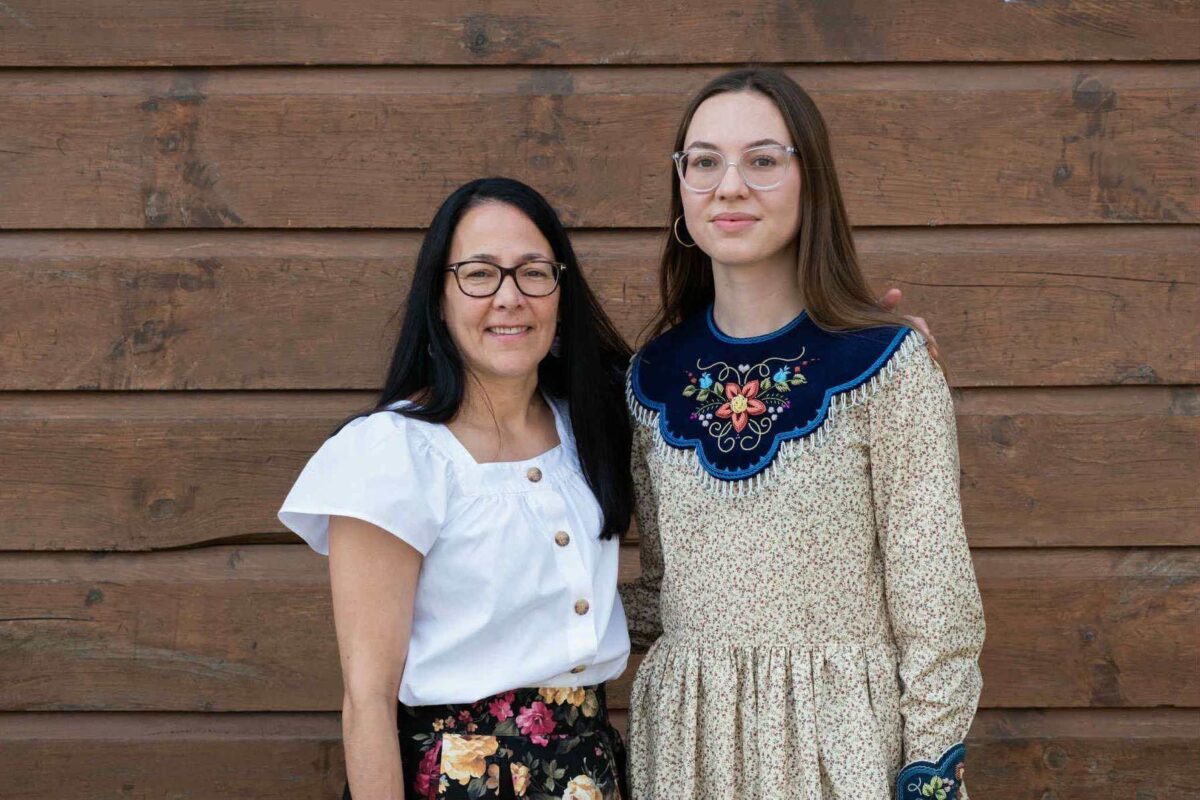
Teiotenharò:se’ Stacey (right) and her mother, Tammy Delaronde (left), at her Ratiwennahní:rats graduation this month. Courtesy Teiotenharò:se’ Stacey
Teiotenharò:se’ Stacey doesn’t remember a specific moment that made her want to complete the Kanien’kéha Ratiwennahní:rats Adult Immersion Program, she’s just always been certain that it would be a part of her journey as a young Kanien’kehá:ka woman.
When she took the plunge and applied two years ago, she thought she might be at the start of a long journey, acutely aware that it takes many applicants years before being accepted.
To her surprise, she was granted admission to the program, offered by Kanien’kehá:ka Onkwawén:na Raotitióhkwa Language & Cultural Center (KOR), on her very first try.
Now, reflecting on her last two years of language learning, Stacey feels confident in taking the lessons she’s learned forward, to further her own Kanien’kéha knowledge, as well as language initiatives in the community.
“I was just like a sponge, I absorbed as much as I could,” Stacey said, adding that sometimes the immersion aspect of the program was hard, particularly when she lacked the words she needed to say exactly what she wanted. “I was acquiring as much I could, just to be able to talk about my everyday life, the things I’d need to say every day.”
Stacey realized quickly that the program would take a lot of additional learning hours – luckily, she loves to study.
“I studied a lot of vocabulary, and that really opened up more for me to figure out and recognize different types of linguistic patterns,” she said.

She kept a curious mind, often taking her questions to instructors, which prepared her as the course complexity ramped up.
“I’d go to my teacher and say, ‘Okay, I have a word that looks like this, and they mean the same thing, but they have different features, why is that?’” she said. “That really helped.”
Stacey was one of 13 graduates in this year’s Ratiwennahní:rats cohort, and she said that part of what made the experience so enjoyable was the support of her peers. She loosely knew a few of her classmates before starting, but by the end of the two years, all of them had become incredibly close - she even met her now-boyfriend, Tahothorátie’ Cross, in the program.
“We all got along very well, and it was just so nice. I looked forward to going to class every day, because I just loved the class that I had,” Stacey said.
Having supportive classmates made getting over hurdles easier, Stacey said. For her, one of the biggest challenges was finding the confidence to speak, and it took some confidence to get comfortable speaking in front of others.
“I had to just push myself to talk and get rid of that shyness. I’m like that even in English I find, if I don’t really know people and I’m not super comfortable then I won’t talk,” she said.
Luckily, it wasn’t long before she felt at home in the classroom, but getting comfortable speaking in an immersion environment had its own difficulties too.

“When you’re still learning, it’s scary to make mistakes, you want to avoid it at all costs and avoid that embarrassment, but you have to do it, you just have to go through that,” she said. “The hardest part is actually speaking, but that’s the whole point of being there, to learn how to speak.”
The solution was embracing mistakes, rather than trying to avoid them.
“Sometimes we’d get caught up in the grammar, because all of our units are based on grammar, and you’re studying all of these rules,” she said. “It’s easy to get caught up in studying those rules without actually speaking, but you have to keep pushing.”
At the beginning of this month, Stacey was joined by family and friends as she celebrated her graduation with her peers and instructors. She felt proud reflecting on her progress over the past two years.
“I still can’t grasp how fast it went. I was told from the start to cherish it because it’s going to go fast, and it really did, I still can’t believe that it’s already done,” she said. “Before getting into it, when you don’t know anything, you don’t truly understand how big of a task it is, and really it’s not over once you finish your two years, this is a lifelong journey.”
Stacey is passionate about continuing her language journey and will be a camp counsellor at the Aóskon Onkwehonwehnéha summer camp, working with youth ages six to 12 in an immersion environment.
“I’ve never worked with kids, so that’ll be a whole new challenge, especially managing that and trying to maintain a complete immersion environment, but I’m excited,” she said.
Sign up for email updates from The Eastern Door
Her advice for future Ratiwennahní:rats students is to soak in their years in the program, but remember that their language journey is one to enjoy for their whole life, not just for those two years.
“You’re essentially a lifelong student, a lifelong learner of Kanien’kéha. You’ll never be truly finished studying,” she said.
“I’ve learned a lot and I’m happy with how far I’ve come, but there’s still so much more for me to do, and so much more to learn. I’ve only made a tiny little dent in the grand scheme of things.”