Survival School short on space
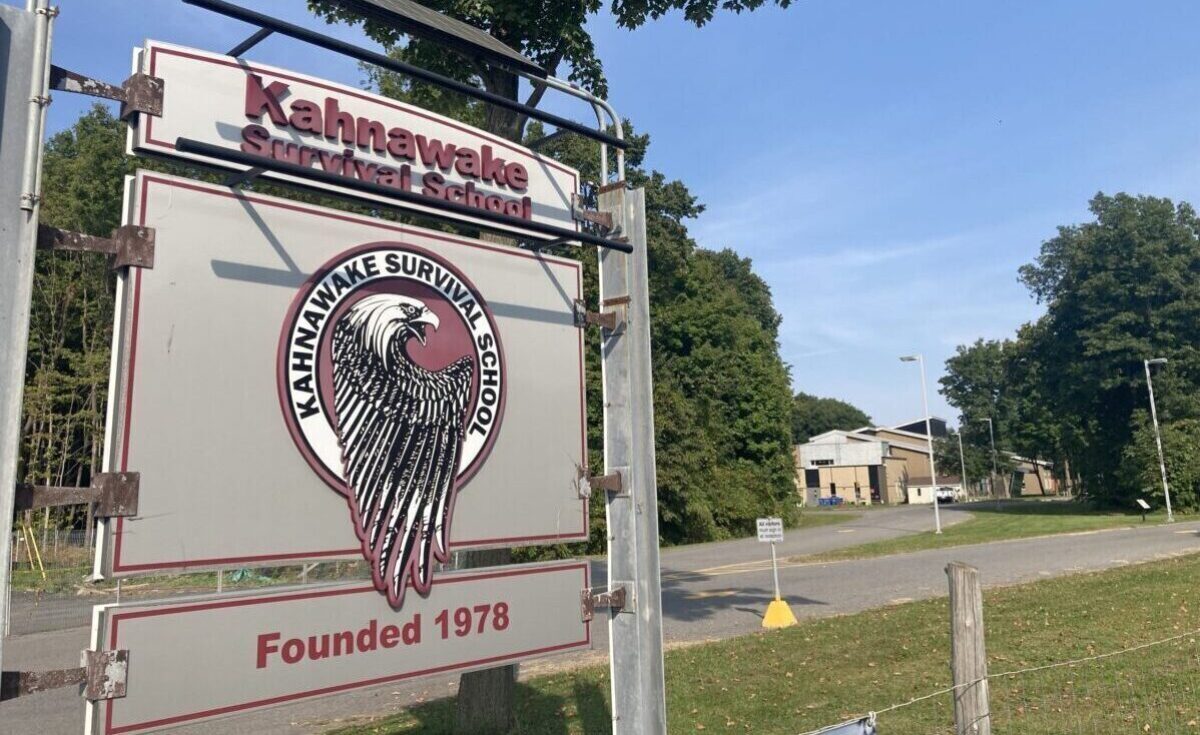
File photo
Enrollment has reached capacity for grades seven and nine at Kahnawake Survival School (KSS), the earliest classes have filled up at the school. While the Kahnawake Education Center (KEC) has acknowledged this means disappointment for some families, small class sizes are part of what has made so many parents want to send their children to school locally, according to KEC education director Falen Iakowennaiéwas Jacobs.
“This has been a goal and a vision for KEC to have our community choose our community schools for their children’s education,” she said. “This is a great thing. We’re so honoured that the community has the faith in our school system to educate our children.”
If the trend continues, however, steps will need to be taken to boost the school’s physical capacity, she said, whether through mobile classrooms or, preferably, a physical expansion of the building itself. The KEC is already looking into the possibility.
“Every year we’re getting more and more student interest, which of course is a very positive
thing. Right now, it’s the space that’s limited. We don’t have the space in the school,” said Jacobs.

Karonhianónhnha Tsi Ionterihwaienstáhkhwa is currently undergoing an expansion that will add classrooms and other facilities, and which is set to be completed by next summer. “The gain in classrooms and services, it’s going to be well worth it,” said Jacobs.
While construction only recently began on that project, the planning took years, Jacobs said. Even mobile classrooms take a good deal of preparation, including substantial budgeting, meaning it is not feasible to find a solution for the upcoming school year at KSS.
There is also the matter of staffing, which is easier said than done during a provincewide teachers’ shortage.
As a result, KSS has implemented a waitlist for grades seven and nine, since there are already nearly 60 students registered in each one, to be divided between three classrooms apiece.
The school aims not to exceed a maximum of 18 students per class, not only because of limited space but also because it is viewed as optimal to ensure teachers can be attentive to students’ individual needs. Outside schools sometimes exceed 30 students per classroom.



“In comparison to public schools outside of the community, our class numbers are very proportioned to support teaching and learning,” Jacobs said, something noted by visitors and others.
“We get people transferring from other schools, and they’re just in awe of the services and the programming that we’re able to offer our students. Especially when it comes to staff and student ratio, we’re very fortunate,” she said.
While the weeks-long registration period opened in February as usual, registrations often come in after this time frame closes, with an influx in the summer, and sometimes even coming in the form of transfer requests after the school year begins.
All students must be registered, including those already attending the school, or risk not getting a spot for the following academic year.
All in all, too much interest is a good problem for the KEC to have, Jacobs suggested.
Sign up for email updates from The Eastern Door
“I do really hope this trend increases,” she said. “I do believe it’s an indicator that the community and parents believe in the quality education and experiences of cultural programming and tsi niionkwarihò:ten within our schools.”
Marcus Bankuti, Local Journalism Initiative Reporter