Historic child and family services agreement signed
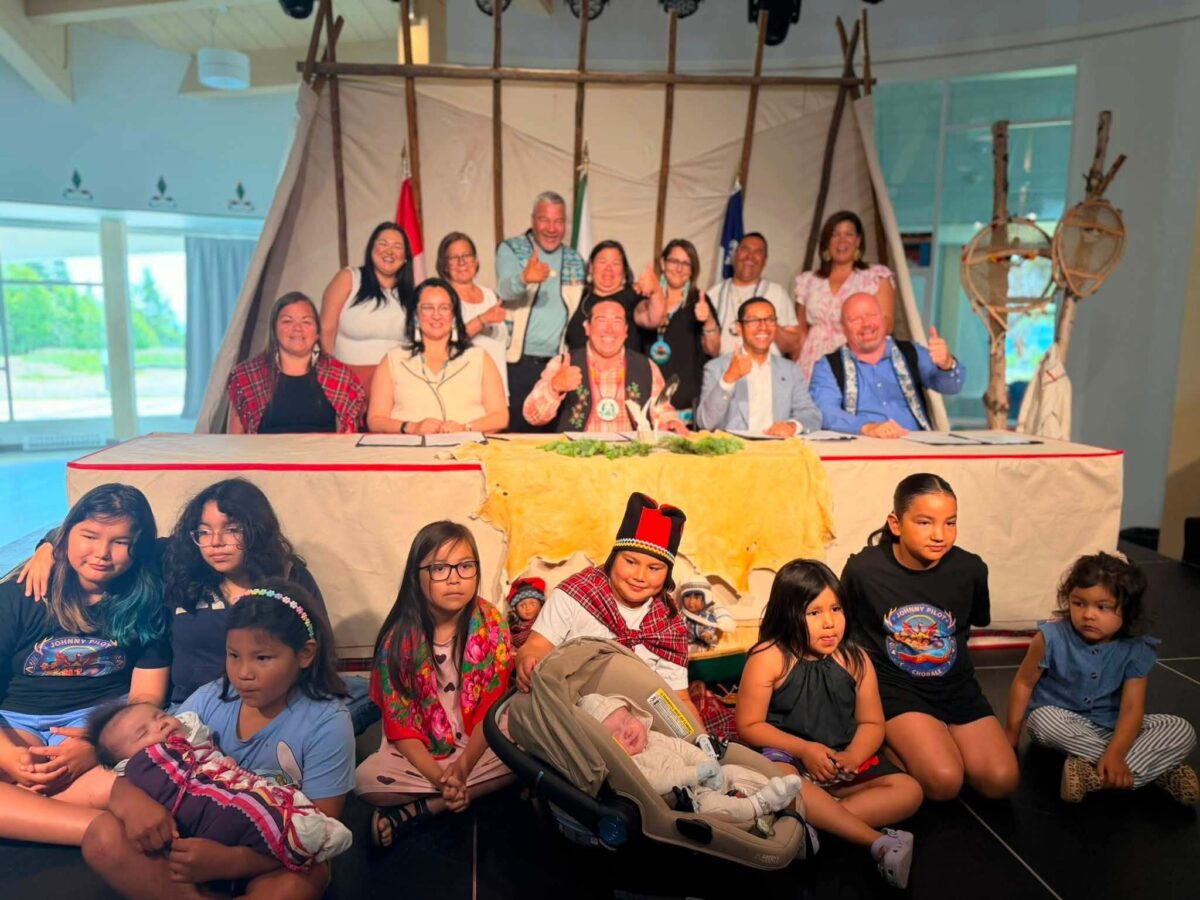
Courtesy Innu Takuaikan Uashat mak Mani-utenam
For Jonathan Shetush, chief of the Innu Takuaikan Uashat mak Mani-utenam (ITUM) band council, July 10’s tripartite agreement with the provincial government of Quebec and the federal government marks the beginning of a new chapter, one where they will have the right to self-determine how they will care for their own children.
That agreement, the Tshisheuatishitau Child and Family Services Agreement, makes ITUM the first Indigenous community in the province to have this kind of agreement under the federal government’s Act respecting First Nations, Inuit, and Métis children, youth, and families.
This will allow the ITUM to implement their own child welfare services law, the Tshisheuatishitau Act, replacing the provincial Youth Protection Act.
“This is for the protection of our culture and gives people a chance to stay close to their culture and close to their community,” said Shetush.
“This is something that will be really communal. I think that we are the best guardians of our children.”
Shetush said that those who leave the community at a young age to go to the city have often found it difficult to return when they are older.
“When it has been a long time since you’ve been in the community, it makes it difficult, identity-wise,” said Shetush.

“We’re going to keep our youth here, help keep their language and their culture. But we’re also going to do more prevention to help families take care of their children.”
More than 2,000 people were consulted as part of the development of ITUM’s new law, from multiple generations within the community.
“I am very happy, because it really comes from them,” said Shetush.
Part of what was determined was the elimination of the tribunal as part of the proceedings.
Instead, family councils will take place, with the child surrounded by family, with family members making the needed decisions.
If that is not possible because of conflicts or an absence of family, a council of elders will do so instead.
The Tshisheuatishitau Act will also see local caregivers recognized as being able to work for child welfare services in the community.





“This is going to be a big change,” said Shetush.
The signing ceremony saw multiple government officials attend: Shetush, but also Indigenous Services Canada minister Mandy Gull-Masty; deputy premier, minister of public safety and minister responsible for relations with First Nations and Inuit Ian Lafrenière; minister responsible for social services and the fight against homelessness Lionel Carmant; and minister of national resources and forests Kateri Champagne Jourdain.
Jourdain, who is Innu and represents the riding of Duplessis where ITUM is based, was the first Indigenous woman elected to Quebec’s National Assembly in 2022 and the first to be a cabinet minister.
“Kateri comes from our community, and I think a lot of work has been done to make so that we are heard from the other ministers,” said Shetush.
“I think having Indigenous ministers benefits our communities, because it helps them understand us better.”
At the signing, Gull-Masty announced that $137 million in funding had been committed by 2030 to help ITUM put their new systems into place.
“We are proud to support the nation in this new chapter,” said Gull-Masty via statement.
Sign up for email updates from The Eastern Door
“For generations, ITUM has worked tirelessly so that decisions about its children are made by the Nation. This first tripartite coordination agreement in Québec recognizes that work, leadership, and the important decisions made so that children can grow up within their Nation, their language, and their culture.”
From now until the Tshisheuatishitau Act comes into effect in September, ITUM will be hard at work to make sure existing files are transferred to them, so that they can begin the transition as smoothly as possible.
“It is going to take a lot of resources,” said Shetush, who was very pleased that the federal government had announced the financial support.
“It’s important that we can work together.”