Joining forces against Alberta separatism
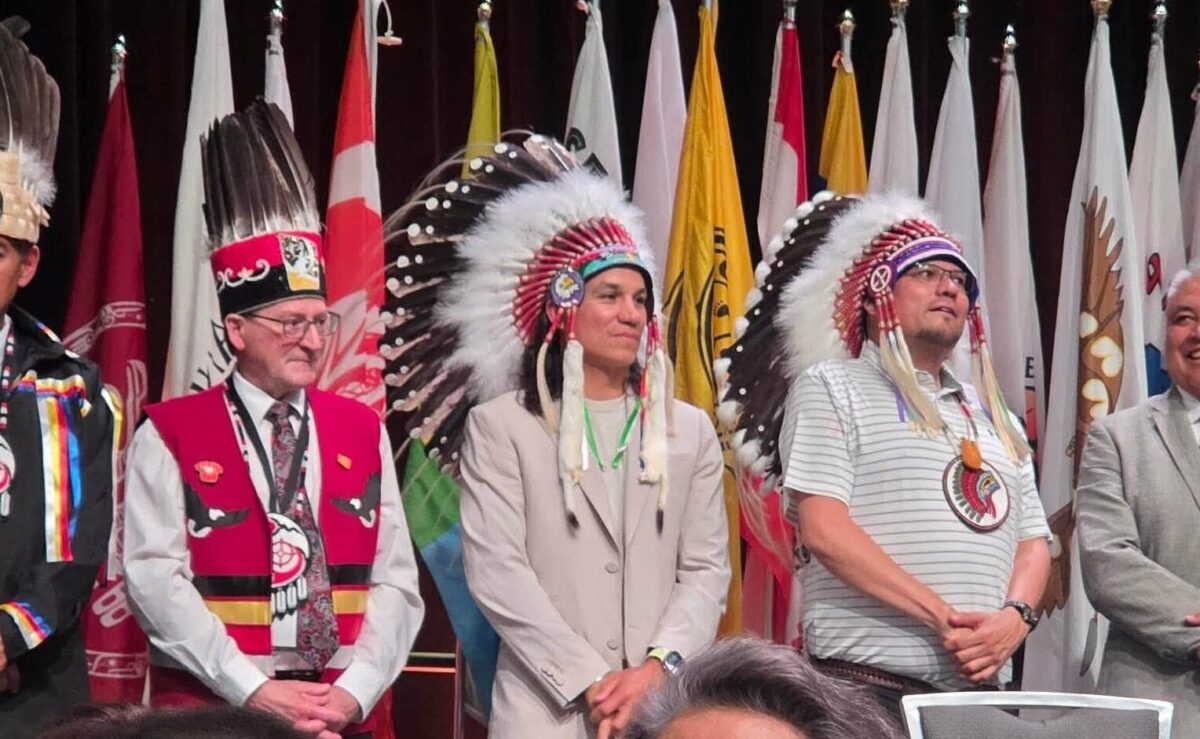
Assembly of First Nations Quebec-Labrador regional chief Francis Verreault-Paul attended the AFN Annual General Assembly, where an emergency resolution was passed regarding Alberta separatism. Courtesy AFNQL Facebook page
The Assembly of First Nations Quebec-Labrador (AFNQL) has joined leaders of Indigenous communities in Alberta in defending treaty rights from a burgeoning separatism movement in that province.
Alberta’s premier, Danielle Smith, announced in May that the province would move forward with a non-binding referendum question relating to separating from Canada, even after an Alberta judge quashed a petition for a similar, albeit more direct, referendum, citing a failure to consult First Nations.
“It’s a strong position of support to our sisters and brothers from Alberta because they made it clear what their stance is. I think with First Nations, we need to support each other,” said AFNQL regional chief Francis Verreault-Paul.
An Assembly of First Nations (AFN) emergency resolution was passed opposing Alberta separation following a July 13 meeting between AFNQL and Treaty 6, 7, 8, and Blackfoot Confederacy chiefs. Verreault-Paul said the prevalence of separatism in Quebec led the chiefs from Alberta to seek the AFNQL’s participation.
“The fact we’ve experienced that in Quebec two times, they wanted to be in touch with us regarding these past experiences. It was just a first, historic meeting,” he said.

“We have a lot in common with other First Nations across Turtle Island, and to see what their challenges are, to see how they deal with them - I think we need to be collectively strong.”
Quebec separatism, Verreault-Paul noted, may be on the rise, with the Parti Quebecois showing a strong performance in polls surveying voter intentions for the October election. The party has promised a referendum on separating from Canada if elected, even releasing a lengthy “Blue Book” outlining its vision for a sovereign Quebec - only the chapter on Indigenous relations has yet to be released.
“In terms of process, I think consultation and consent are two very important aspects,” said Verreault-Paul.
“Regarding the ‘Blue Book,’ it’s their book, in the sense that it’s a book about the independence of Quebec, what Quebec will be if Quebec becomes a country. I think there’s a lot to discuss between us and them before going there,” he said.
“We’ll wait for the election and see what’s going to happen, and again, we’ll have those discussions with the Parti Quebecois in the meantime.”



In Alberta, the provincial election that will contain the ballot question on separatism - essentially a referendum on having a referendum - is also slated for October.
The emergency resolution passed by the AFN calls on governments in Canada to abide by the United Nations Declaration on the Rights of Indigenous Peoples (UNDRIP) by engaging First Nations on a government-to-government basis and proceeding on constitutional and political processes only with the free, prior, and informed consent of First Nations that would be affected.
“First Nations rights are not negotiable and continued cooperation among First Nations will be essential in protecting treaty rights for future generations,” reads the statement.
Smith, the leader of the ruling United Conservative Party of Alberta, has called the Court of King’s Bench of Alberta ruling quashing the referendum petition “anti-democratic” while arguing there’s a lack of clarity on the duty to consult.
Asked at a press conference for her response to treaty chiefs in the province asking for an investigation into whether Smith’s actions amount to treason, Smith sharply rebuked them, asking First Nations chiefs to “check themselves” and respect Alberta’s effort to pursue a “new relationship with Ottawa that respects our jurisdiction.”
Sign up for email updates from The Eastern Door
Marcus Bankuti, Local Journalism Initiative Reporter