You can’t pick and choose history
Megan Kanerahtenha:wi Whyte The Eastern Door
In perhaps the ultimate sign of the times, communities everywhere are debating taking down statues.
It’s easy to understand why - we live in an era when not only Kahnawa’kehró:non and other Indigenous people, but whole swaths of the globe, are reevaluating the legacies of their heroes, trying to figure out where the line is between recognizing history and lionizing it.
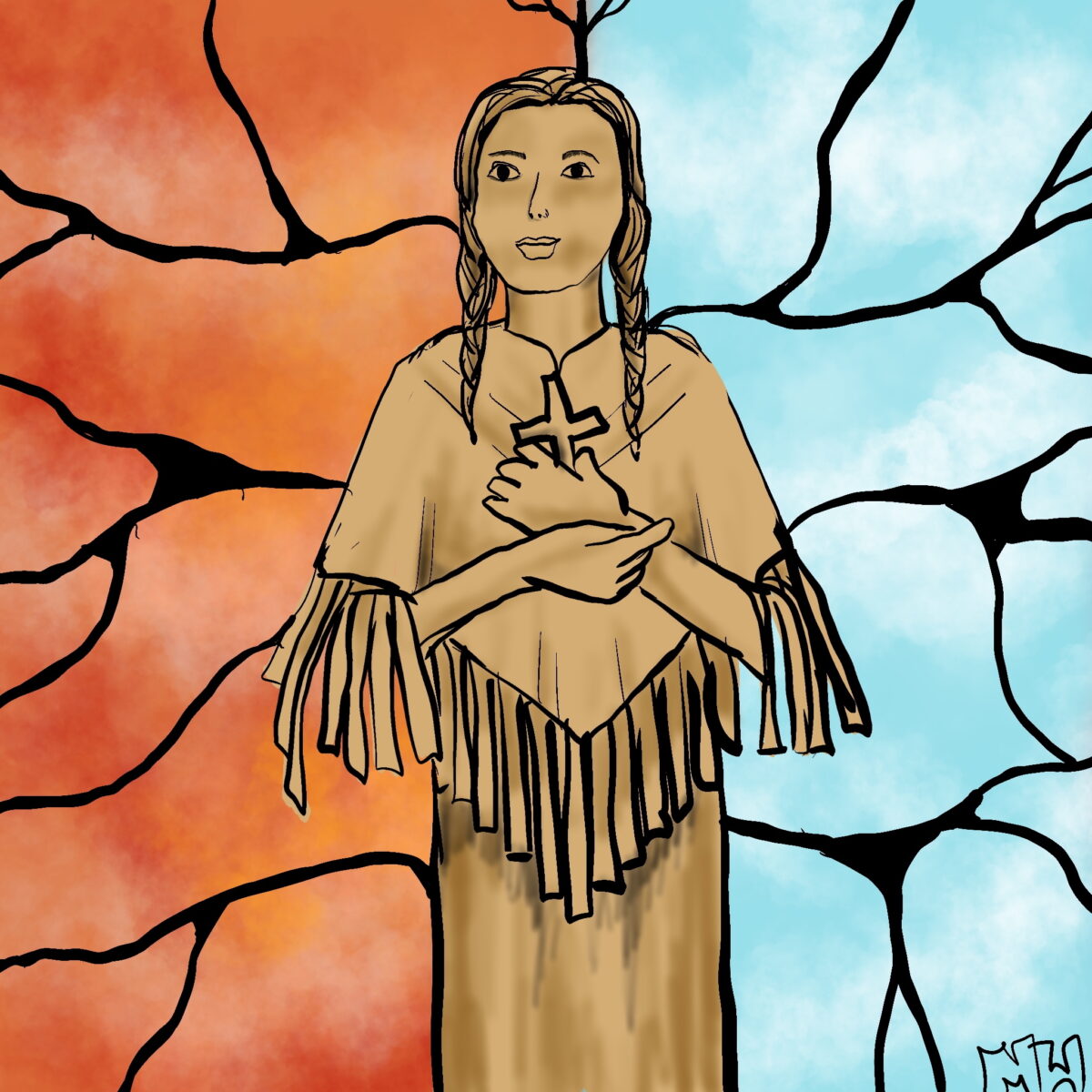
In the 21st century we’ve seen efforts targeting statues of Christopher Columbus; Confederate generals; architects of the residential school system like John A. MacDonald; and now, a Mohawk woman who fell in with the Jesuits and converted to Christianity.
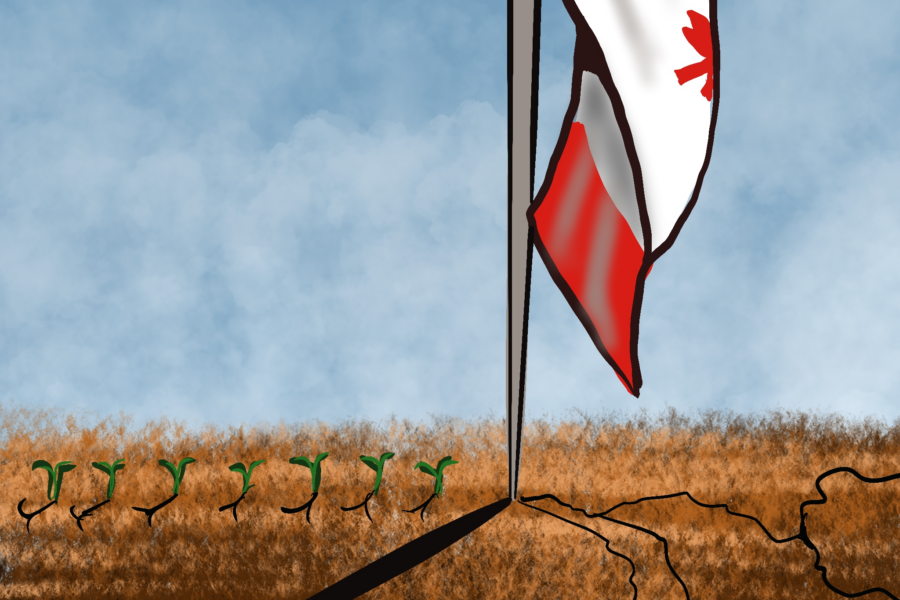
Most folks probably didn’t think much about the statue atop Kateri School - a former Indian day school - until it became the talk of the town a few weeks ago. After all, that statue has been there as long as most people can remember, and has hardly seemed out of place atop a building that bears her name.
But the statue of Kateri Tekakwitha shows her holding a cross, the biggest symbol of Christianity ever, and she’s standing right there on top of the school. It’s a building where many community members suffered gravely at the hands of the church.
Some parents say they see the statue as incompatible with the values they are trying to instill, and we can understand that.
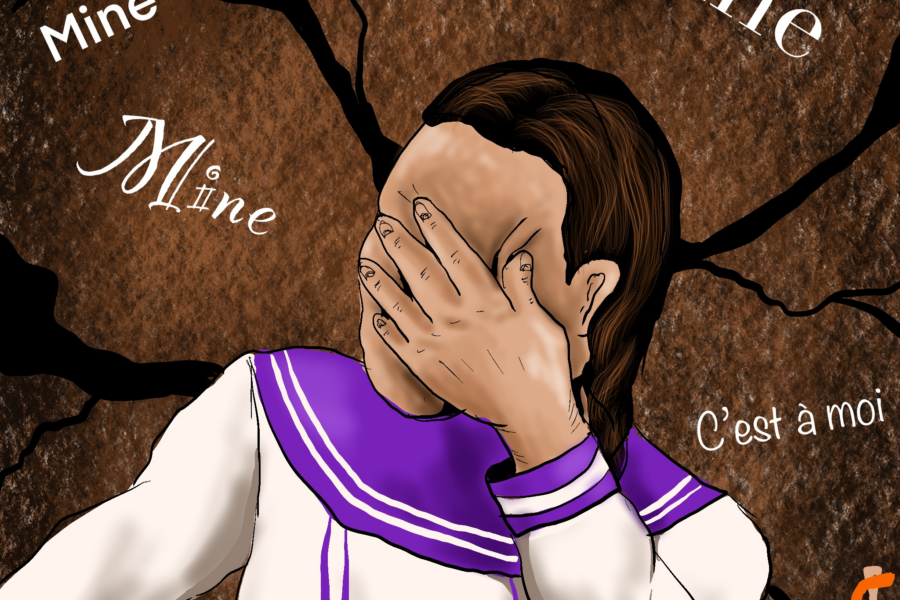
But when the St. Francis Xavier church committee received a letter saying the statue would be removed and asking if they wanted it, their feelings were important too.
The statue in question is no hand-me-down couch, but you can’t blame the church committee for feeling like the likeness of St. Kateri Tekakwitha was being treated like one.

Where would it have gone if the church hadn’t taken it?
Even most opponents of the church would not have wanted to see it merely discarded. After all, even advocates for the statue’s removal have said they respect Kateri Tekakwitha as a Mohawk woman.
What would come next? Rename the school? Rename the hospital? Rename the island? These are not decisions to be taken lightly.
Kateri is part of Kahnawake’s history, and while the religion she subscribed to reflects a past many wish to leave behind, this isn’t a parallel to the father Lajoie case, who was non-Native and was accused by multiple community members of sexual abuse, leading to his remains being exhumed and removed from the community, in a painful chapter for Kahnawake.
Kateri Tekakwitha was never accused of anything untoward. And she’s not just a symbol of the church. She was a living, breathing Kanien’kehá:ka woman, not to mention probably the most famous Kahnawa’kehró:non ever.
After all, she’s probably Kahnawake’s biggest tourism draw, with people the world over wanting to visit the shrine of the first-ever Indigenous saint from Turtle Island.
For many Kahnawake members, Kateri represents more than just a dark period defined by catholic interference and abuse, but a symbol of grace and hope. After all, plenty of Kahnawake church members will tell you themselves that they too are advocates for reconciliation in light of the church’s abuses.
It’s necessary to acknowledge that for these Kahnawa’kehró:non, many of them elders, their faith is part of who they are. You can think of that what you may, but the fact is they are as Kahnawa’kehró:non and as Kanien’kehá:ka as anyone else, and their feelings matter, too. You can’t just pull out the rug from under them.




And this isn’t the dark old days. Traditional folks have a leading voice in the community’s affairs now, including on the Combined Schools Committee. They deserve to have a say and put these important questions out there.
At the same time, cultural revitalization - reclaiming that which existed before contact and makes Kanien’kehá:ka who they are - must be given every chance to flourish, even if the genie can’t be put back in the bottle.
So how to move forward?
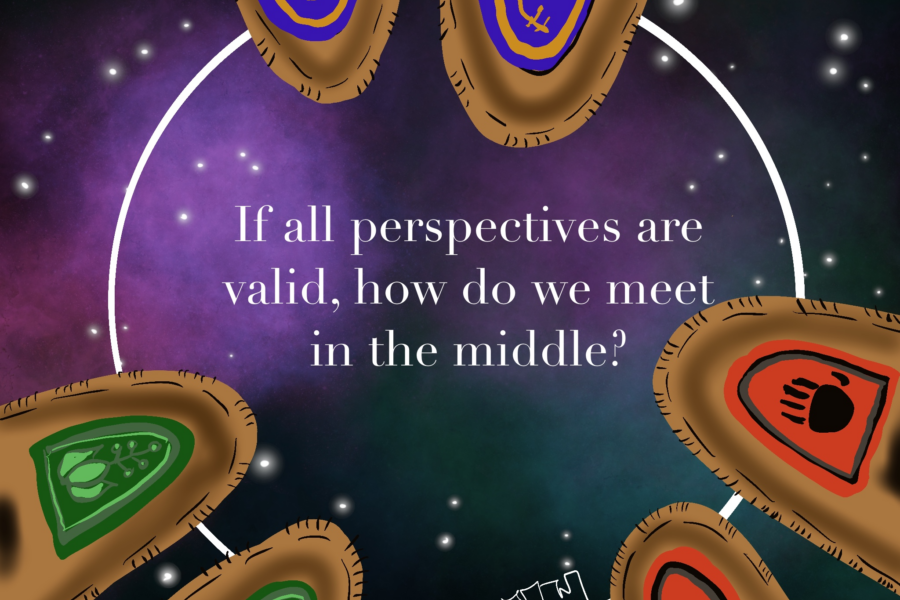
Well, on this issue, we expect there will be more debate, and hopefully both sides will hear each other. The statue controversy reflects larger challenges when it comes to being Onkwehón:we on lands the map says is called Canada from coast to coast, and these difficulties won’t go away anytime soon, and neither will the fight for justice, but that fight shouldn’t be against one another.
A lot of the hard feelings about this issue came after its proposed removal landed on the agenda of a Mohawk Council of Kahnawake (MCK) community meeting, when few had heard of it, helping to shape public opinion on the issue - mostly against.
There was plenty of finger-pointing to go around about the way in which the statue came to the forefront of public consciousness, and the Combined Schools Committee and the in-school committee reps have a fair point that it shouldn’t have come out this way.
But how, then, should it have come out?
Unfortunately, the school committees, thinking everyone would be on their side or some of them, perhaps, not really caring, didn’t deem it necessary to bring the community into the conversation themselves.
Sign up for email updates from The Eastern Door
But the opponents of the statue’s removal have an important point: what happens at Kahnawake’s schools are the business of all Kahnawa’kehró:non, not just those who have a child attending at any given moment or filling another open spot on the in-school committee.
All the elders who grew up attending Kateri School when it was still an Indian day school also deserve a say in how to renew Indigenous teachings.
Kahnawake education is a key force in strengthening the culture and pursuing a future in which all children in the community speak the language, know the history and the ceremonies, and are equipped to lead a thriving future for Indigenous ways of knowing and being in an interconnected world.
And in that pursuit, every Kahnawa’kehró:non deserves a voice.
TED Staff