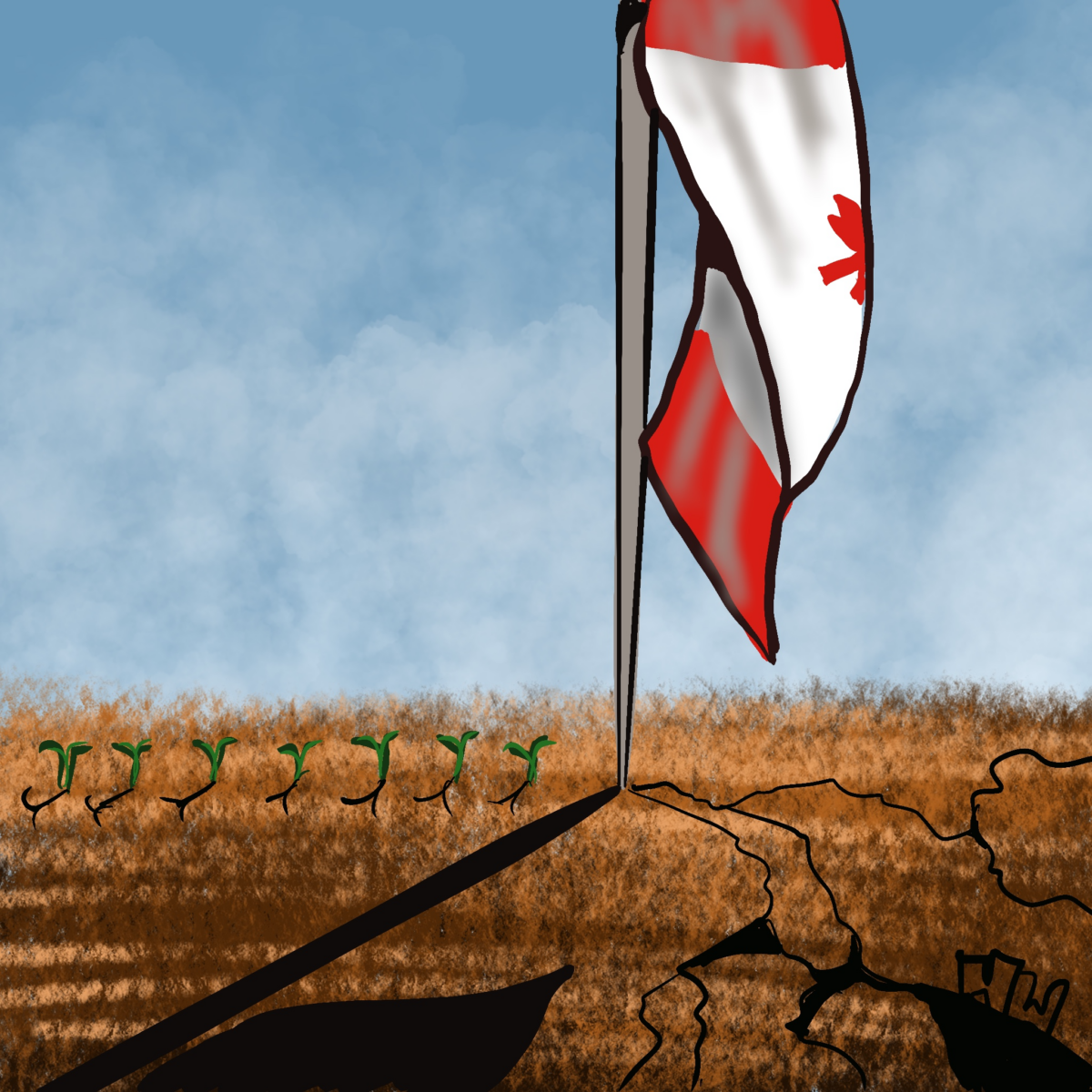
#CancelCanadaDay is as relevant as ever
Megan Kanerahtenha:wi Whyte The Eastern Door
A lot has changed in the past five years, but then again, a lot hasn’t.
On July 1, 2021, many Canada Day events were cancelled, or at least dramatically scaled back, after the Kamloops announcement confronted Canadians with the genocidal reality of the residential school system.
Sure, the COVID-19 pandemic was blamed for many celebrations being toned down, but enough people knew it was no time for fireworks that cities across the country were surely relieved to tuck away the festivities.
Evidence of residential school abuses, of course, had already long been clear. After all, the Truth and Reconciliation Commission’s work wrapped up years before the May 2021 announcement by the Tk̓emlúps te Secwépemc Kukpi7 First Nation of the discovery of 215 unmarked burials at the site of the Kamloops Indian Residential School.
A reckoning should have already happened by then - but it hadn’t.
And five years later, it hasn’t.
Fewer survivors are alive each year, still waiting for justice in their lifetime for the abuses they suffered at residential schools. Yet the recommendations of the Independent Special Interlocutor for Missing Children and Unmarked Graves and Burial Sites associated with Indian Residential Schools, whose final report was released in 2024, seem to be sitting in a drawer somewhere in Ottawa.
Predictably, as the shock has worn off in some corners, and residential school denialism gains momentum (even as legislative attempts to stymie it are quashed), the country seems to have sunk back into the worn-out couch cushion of patriotic feelings.

The resurgence of Canadian pride has been expedited no doubt by the wanton insults and sabre-rattling of the US under Trump: The Sequel, but if we can all agree that it’s time to be clear-eyed and bold in looking to the future, well, that just can’t be done by shrugging off the past.
Canada, as we know, is a country built on genocide, and no matter how it evolves, that will always be the case. It’s time for real change.
After years of lip service and financial settlements and land acknowledgements, the Indian Act is still the law of the land, and that land, when it comes to what is recognized as Indigenous, is still far too scarce.
What is the reality of Canada? Just a few weeks ago, the Permanent People’s Tribunal came to Montreal and ruled that Canada not only committed genocide against Indigenous peoples, but continues to do so.
Yet this week, we got an official Canada Day statement from the country’s prime minister, Mark Carney, that shamefully makes no explicit mention of Indigenous peoples - but which does boast of Canada’s 10 million square kilometres.
The message is of a country that has an embarrassment of riches - and well, yeah, it IS an embarrassment.
That’s Indigenous land, in a country where many First Nations struggle to house their people. But the Canadian public has so far to go that many blame whole Onkwehón:we communities for conflicts that inevitably arise when external interference creates the conditions for land grabbing and threats of violence.
Maybe that’s why there’s no pushback from the voting public when promises of support are met by delay, delay, delay.




Of course, some Canadians may rue the day they did not take all this seriously, because Canada’s own legal concepts could show that the title of many privately held lands would not hold up to scrutiny even under colonial legal frameworks, as happened in the Cowichan case out west, which recognizes the Indigenous title of ancestral lands purported to be owned by colonial interests for generations.
So, although the time for land back is way past due, Indigenous communities are asked to celebrate the return of modest parcels of rural land the government had sitting around and doesn’t need anymore, after a decade of hard work to make it through a protracted Additions to Reserve process.
Don’t get us wrong, the return of land is great news, but Canada should be held accountable for stopping short of protecting the shrinking undeveloped lands that still exist closer to the reserves that need them - and have the right to them - by buying them up and returning them.
In other cases, land may be returned, sure, but with strings attached, like the ecological gift proposal in the Pines, continuing a long Canadian tradition of depriving Onkwehón:we of freedom of choice.
Carney’s Canada Day statement credits Canadians for being hard-working, compassionate, and kind, but these are not qualities belonging to a citizenry, but rather aspirations that must be continually renewed. If only this were a country defined by kindness and compassion.
Canada Day, so long as it’s on the calendar, must not be a day to celebrate what Canada is but rather to investigate what it could be, to invest in a bolder vision of equity and justice, which must do right by the First Peoples of these lands and waters.
There is so far to go before reconciliation is realized, and not just a word that gets thrown around.
The duty to consult is ingrained in the constitution, but we still live in a Canada that applies its own laws as convenient when it comes to First Nations.
Sign up for email updates from The Eastern Door
The Building Canada Act, which we’ve editorialized about several times, was the subject of a July 1 protest this week at Place du Canada in Montreal. That law was advertised as equipping the country to build bigger and bolder, but all signs point to a legislative bulldozer of consultations, compelling Indigenous communities rather than empowering them, and prolonging an era of favouring developers and mining companies over Indigenous rights.
But the Canadian state as we know it is eroding, even if fireworks have returned to July 1.
What will be built in its place? That’s the question Canadians should have been asking themselves this week.
Marcus Bankuti, Managing Editor
Steve Bonspiel, Editor/Publisher