Celebrating Indigenous history
Megan Kanerahtenha:wi Whyte The Eastern Door
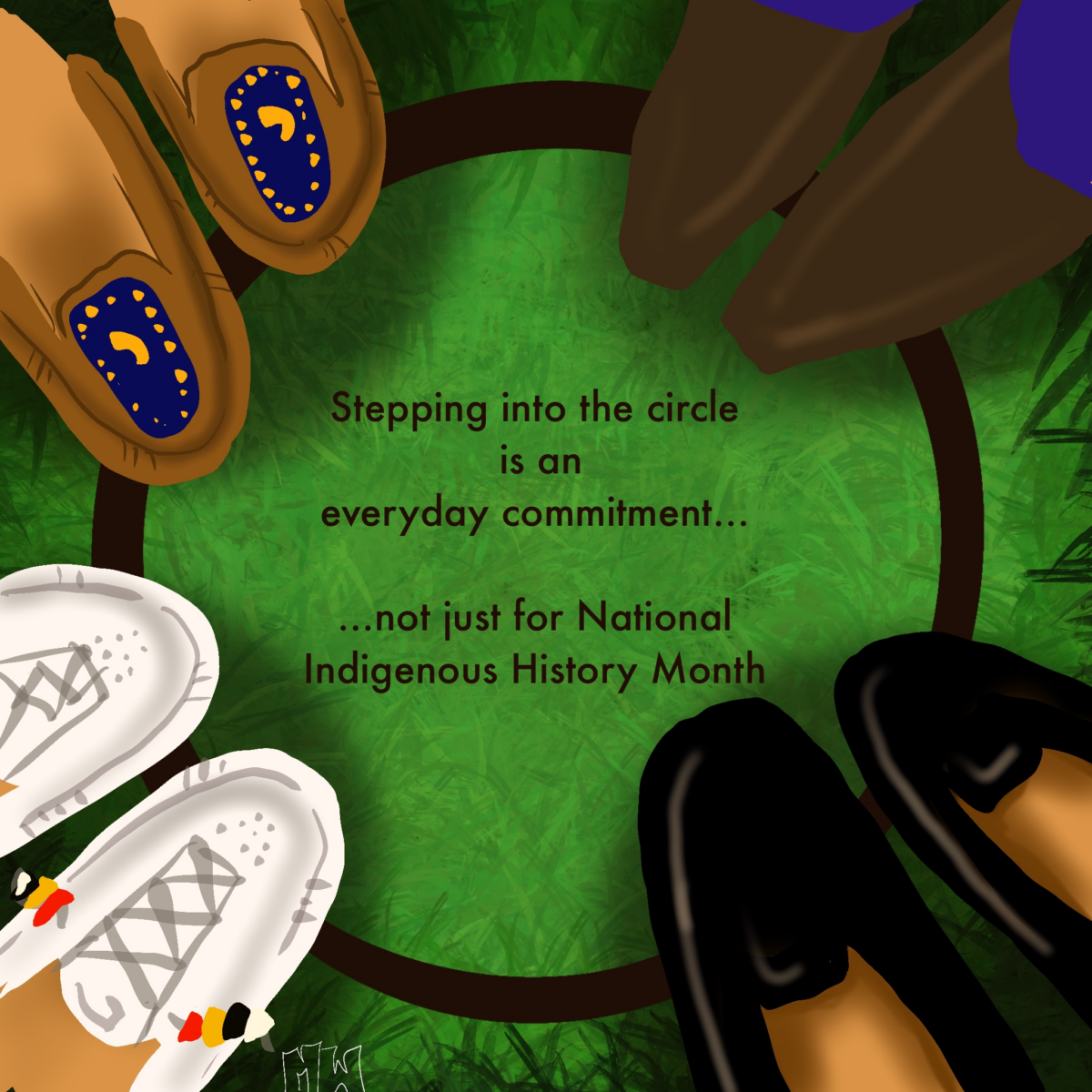
As the country wrestles with the interim ruling of the Permanent Peoples’ Tribunal issued Friday - that Canada is committing genocide against Indigenous Peoples – we mark National Indigenous History Month.
Like many commemorations and other significant dates that Canada acknowledges when it comes to Indigenous Peoples, this one invites a flurry of statements from Canadian politicians, who take a moment to profess their support for Indigenous cultures, languages, dignity, and life.
These statements rarely have teeth, with so many of the urgent concerns of Indigenous communities barely addressed, if at all, but the fact these occasions cannot pass without leaders of all stripes acknowledging the necessity of reconciliation says something: the country’s moral and legal obligations to Indigenous Peoples may be inconvenient to those who want to preserve the status quo, but they cannot be denied or ignored.
Yet, as the Tribunal and those whose courage its hearings were built on show us, the colonial drive to extinguish the foundations of Indigenous identity - separating children from their families, punishing children for speaking their own language, abuses that burdened families with intergenerational trauma - extends and reverberates to this day.
Much of this was attempted through residential schools and Indian day schools, but of course that’s not all.
It was even illegal, at one time, to practice Indigenous ceremonies, which have a unique power to bond the past and present. That just goes to show you that the power of history has never been a secret, and that same power is what makes it such an important force for Onkwehón:we today.

Canada failed in its colonial project of assimilation, in enacting its will to eliminate Indigenous identities. That’s a credit to the remarkable strength of Onkwehón:we communities and individuals, who have fought for generations.
We constantly have the privilege to speak with people who are setting aside years of their lives just to learn the language that is their birthright. The Kanatahkwèn:ke Cultural Arts Center now stands tall as a monument not only to the Kanien’kéha language and Kanien’kehá:ka culture, but to the tireless effort of advocates and supporters - even to the children who cared enough to tap into their piggy banks, that’s how well they have been taught to value the generations to come.
That same building will be home to a museum that will finally provide a state-of-the-art venue for visitors and Kahnawa’kehró:non alike to understand the richness of the history of these lands - Indigenous lands - with a depth and perspective you won’t find in a textbook in Lachine.
We try to do our part here at The Eastern Door, where the Sharing Our Stories project, which is all about the preservation of lived history and the promotion of Kanien’kéha, is going stronger than ever.
But it’s the elders who sit down with the Sharing Our Stories team, who do so because of the knowledge that history matters, who deserve the credit.
It’s many of these same elders who are in the classroom imparting their knowledge decades after retirement age, who gather around sacred fires and share their worst experiences so that the legacy of residential schools will never be forgotten, and who are in so many ways the guiding lights of the community.

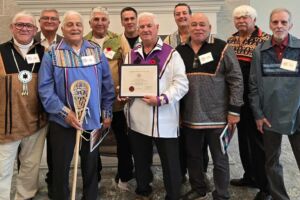

That warrants enormous respect and is not something to be taken lightly. What is imparted by elders is a lodestar because history is fundamental to identity, to wisdom, to action.
As we so often observe, this country needs action more than words. The government must step up not merely in ways that suit a colonial vision of Canada such as economic benefits flowing from new projects in which Indigenous communities don’t even get a meaningful say.
Indigenous communities are doing an incredible job of cultural revitalization, of transmitting its value. Outside communities must embark on teaching their children with the same urgency, which is their moral obligation.
Right now in this country, we see unceded land treated like it was handed over. We see treaty territory being disrespected and obligations to Indigenous communities there ignored.
Over the weekend, there was a white supremacist rally in Shawinigan. The participants, mostly cowards in masks, held a banner that said “I remember a white Quebec.”
Indigenous communities were of course quick to point out that this land has been Indigenous since time immemorial, which is to say, many moons before the first white face showed up on a boat.
Sign up for email updates from The Eastern Door
Quebec’s politicians, of all stripes, were also quick to decry the protest.
In many cases, these same politicians turned a deaf ear to Indigenous concerns that new French language laws could undermine Indigenous efforts to strengthen endangered Indigenous languages. There are many examples of the government dismissing well-founded fears held by groups that don’t fit into its vision of “old-stock” Quebecers, themselves newcomers in the grand scheme of things.
Only a lack of knowledge of history, or a willful resistance to it, could justify those kinds of positions. And the hateful result is too predictable, even as many of the people advocating for a colonial worldview fall over themselves to condemn it.
That’s just one reason every opportunity to observe, share, recognize, and take pride in the rich history of Indigenous Peoples means so much.
Marcus Bankuti, Managing Editor
Steve Bonspiel, Editor/Publisher