The power of the peoples’ judgment
Megan Kanerahtenha:wi Whyte The Eastern Door
The international Permanent Peoples’ Tribunal is in Tiohtià:ke this week, probing a legacy of missing children and unmarked graves associated with residential schools.
It’s about time for this kind of forum. For all the commissions and offices, there has still never been accountability, and a reckoning in this country is far from complete, even as there are fewer survivors every year.
That’s why the world’s attention is so important right now.
After the Tribunal’s legal experts combed through the evidence, the charges in their indictment could not be more serious: genocide and crimes against humanity. Now it’s up to the panel of judges to hear the expert and witness testimony and contemplate the crimes that have taken place and which still resonate in Onkwehón:we families and communities across the country.
The Tribunal, asked to undertake the case by the Native Women’s Shelter of Montreal, is what’s known as an opinion tribunal - an independent body, issuing non-binding judgments, at least as far as enforcement is concerned.
But the Tribunal’s authority to make a moral judgment is as binding as it gets, and if everyone can already sense the outcome, that’s because the facts have long been clear.
The Permanent Peoples’ Tribunal is no ad hoc committee. It has been investigating and prosecuting human rights abuses since 1979 and has made rulings in more than 50 cases, and an international investigation into Canada’s great shame is long overdue.

This is a chance to apply meaningful pressure and to hear from survivors while we still can.
Though some residential school survivors had a chance to speak their truth during the Truth and Reconciliation Commission (TRC) days, too many of its calls to action have languished. And there is still so much we don’t know and must be confronted.
In fact, in recent years, the voices of those who dismiss and minimize the genocidal actions of the state have only grown, finding a home in far too much spilled ink.
That denialism has no place in the discourse, and among other things, the Tribunal offers the opportunity to show the world why.
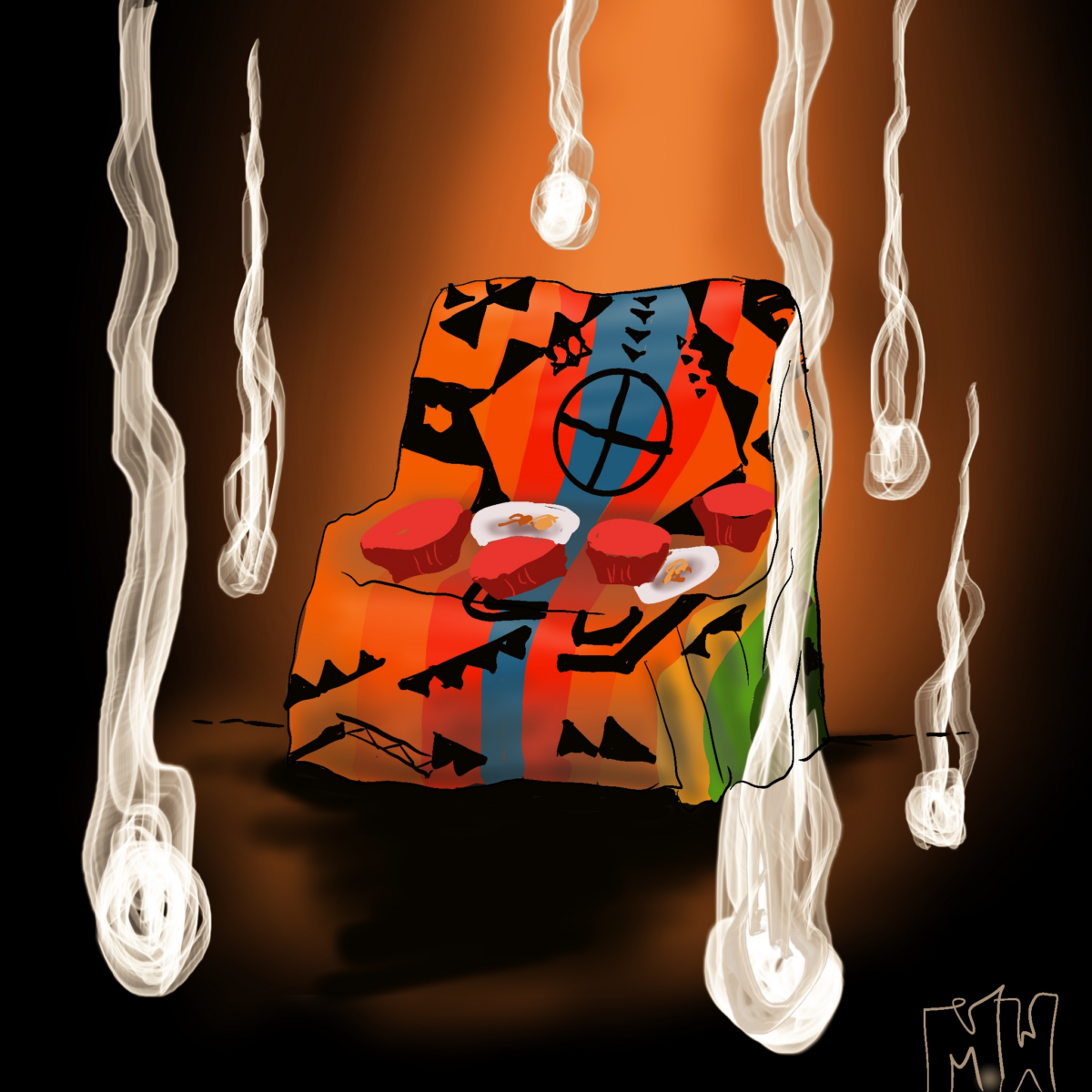
Yet, despite the significance of this week’s proceedings, there has been an empty chair in place of government representatives at the daphne gallery-turned-courtroom. That’s right, the government didn’t show.
In colonial courts that wouldn’t be tolerated, but even as Indigenous Peoples in Canada coalesce around these proceedings, Canada’s absence is no surprise.
It’s in the government’s interests to minimize the Tribunal, lest its findings light a fire under the international bodies this country does recognize as having the authority to rule.
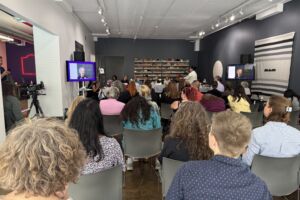
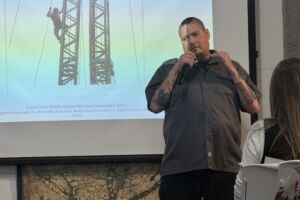
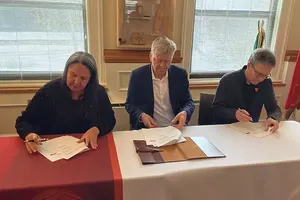
There’s another reason, too - there is simply no defense for the indefensible. So, what could they really say besides, “We throw ourselves at the mercy of the court”?
For colonial entities, being at anyone’s mercy is inconceivable. Canada wants these proceedings to come and go, to be something that most of its citizens will quickly move on from, if they hear of it at all, and unfortunately that’s liable to happen.
After all, this is a country where Alberta’s referendum to separate is taken seriously even as the entire province is comprised of treaty territory.
For too many Canadians, what’s inconvenient simply doesn’t exist.
But we’re pleasantly surprised to see even mainstream media outlets shedding light on the events of this week, at which Canada’s actions are on trial, whether the state accepts the Tribunal’s legitimacy or not.
And by turning the world’s attention to the crimes perpetrated against Onkwehón:we in Canada, and the lack of progress, accountability, and justice that has followed, there is no limit to what can be accomplished.
The special interlocutor for missing children and unmarked graves and burial sites, Kimberly Murray, testified as an expert witness to start things off. She worked tirelessly in her role during her mandate, but that office, while independent, was created by the government, and designed to have its limits.
Sign up for email updates from The Eastern Door
Yet through her office, the TRC, investigative journalism, advocacy groups, and above all survivor testimony in all its forms, a great deal has been exposed in recent years, and something revolutionary ought to come out of it.
The Tribunal’s indictment includes a damning statement of facts, tying affronts to territorial, administrative, and bodily autonomy, and a residential school system designed to eliminate Indigenous identities and peoples, to support the charges, which are accompanied by definitions of genocide and crimes against humanity.
An interim ruling is expected to end the week, and a full one is slated for September 30, Orange Shirt Day, also known as the National Day for Truth and Reconciliation.
The fact that survivors have to turn to the international community for support does not reflect well on federal progress, and it cannot be easy for them to revisit their experiences in the pursuit for justice. Their strength and courage is beyond admirable, and it’s time the world rally around them and listen once and for all.
What they went through must never be forgotten or denied.
Marcus Bankuti, Managing Editor
Steve Bonspiel, Editor/Publisher