Road tolls inch forward
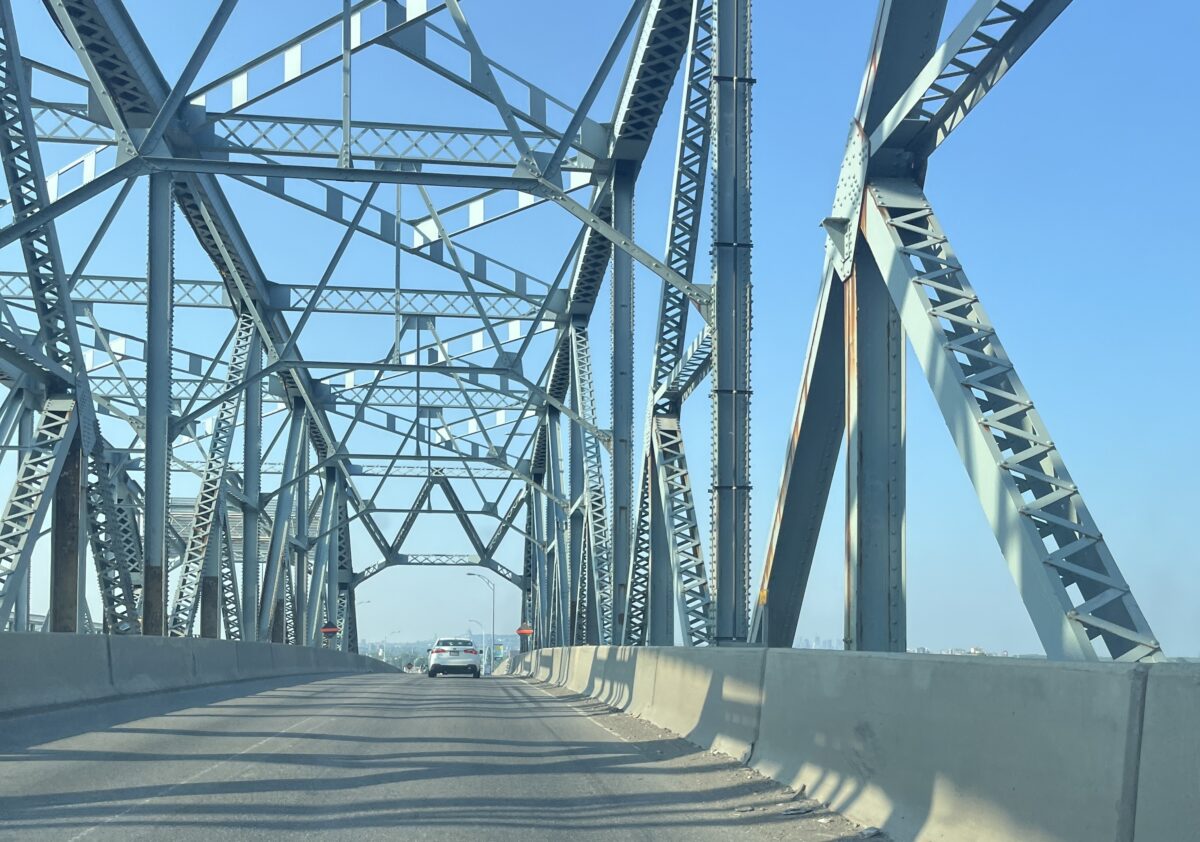
The Mercier Bridge is among several locations under consideration for a new tolling system on the territory.
North of 100,000 commuters pour through Kahnawake’s territory every day, and the Mohawk Council of Kahnawake (MCK) is proving that the announcement last year that it might toll infrastructure on the territory was no idle warning.
That’s the signal sent with the announcement of a major feasibility study on road tolls, which will be led by Arcadis, the same company that worked on the tolling system for the high-profile Gordie Howe International Bridge connecting Windsor and Detroit.
The MCK believes the information yielded by the study will equip it to consider how tolls could best be implemented on the territory to achieve a range of goals.
“The Council’s very supportive of this project and finally carrying it out,” said MCK grand chief Cody Diabo. “I know it’s been talked about for many, many years. We have never gotten to that point, but there’ve been some external things that have happened that have really been pushing us now to look at the financial stability of the community.”
He named recent shortcomings with Jordan’s Principle funding and governmental cuts to Indigenous-facing departments as two prime examples.
The suggestion that Council could implement tolls on infrastructure crossing Kahnawake made headlines following a press conference in August, where MCK grand chief Cody Diabo’s said that the Mercier Bridge could be one obvious target. The grand chief tied the proposal to a federal directive for 15 percent across-the-board funding cuts for governmental departments, including Indigenous Services Canada (ISC), which he said could trickle down to impacts on Indigenous services.
While ISC eventually saw a cut of just two percent in 2025, Diabo and the MCK still see tolls as a just measure to promote Kahnawake’s economic sovereignty and ensure financial security as the government’s commitment to Indigenous services ebbs and flows.
“Any cuts are going to be detrimental,” said Diabo. “Plus, we have a lot of needs within the community that need to be addressed, so this is looking at that opportunity as well for some own-source revenue.”
He noted that even a toll of $1 could add up considering the sheer number of cars that pass through the territory every day.

While the MCK seems to have stepped back from making the Mercier Bridge the face of the proposal, Diabo suggested Council sees some kind of tolling on the territory as a priority.
He said that in addition to generating revenue and offsetting the costs associated with hosting transit corridors, tolls could even help the flow of traffic off routes like the Old Chateauguay Road (OCR), where considerable resources are dedicated to controlling traffic.
He acknowledged that traffic-related issues have been the source of flareups with neighbouring communities in recent years, most recently commuters trying to avoid construction on Chateauguay’s St. Jean Baptiste Boulevard by cutting through the OCR, with Peacekeepers and community members alike cracking down on the prohibited maneuver.
Diabo, who has emphasized that tolls are not envisioned as a way to punish people from outside communities, said Kahnawake was simply reacting to the amount of traffic coming through the territory and that education is a key factor in easing tensions.
“They’re not used to being inconvenienced,” said Diabo. “But First Nations people have been inconvenienced since the first point of contact. I think it’s a little bit of a wake-up call for them to understand the realities and why First Nations feel or do the things that they do.”
He suggested people need to think about how being surrounded by so much development impacts Kahnawake rather than getting angry that they’re being turned away from cutting through the community.
“You can’t even utilize your own roads because someone else is trying to use it as a shortcut. Why don’t they use Highway 30? Because it takes more time and they’ve got to pay almost $5.”
As for potential tolls in Kahnawake, just like the location and method of tolling, this would be informed by the study.
Community member Ioronhiateka Delisle favours the implementation of tolls, but he said the way this is done is critical, and Kahnawake needs to be ready for it not to be easy.


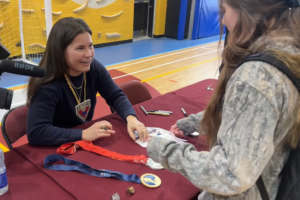
“We need to be independent from Canada, and the tolls gives us a chance to stand alone,” said Delisle. “If we do, we have to be prepared for the consequences that come with it, like our children will have to deal with racism from uneducated people that don’t understand why we have the right to do what we do. It’s going to be a tough time ahead.”
He suggested measures such as discounted annual rates for people who live in communities neighbouring Kahnawake could help soothe potential tensions.
“Remember, we have to live next to these people for the rest of our lives,” Delisle said.
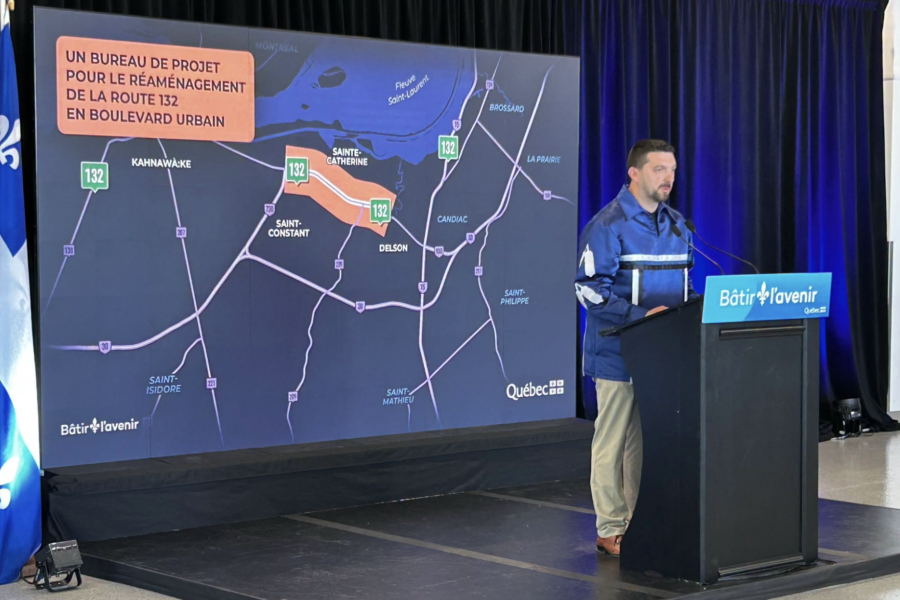
He believes tolls should be put on Highways 132 and 138, Route 207, and the OCR, to maximize both revenues and traffic control.
“All in all, I believe it would be good for the community as long as it balances in our favour all the way around, not just money,” he said.
Candiac resident Chris Pike was curious whether tolls will levied on Highway 132, which his family uses frequently.
“I completely respect the territory and the roads within. I do not agree with non-residents taking side roads to bypass traffic and such, but the 132 is essential to get into town for many people,” he said.
His wife takes Highway 132 twice a week to get to work in Boisbriand, he said, although he added that she has never cut through the territory, no matter how bad traffic gets, out of respect for the community.
“I’m not sure we would use the 132 if we had to pay a toll, but would support a slight increase in taxes if the government were to subsidize Kahnawake for its use,” he said.
Sign up for email updates from The Eastern Door
Jacques Cartier and Champlain Bridges Incorporated (JCCBI), the crown corporation that oversees the federal side of the Mercier Bridge, declined to comment on the possibility of tolls, saying only that a feasibility study on tolls is an MCK initiative. Quebec’s transport ministry (MTMD) and ISC did not reply to requests for comment by deadline.
The tolling feasibility study is expected to take six months to a year and will also look at factors like impacts to the local economy, traffic, safety, and jurisdiction, according to the MCK.
The MCK has said previously that community members would be exempt from any tolling.
Marcus Bankuti, Local Journalism Initiative Reporter