Items returned from Vatican
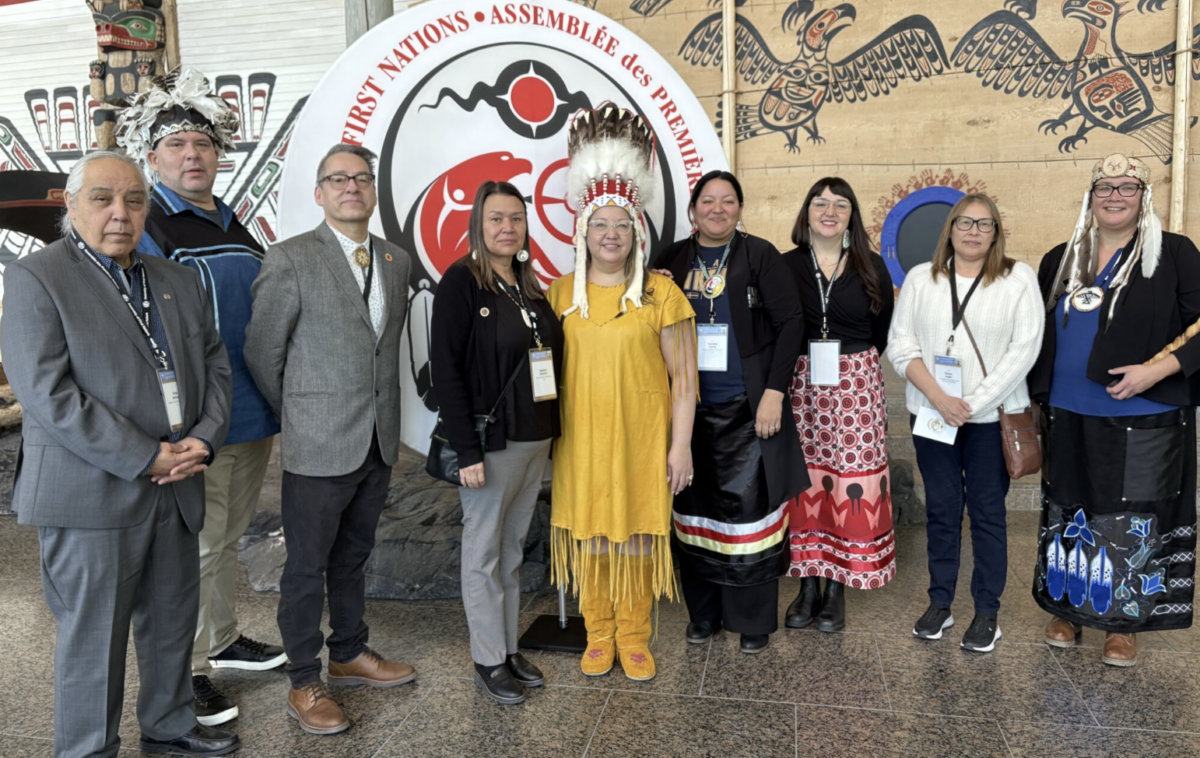
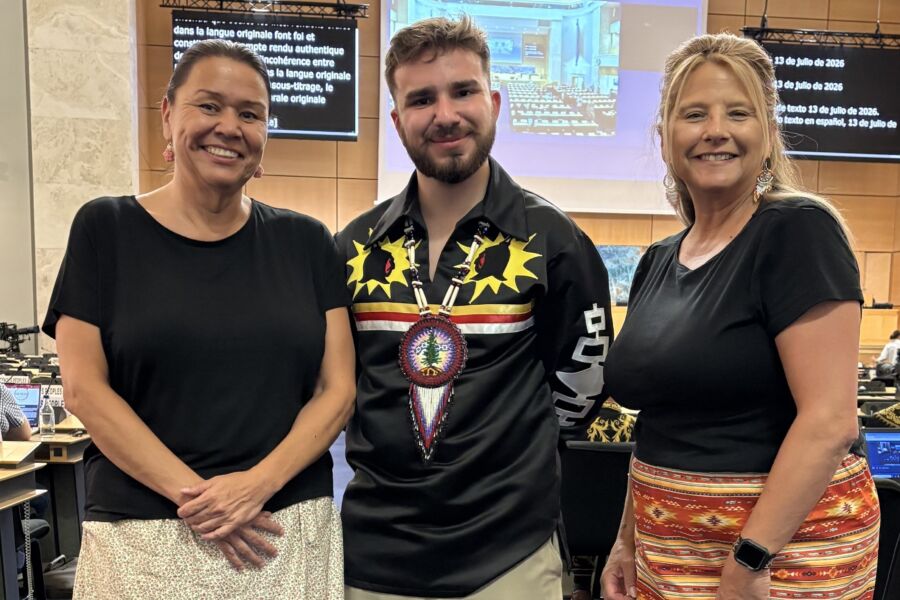
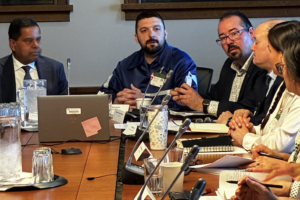
Indigenous leadership, including MCK chiefs David Diabo, Ross Montour, and Melanie Morrison, gathered in Gatineau for the unveiling of sacred items. Courtesy Melanie Morrison
A ceremony held in Gatineau this week saw the return of sacred items to their home communities from the Vatican Museums archive, part of an ongoing process that will see a total of 62 items transferred to Indigenous communities across Turtle Island.
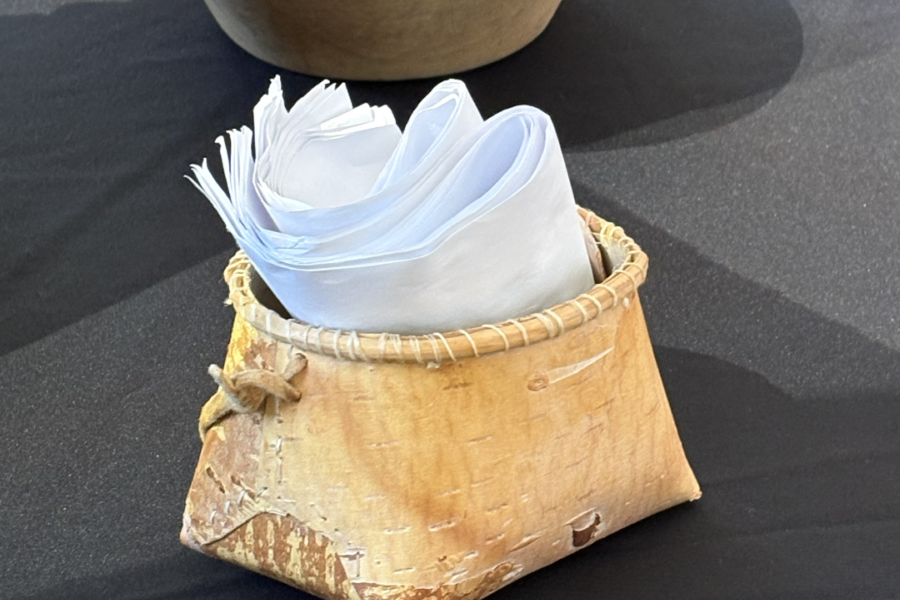
Though none of the items unveiled in Gatineau have origins in Kahnawake, Mohawk Council of Kahnawake (MCK) chiefs David Diabo, Ross Montour, and Melanie Morrison were in attendance at the ceremony, which included the unveiling of a birch bark sap collector basket, which will be returned to Akwesasne.
There remains many items whose origins are yet to be identified, but preliminary items shown also included embroidered mittens from Athabasca Chipewyan First Nation, a wooden bowl and spoon from Manitoulin Island, and a model cradleboard and doll with origins in Ontario.
“It’s very moving and inspiring that these things are taking place. I think it’s a step in the right direction,” said Morrison. “Could it be better? Absolutely. We shouldn’t be negotiating returns of our own items, if we want reconciliation they should give back everything that was taken.”
Also in attendance was Francis Verreault-Paul, regional chief of the Assembly of First Nations Quebec-Labrador (AFNQL).
“It was quite moving and a real mix of emotions, I was full of joy seeing those artifacts back and our history back, but at the same time it’s sad, because these objects were taken without the consent of our First Nations, and for a long, long time those First Nations didn’t get to know where those sacred objects were,” he said.
Chiefs in attendance also saw more items unboxed in a private ceremony. Those items still need to be traced back to their community of origin.

“We’re going to have to really make sure that we have the right experts around the table, elders, historians, and all experts on these types of objects to make sure they’re rightly identified,” said Verreault-Paul. “They’re sacred, so we can’t go forward without first talking to the nation that they belong to.”
Diabo said it was historic to see the items transferred from the Vatican - the late Pope Francis played a major role in the efforts to return the items from the Vatican Museum Archives.
“It’s like looking out of a window and having a direct view back into the past,” Diabo said. “It’s the kind of handiwork we don’t normally see anymore, and the knowledge of how we do that is passing into history. It was amazing to look at.”
He and Morrison said that in the future, they hope Kahnawake could help house sacred items, particularly if there’s no safe home for them in their home nations.
Kahnawake would be able to offer a temperature-controlled environment in a 600-square-foot collections room for items to be displayed in Kanatahkwèn:ke, the community’s soon-to-be-opened Cultural Arts Centre.
“The whole goal is to be able to have culturally-related exhibits in our community, and with things like this being rematriated back to communities across Canada, it’s part of our history as Indigenous people,” Morrison said.
“We have to see the extent of the exhibits we can house, but it’s definitely on the table, because it would be nice to have the community see a mix of different First Nations and Inuit things coming through.”
The journey home for the sacred items started in November of last year, when Assembly of First Nations (AFN) national chief Cindy Woodhouse Nepinak travelled to the Vatican City with a delegation of First Nations leadership, elders, knowledge keepers, and residential school survivors. The group had also been joined by four First Nations youth, who accompanied the items on the flight home.
The items were met by more leadership, including MCK chief David Diabo and community member Ka’nasohon Kevin Deer, at Montreal’s Pierre Elliott Trudeau International Airport in December, where tobacco was laid and traditional songs were sung to welcome the pieces home.
Tuesday’s event in Gatineau saw AFN leadership gather for a formal ceremony to mark the return of the items, with Claudette Commanda opening the ceremony, and the Akwesasne Men’s Singers singing a Haudenosaunee Round Dance. The closing prayer was given by Leonard Weasel Traveller, and community members from nations across Turtle Island spoke to guests.
“Hearing from representatives of the communities was moving. It’s a lot to take in, this stuff was removed from your community’s history, and it’s finally making its way back home,” Morrison said. “The whole day was very respectful.”
Morrison was able to see two additional crates of items, though the contents of those crates will remain private until the AFN has established the origins of the items. She said that should any of the items be identified as coming from Kahnawake, the community is ready to welcome them with open arms.
“It’s really inspiring that these things are taking place, and for it to coincide with us opening up a museum here in our community where we can take back items as they come to light, that’s really amazing,” she said.
Sign up for email updates from The Eastern Door
Woodhouse Nepinak is set to meet with Pope Leo XIV in the Vatican in April to work on more repatriation work.
“I really hope that the institution will be working with First Nations to make sure that the items can come back home quickly,” said Verreault-Paul, adding that Woodhouse Nepinak expressed that while the Vatican had been receptive, it had been difficult to coordinate with the Canadian Council of Catholic Bishops throughout the process.
“I think it’s been quite complex, and I really hope that they can learn from that first experience,” Verreault-Paul said.
The Canadian Museum of History and other experts will support First Nations in determining the origin of the rest of the items, with each First Nation and community ultimately deciding where each piece will be stored and used.