Marking a year of Carney

Mark Carney was sworn in as prime minister of Canada on March 14, 2025. Courtesy Governor-General of Canada
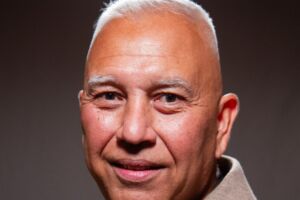
This weekend, Mark Carney will reach one year as prime minister of Canada, but the community is still waiting for a meaningful shift when it comes to nation-to-nation relations, according to Mohawk Council of Kahnawake (MCK) grand chief Cody Diabo.
“I think it’s more or less the same. It’s more about the personal connections you make with different ministers that help push certain things,” said Diabo.
“I have a really good relationship with the CIRNAC (Crown-Indigenous Relations and Northern Affairs) minister, but that’s pretty much it,” he said. “As a whole, I still find Mark Carney’s approach, is more about, he’s a Conservative dressed in red.”
Carney took the helm of the Canadian government from the previous prime minister, Justin Trudeau, on March 14, 2025, at a time when the political landscape was dominated - as it still is - by coping with the US presidency of Donald Trump, whose mercurial approach to tariffs and annexation threats have continued unabated.
Some of Carney’s measures in this regard, such as Bill C-5, which seeks to unify the Canadian economy, have incensed First Nations, who have said the legislation heightens the risk of projects such as resource extraction being foisted on communities without their consent or partnership.

“The relationship itself, between us and Canada, is still sort of status quo,” Diabo said. “We had the concerns with Bill C-5 that he’s rushed through. We’re still dealing with some of these effects.”
Following Carney’s elevation to prime minister after winning the leadership of the Liberal Party, an election was called for April 28, which Carney’s Liberals won, coming up just shy of a majority. Since then, floor crossings from other parties have edged them ever closer to that threshold.
Most recently, member of parliament (MP) for Nunavut, Lori Idlout, who is Inuk, switched from the NDP to the Liberals, giving them 170 seats, just two short of a majority government. Meanwhile, there are three by-elections underway, creating an opening for the Liberals to reach majority status.
“It’s still a little early to tell. A year into his mandate time, we’ll see. He’s also in a minority government, so it’s very difficult for him to get things done. Although, seeing a lot of the floor crossings, he might be on the verge of a majority, and then we’ll really see what his true intentions are,” said Diabo.
One thing that has frustrated Diabo, however, is the prime minister’s inaccessibility. Diabo was among a group of chiefs who walked out of an Assembly of First Nations (AFN) meeting with Carney last July, in part because they felt there was no opportunity for meaningful dialogue, due to limited time for questions.

There has also been scant response to MCK letters to the prime minister, Diabo said. The MCK is still lobbying for a meeting with the prime minister to bring concerns to him directly.
“We demand that we have an actual face-to-face meeting, or even virtual,” said Diabo.
“He can fly all over the world. There’s no harm for him to open up a computer and have a virtual call while he’s in transit.”
The by-elections in Scarborough Southwest, University-Rosedale, and Terrebonne - initially a one-vote victory for the Liberals that was successfully challenged by the Bloc Quebecois - will be held April 13.
Sign up for email updates from The Eastern Door
Marcus Bankuti, Local Journalism Initiative Reporter