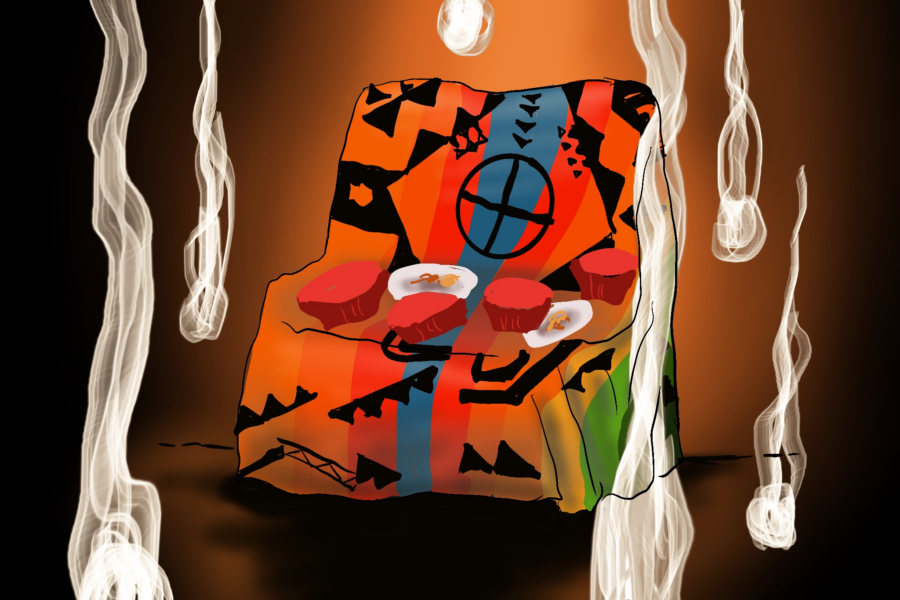
Tariff ping pong
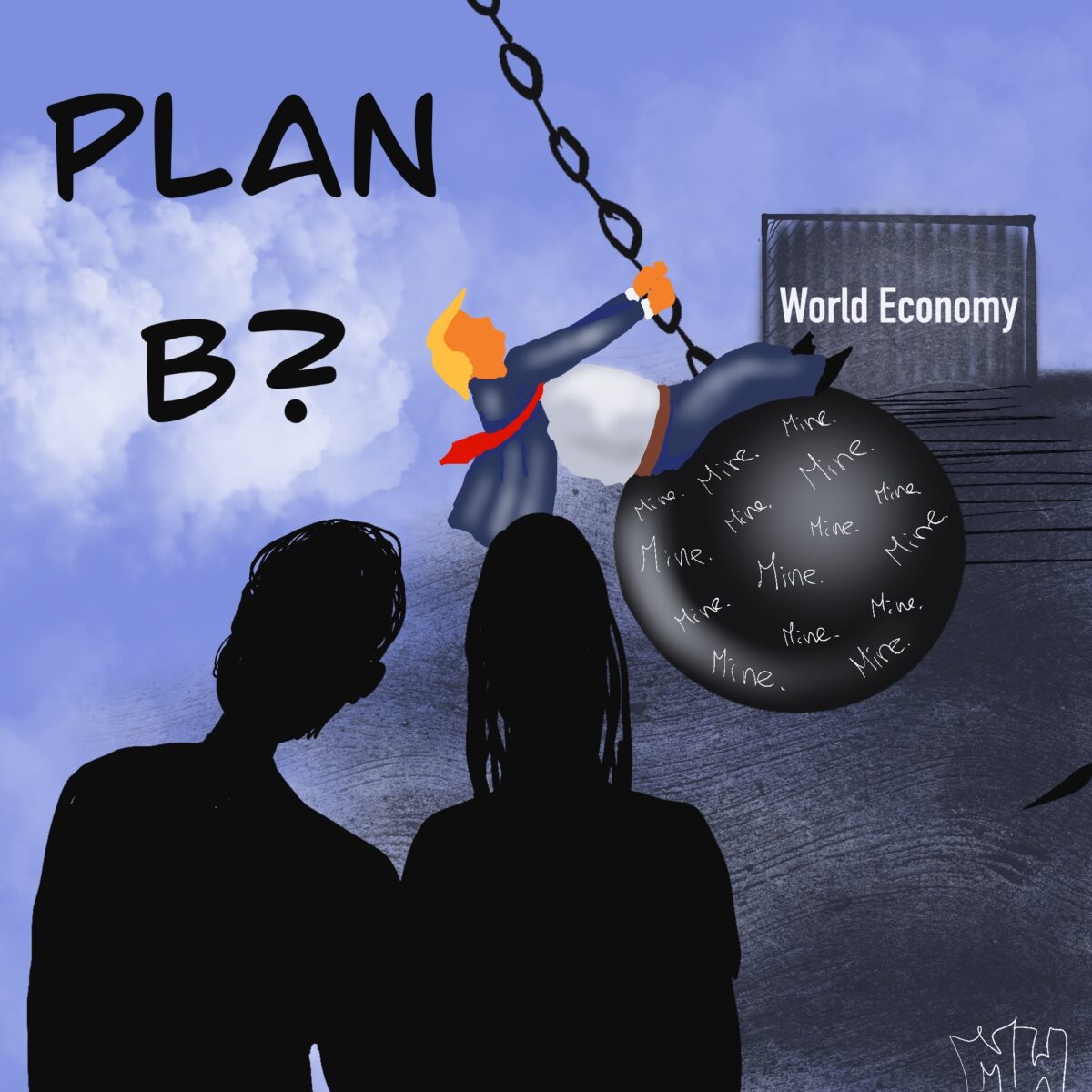
Two behemoths are duking it out, and as usual neither one is paying any mind to the Indigenous nations whose land they’re on, nor to the fact these nations don’t recognize the legitimacy of an imaginary line imposed on Turtle Island by colonial powers.
But here we are.
American politics, it’s a bore, and so is the trade war, but unfortunately this petty squabbling - entirely concocted, we should say, by the whims of the US president - has real consequences for First Nations working hard to assert their sovereignty, including economic sovereignty.
On the Canadian side, today we meet the new boss, same as the old boss (in the immortal words of The Who), with Mark Carney replacing Justin Trudeau as prime minister. Hopefully he can confront this issue, which is the US’s fault, while honestly engaging and supporting Indigenous communities.
Let’s face it, the “Team Canada” approach has taken for granted the support of First Nations, who have their own interests to protect, even if Trump’s 51st state rabble-rousing is still offensive to many.
On the American side, well, we all know what’s happening there. Trump is doing his best to remind us every day he is a very unstable non-genius, even if he literally says the opposite.
If you didn’t know what a tariff was last year, you probably do in 2025, but in case you need a little refresher before we get too deep, it’s a tax paid on imports, usually applied to certain kinds of products. It’s paid by the importer, whose inflated costs then make goods more expensive for the consumer.
That means not just complete products but the components they’re made of, and even the electricity that powers the plants.

Trump has upended trade by demanding across-the-board tariffs on Canadian products, an unprecedented and economically damaging move, for both countries.
The uncertainty has been hard to take, since that’s about the worst thing possible for business investment, and uncertainty is the name of the game. First tariffs were going into effect on February 1, then Trump backed out at the last minute. Then when Canada fought back with tariffs of its own, Trump retreated.
Then he announced steel and aluminum tariffs, which did come to pass, but they were going to be 50 percent and ended up being 25 percent.
The tariff-on-everything came back around and was put into effect on March 4, but two days later was scaled back. Now the stock market is tanking because nobody knows what to expect from day-to-day.
The story goes on but we won’t bore you.
With the story changing every day, we don’t have many answers, but we do have many questions.
Fortunately, we’re told the new Kahnawà:ke Cultural Arts Center is far enough into construction that it’s mostly immune, but what will happen to the Hertel project, the much-vaunted collaboration between Kahnawake and Hydro Quebec? Kahnawake has a 10 percent stake in that $345 million project, which is expected to generate revenues for the next 40 years.
But will there be any buyer for the electricity it delivers if that electricity suddenly costs 25 percent more than expected? What’s 10 percent of nothing?


Our requests to Hydro Quebec on the issue have yielded only vague, corporate replies that don’t say much. Honestly, we doubt the Mohawk Council of Kahnawake (MCK) has any more clarity than we do.
We do know MCK grand chief Cody Diabo seems worried about the tariffs, explaining he was busy working on following up on the recent tariff announcements.
He’s not the only First Nations politician who is worried. The Assembly of First Nations (AFN) has issued multiple press release on the subject.
It’s no surprise. After all, Canada boasts of plentiful natural resources that the US depends on. But who are the stewards of this land? Onkwehón:we, of course, who are once again sidelined as the true title holders of Turtle Island.
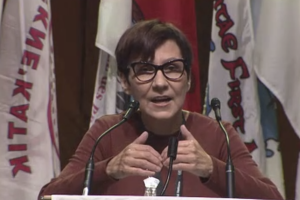
AFN national chief Cindy Woodhouse Nepinak has demanded a seat at the table for First Nations, slamming the government for locking Indigenous communities out of discussions pertaining to treaty rights.
After all, she points out, First Nations have a right to self-determination.
Indeed, now more than ever, Canadian institutions everywhere need to look in the mirror and ask how they are working to mitigate the harms to Onkwehón:we their businesses were built on, and that means facilitating Indigenous sovereignty the best way companies can, with their dollar.
That means more than just naming an Indigenous person to the company’s board of directors, it means equity initiatives from top to bottom, which benefits companies, and it means supporting Indigenous-led initiatives and real partnerships.
Sign up for email updates from The Eastern Door
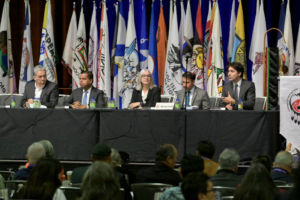
This brings us back around to Hydro Quebec, which offered up its president and CEO, Michael Sabia, to be a key speaker at this week’s major “economic reconciliation” summit in Tiohtià:ke.
He brought up the tariffs within seconds of opening his speech, expressing worry Indigenous construction, retail, manufacturing, and natural resources could all be impacted, affecting tons of jobs.
He said Hydro Quebec has an obligation to address this.
That’s certain. Hydro Quebec has a dirty history and making that right doesn’t begin and end with Hertel, which must find a way forward despite the trade war, so we hope Sabia will continue, as he pledges, to prioritize Indigenous partnerships.
And this is to the benefit of institutions like Hydro Quebec, as First Nations have much to offer and bring to the table, not to mention the inherent rights that come into play with all manner of projects.
And the “Buy Canadian” crowd? They should be looking to pour into the Kahnawà:ke Cultural Arts Center when those doors open, ready to boost Indigenous tourism and learn about the true history of this country instead of treating First Nations as an afterthought when so much is at stake.
TED Staff