Plans tabled for long-term reform
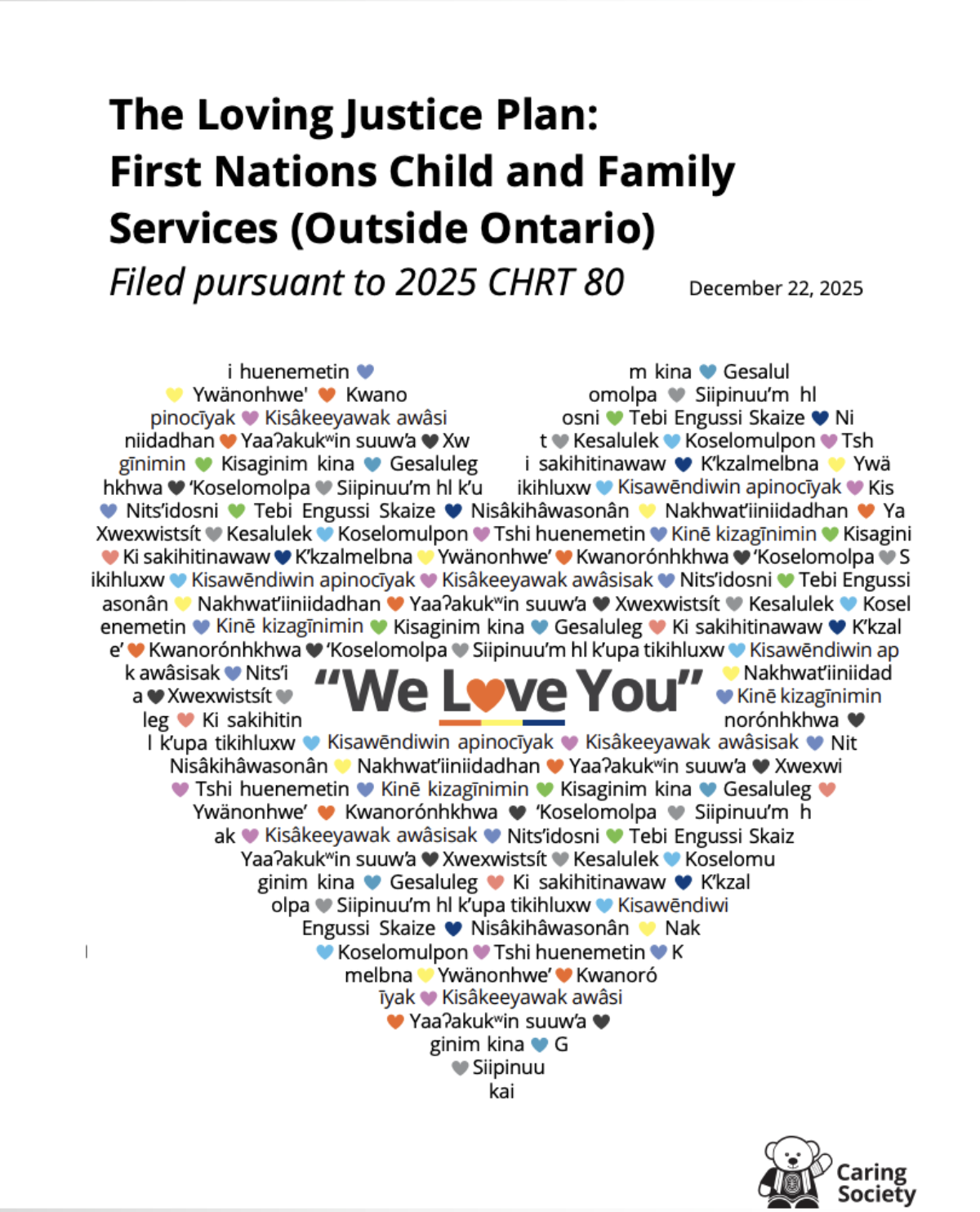
Two plans, one compiled by First Nations advocates and the other by the federal government, have been filed with the Canadian Human Rights Tribunal (CHRT), each proposing paths forward for the long-term reform of First Nations Child and Family Services.
The plans were tabled in late December, with the First Nations Child and Family Caring Society of Canada (Caring Society) releasing “The Loving Justice National Plan” with support from the Assembly of First Nations (AFN) and the National Children’s Chiefs Commission (NCCC). The report is more than 100 pages long and features the results of consultations with communities and First Nations advocates from across Turtle Island, who contributed their thoughts about how to meaningfully reform the system.
Cindy Blackstock, executive director of the Caring Society, said that it was a challenge to consult with so many different First Nations groups within a short time frame – the plan was compiled in just four months.
“I think it really demonstrates the love that First Nations folks have for their kids, that people just organized and there were over 100 submissions that came in,” Blackstock said. “We relied on those really heavily to inform the Loving Justice plan to end Canada’s discrimination.”
The Loving Justice plan focuses on themes like accountability and transparency, featuring proposed measures for enforcement of the plan – those consulted expressed distrust of Canada’s ability to voluntarily end discrimination in the Child and Family Services system, and therefore a need for oversight of the implementation of any long-term reform plan was stressed.

Proposed solutions within the plan include an alternative dispute resolution mechanism that is “grounded in First Nations law and legal traditions” and “built on an expert-informed rights-based design with built-in non-discrimination assessments and protections from retaliation.”
“This has to safeguard multiple generations of kids from Canada’s discrimination. We’ve got to stop the cycle of Canada hurting generation after generation,” Blackstock said. “Whatever is agreed to on minimum standards needs to be enforceable against Canada, because people have seen Canada make commitments in the past and then break them, and the damage is then done to children. A real key piece is holding Canada accountable.”
While the Loving Justice plan advocates for national minimum standards applied to Child and Family Services, Canada’s proposed national plan prioritizes region-specific agreements with local reform – the plan is for regions outside of Ontario, because the federal government has already negotiated a separate agreement with the Chiefs of Ontario.
It features a seven-year funding commitment of $27 billion for long-term reform of Child and Family Services starting in April 2027, as well as a commitment of $4.4 billion annually once that commitment ends.
In contrast, the Loving Justice plan doesn’t put a single national price tag on how much funding reform would require – there is no proposed cap for funding, and instead the focus is on funding being needs-based and adaptable to the realities of each community.

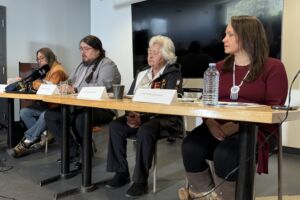
“We remain committed to working with First Nations partners, including the First Nations Child and Family Caring Society, to advance long-term reform to child and family services,” Indigenous services minister Mandy Gull-Masty told The Eastern Door in a statement. “This plan moves us forward with sustainable funding and a shared focus on strengthening families and ensuring First Nations children can grow up safely connected to their families, cultures, and communities.”
Canada’s plan funnels more than $35.5 billion to long-term reform, less than the $47.8 billion agreement that the AFN had rejected back in October 2024 from the Trudeau government. Back then, chiefs said there hadn’t been enough consultation with First Nations – though this plan includes less funding, the new plan’s inclusion of the $4.4 billion ongoing annual funding wasn’t featured in the 2024 proposal.
Blackstock said she remains skeptical about the funding commitments from Canada, and that the Caring Society is still analysing the numbers put forward by the federal government to determine whether the amounts would truly be enough to enact long-term change as well as cover operational costs within Child and Family services.
She added that while it’s positive to see an Indigenous person leading the Indigenous Services portfolio – Gull-Masty is the first Indigenous person to hold the office – she’s still waiting to see whether Canada will be able to offer meaningful change once a plan is approved by the CHRT.
“I wish the minister the most success in being able to eliminate Canada’s discrimination, but we haven’t seen it so far,” Blackstock said. “We’re dealing with something very sacred here, which is children.”
Sign up for email updates from The Eastern Door
The plans will now be reviewed before next steps are determined.
“(Indigenous Services Canada) have significant power and influence, they have the solutions at their fingertips to make thousands of children’s lives better, and to me, that solution is all mapped out in the Loving Justice plan,” Blackstock said. “It’s endorsed by the leadership, it came from their direction, and so I’ll be really interested to see if Canada actually implements it.”