Symposium comes to McGill
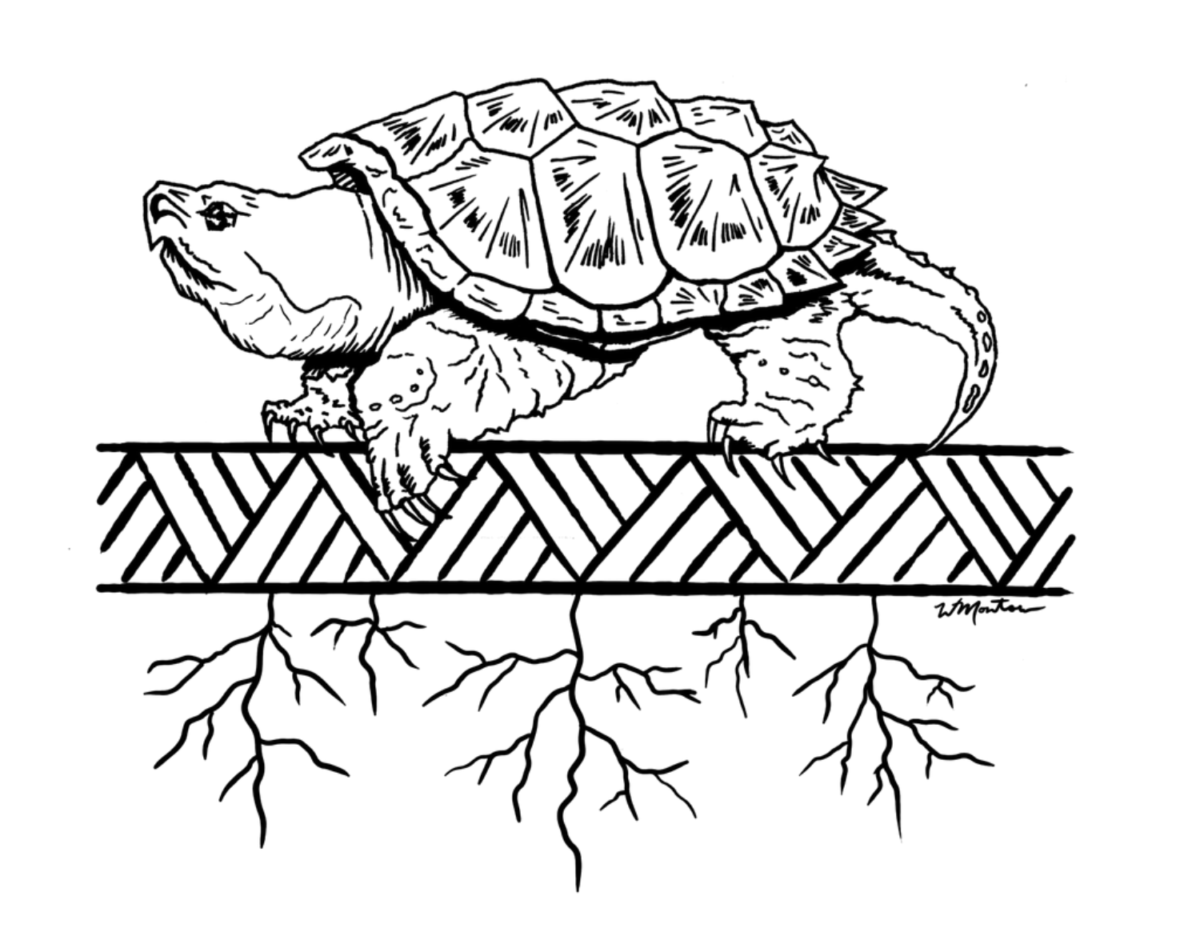
The artwork for the “Tsitewatá:ti: Let Us Speak Again” symposium was designed by Kahnawake’s own Wakenhnhiióhstha Montour.
Organizers say collaboration is at the heart of an upcoming language symposium at McGill University, where Onkwehón:we from around the world will come together to share their experiences and goals in the field of language revitalization.
“This is specifically targeted at bringing language revitalization practitioners of very different backgrounds and very different communities together into the same space to share ideas about what works for all of our communities,” said Arihwisaks Colin Benedict, who is Kanien’kehá:ka from Akwesasne.
Benedict is a master’s student in McGill’s Indigenous Language Revitalization program who focuses on pedagogical approaches and curriculum design to further the long-term goal of improved intergenerational transmission of Kanien’kéha in Akwesasne over the next 30 years.
He’s been working on organizing the “Tsitewatá:ti: Let Us Speak Again” symposium since the fall of last year, alongside Mia Fischlin, who is Inuvialuk/Dene/settler, Caleb Moses who is Māori, Noelani Arista who is Hawaiian, and Zoe Regnier, who has heritage from Akwesasne.

The symposium is set to take place over two days on April 23 and 24 in the Student’s Society of McGill University (SSMU) ballroom and will feature panel discussions on a range of topics, from Indigenous Languages and Dictionaries to Translation in Media and Storytelling.
“We want language practitioners from local communities to be able to form connections with people from different places, see how they approach language revitalization and say, ‘Okay, this is what they’re out doing in Hawaii, this is what they’re doing in New Zealand, this is an Ojibwe context,’” Benedict said.
“We want them to think ‘What can we do here in our own communities to further bolster our own language revitalization efforts?’ and collectively show each other what works and doesn’t work so we can come away a little bit wiser.”
The design for the event was illustrated by Wakenhnhiióhstha Montour, from Kahnawake, and features a turtle atop a braid edged with tree roots (photo at right).
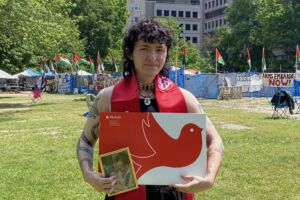
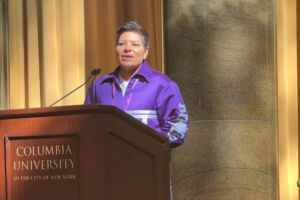
“As people, we Kanien’kehá:ka use these symbols to tell a story from top down. I like to honour our culture and ancestors in this way, but add in my own style,” Montour said. “I wanted to create something that blends raw and natural illustration with Kanien’kehá:ka and Haudenosaunee symbolic storytelling.”
Kahnawake’s own Kahtehrón:ni Stacey will also be taking part in a panel on the first day of the symposium, where she’ll be discussing language policy and planning.
The panel will be moderated by Benedict and will also feature Brooke Mosay Gonzales, who is Ojibwe, and Tehota’kerá:ton Jeremy Green, who is from Tyendinaga. The group will cover short, medium, and long-term approaches to policy and planning in Indigenous language revitalization.
Part of the symposium will also include an Indigenous vendor space, which will be open to the public from 12 p.m. to 5 p.m. on Thursday, April 23.
Sign up for email updates from The Eastern Door
“I think having everybody in the same space, making those physical connections, going back to communities having had that face-to-face interaction with each other is extremely valuable,” Benedict said. “It’s one of the most important aspects of this conference alongside all the really valuable conversations that will come out of the panels themselves.”
Registration to attend the conference can be found on the McGill Indigenous Studies Program Facebook page.