How Kanien’kéha shapes lives

Courtesy Kahontóktha Beauvais
For years, Kanien’kéha was something Kahontóktha Beauvais heard around her but never fully understood.
Her father, grandmother, and members of her family spoke it fluently in conversation that she could barely piece together.
“I didn’t know what I wanted to do,” said Beauvais. “I didn’t get a chance to experience college or university because I got pregnant so early.”
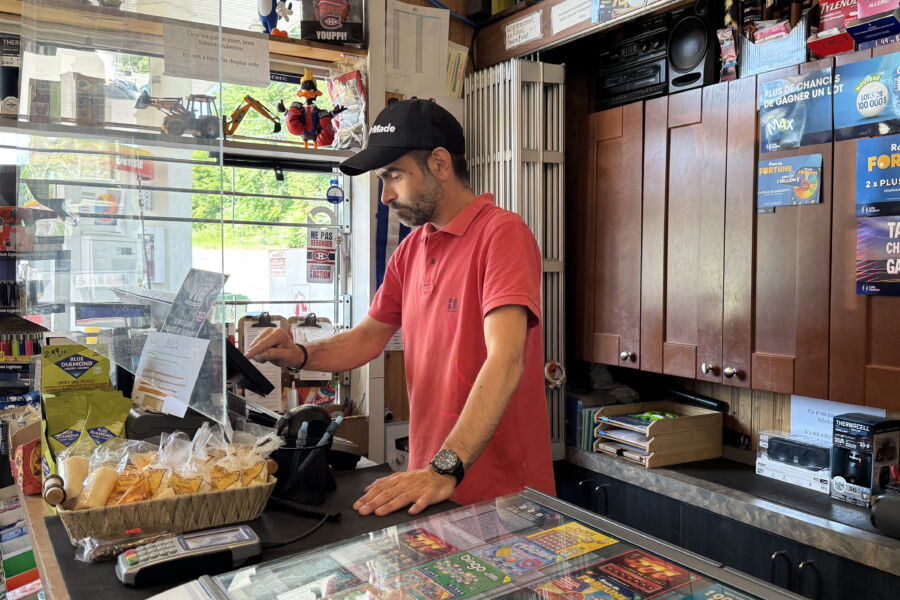
After becoming a mother in her late teens, Beauvais put school aside and worked at Mohawk Gas Bar.
Then a customer changed everything.
Wenn’tiio Will Gareau, language teacher at the Tsi Ronterihwanónhnha ne Kanien’kéha Language and Cultural Center, walked into the gas station and began speaking in Kanien’kéha to Beauvais, who knew a little but could hardly understand.
“He told me about the new language program coming up, and at first I just said I’d think about it to keep the conversation going, but then I really thought about it,” said Beauvais.
The Ratiwennenhá:wi Kanien’kéha language immersion program she entered demanded commitment and a strong support base to balance schoolwork and personal life.
For Beauvais, those demands intensified quickly, as months after starting the program, she learned she was pregnant with her second child.
“I was like, ‘Oh my God, and I going to be able to do this?’” said Beauvais. “I had a one-and-a-half-year-old and I was pregnant.”

But supported by instructors, classmates, and family, Beauvais continued attending classes throughout her pregnancy and returned to school only months after giving birth.
“In the three years she was doing it, she had to work extra hard,” said Kawisaienhne Albany, teachers’ aide and curriculum developer at the language school.
Despite the demands of raising two younger children, Beauvais remained committed, Albany said.
“She was on time every day, working hard and trying to speak the language,” said Albany.
Beauvais shared a moment that motivated her to continue in the program.
She had a dream that her late tóta came to her and spoke in Kanien’kéha.
“She said, ‘You can do it. I love you,’” said Beauvais. “At the time, I didn’t know what it meant.”
But then months later, while practicing in class, Beauvais learned the translation.
“I wanted to burst into tears,” she said. “That became my motivation to keep going.”
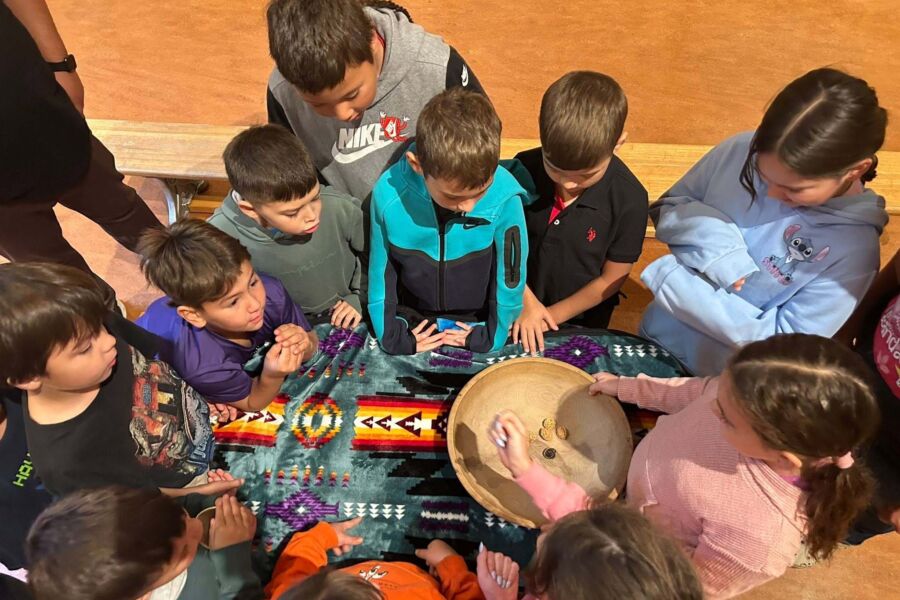
Today, Beauvais teaches Kanien’kéha to children at the Tsi Rontswa’ta:khwa Early Childhood Center while completing her bachelor’s degree at McGill. Her students sing songs in the language, proudly teach new words to their parents, carrying home seeds of the language many feared at one point could disappear.




“The kids are retaining a lot,” said Beauvais. “They go home singing songs.”
“Before, we had almost nobody speaking the language to them,” said Moe Nelson, Beauvais’ cousin.
“Now they’re catching on really young. They’re singing and talking and learning the ways of the language.”
Beauvais’ goal working at the daycare is to prepare children with foundational vocabulary, colours, numbers, instructions, and basic conversations.
“I want them ready for the next step,” said Beauvais. “So, teachers can spend more time teaching them bigger things instead of just the basics.”
“The language teaches you so much,” said Beauvais. “It teaches you about life, about how our people thought and how they spoke to each other.”
Beauvais noted that Kanien’kéha contains no profanity; something she believes reflects the values of respect embedded in the language.
“It was almost taken away from us,” said Beauvais. “My dad went through so much when he went to school. The language was beaten out of him.”
Beauvais shared that her father still struggles emotionally when speaking Kanien’kéha because of those experiences.
“He gets scared,” said Beauvais. “He shuts down right away. I’m trying to push him to keep speaking, I tell him, ‘It’s okay now, this is who we are, this is our language.’
Sign up for email updates from The Eastern Door
“It’s not going to die with us,” said Beauvais. “We’re going to make more first language speakers through our kids.”
For Beauvais, making the decision to enroll in the language program created opportunities she never expected.
“I always wanted to be a teacher,” said Beauvais. “I just didn’t know I wanted to be a language teacher until I started learning.”
Now Beauvais hopes to finish her degree and possibly one day run the daycare herself.
“I don’t plan on stopping,” said Beauvais.
Fern Marmont, Local Journalism Initiative Reporter