Oblates agree to transfer personnel records
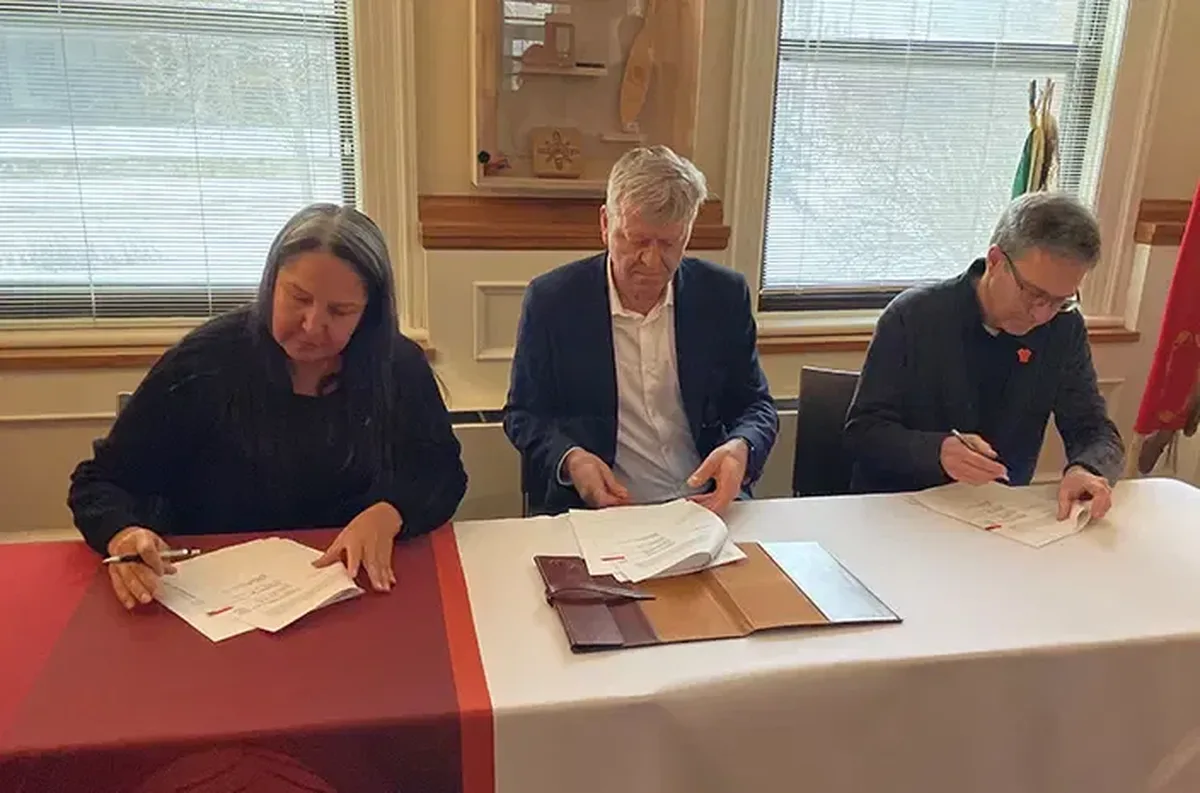
An agreement billed as the first of its kind promises to open up the personnel records of hundreds of members of the Oblates of OMI Lacombe Canada who worked in dozens of residential schools, files that could assist communities in seeking truth and identifying abusers.
The transfer of records to the National Centre for Truth and Reconciliation (NCTR) is set to take place over a year, under the supervision of an archivist paid for by the Oblates, with the NCTR pledging to make the records accessible to the “fullest extent that federal and provincial privacy laws allow.” Information such as portions relating to third parties or health will be redacted.
The agreement follows three years of discussions between the Oblates and the NCTR following the discovery of unmarked graves at the Kamloops Indian Residential School, which was administrated by the religious group. The result is the transfer of personnel records of members who died at least two years ago; the previous standard was 50 years.
“My ultimate hope is it gives answers to the people who were impacted by the schools, directly or indirectly, and that a fuller history of the residential schools might be known by more and more people,” said father Ken Thorson, provincial leader for the Oblates of OMI Lacombe. “If we can contribute to that, it will have been more than worth the work that has gone into this by ourselves and by the NCTR.”
According to NCTR head of archives and senior research director Raymond Frogner, in the coming weeks the NCTR is planning to post the names of more than 700 Oblates and the residential schools at which they worked on the centre’s website. This information was compiled over two years of research, he said, during which discussions with the Oblates were ongoing.
“I honestly believe this is a serious step forward because this is the first time we’ve done it,” said Frogner, adding the centre is hoping to enact similar agreements with other religious orders to help get around the restrictive privacy legislation that governs access to NCTR records.
The information contained in personnel records is highly sought after by groups that are working to uncover the truth about residential schools.

“Every community that is doing searches for the missing and disappeared children, they’re combing through these (other) archival records, and they’re creating lists of names of children and where they came from, and they’re extracting names they can find in letters and documents to put together a personnel list,” said Kimberly Murray, who is wrapping up her mandate this month as Independent Special Interlocutor for Missing Children and Unmarked Graves and Burial Sites associated with Indian Residential Schools.
However, there are many hurdles to compiling a comprehensive list of personnel using these methods.
“They were kids,” said Murray. “They had names for individuals. They didn’t necessarily know their real name, or they just knew them as the gardener, or they had a name that they called the gardener who abused everyone. So the personnel records is something the TRC (Truth and Reconciliation Commission) fought for and that churches kept saying they were not going to deliver the personnel records for the TRC.”
The promised availability of the Oblates’ personnel records contrasts with many of the other millions of records in the hands of the NCTR.
The final report published by Murray’s office in October contains a chapter advocating for the decolonization of archives, noting that churches have highlighted that they are not subject to the privacy legislation that apply to other kinds of organizations. This means records in the hands of the NCTR – housed at the University of Manitoba and subject to Manitoba privacy laws – can be harder to access than if they are obtained directly from churches, according to Murray.
This leads to what Murray called a shell game, in which churches can use the NCTR to, in effect, hide records while creating an illusion of transparency.
“Everywhere I went, people were complaining about their access to the records at the NCTR,” said Murray, who added that the Oblates and similar groups should share records directly with communities.


Thorson suggested the Oblates believe that managing access to the records is now the responsibility of the NCTR, however.
“They’re a third party that ensures transparency, that ensures the documents that have been transferred for the sake of preserving the history of the schools, that they’re the ones that are making decisions about how it is made available to whom,” Thorson said.
Frogner objected to the idea that personnel records are being concealed through the transfer.
“They’re not hiding behind us at all,” said Frogner, who added that the agreement has been constructed so that the Oblates are opening their files in a way that will prevent some of the privacy legislation hurdles that apply to the records provided by the TRC.
“This is my effort to try and get around it,” he said.
“I got here in 2016, and I’m just trying to get around the legislation that was in place when I got here to open the records as much as possible.”
Frogner noted the importance of the personnel files as a means of gathering clues as to which priests and other members of the Oblates may have been abusers. He and Murray both pointed out that it was common for guilty priests to be shuffled around different assignments.
Sign up for email updates from The Eastern Door
“One of the things you’ll notice is some priests worked at one school their entire career and they don’t have any problems in their history,” said Frogner. “Other priests seem to bounce around four or five different [schools], and these are the ones that seem to have had issues with crimes against children.”
Reports from superiors and job reviews that may be in the personnel files can also shed light on what happened, even as this means reading between the lines, Frogner said.
“This is another piece of the puzzle. You’re not going to find always a smoking gun, but it will help you in your research to understand what happened,” he said.
The Eastern Door requested a copy of the agreement from the NCTR but did not receive a response by deadline.
Marcus Bankuti, Local Journalism Initiative Reporter