Tribunal hears residential evidence
Marcus Bankuti The Eastern Door
For Sherlene Bomberry, a survivor of the longest-running residential school in Canada, this week’s hearings at the Permanent Peoples’ Tribunal in Montreal brought about mixed emotions.
“My body remembers,” Bomberry said. “Every time somebody spoke, I felt it in my body, I felt that I’d been through that.”
Bomberry, who is from Six Nations, was at the Mohawk Institute in Brantford, Ontario, in the 1960s. Around 15,000 children are believed to have been forced to attend the Mohawk Institute between 1828 and 1970, including many from Kahnawake and Kanesatake.
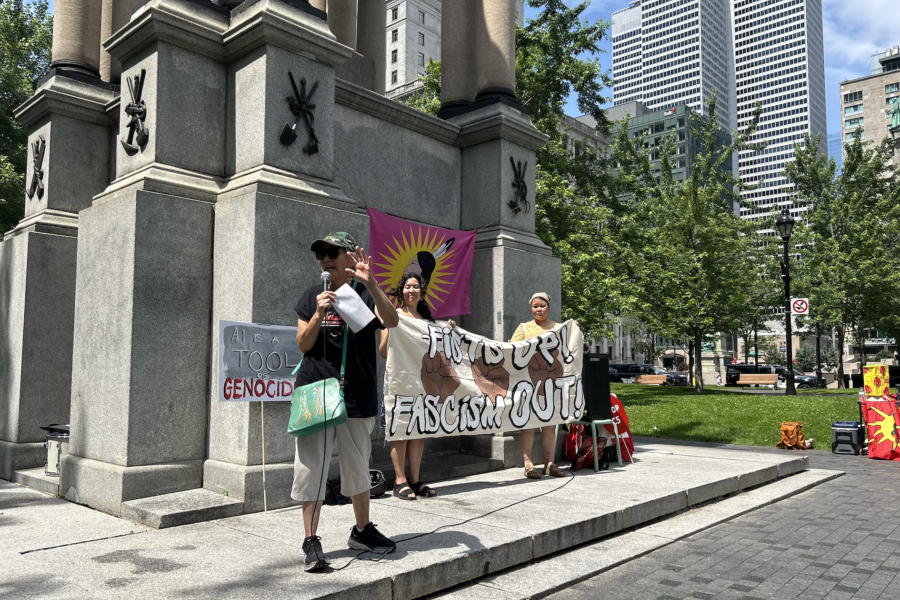
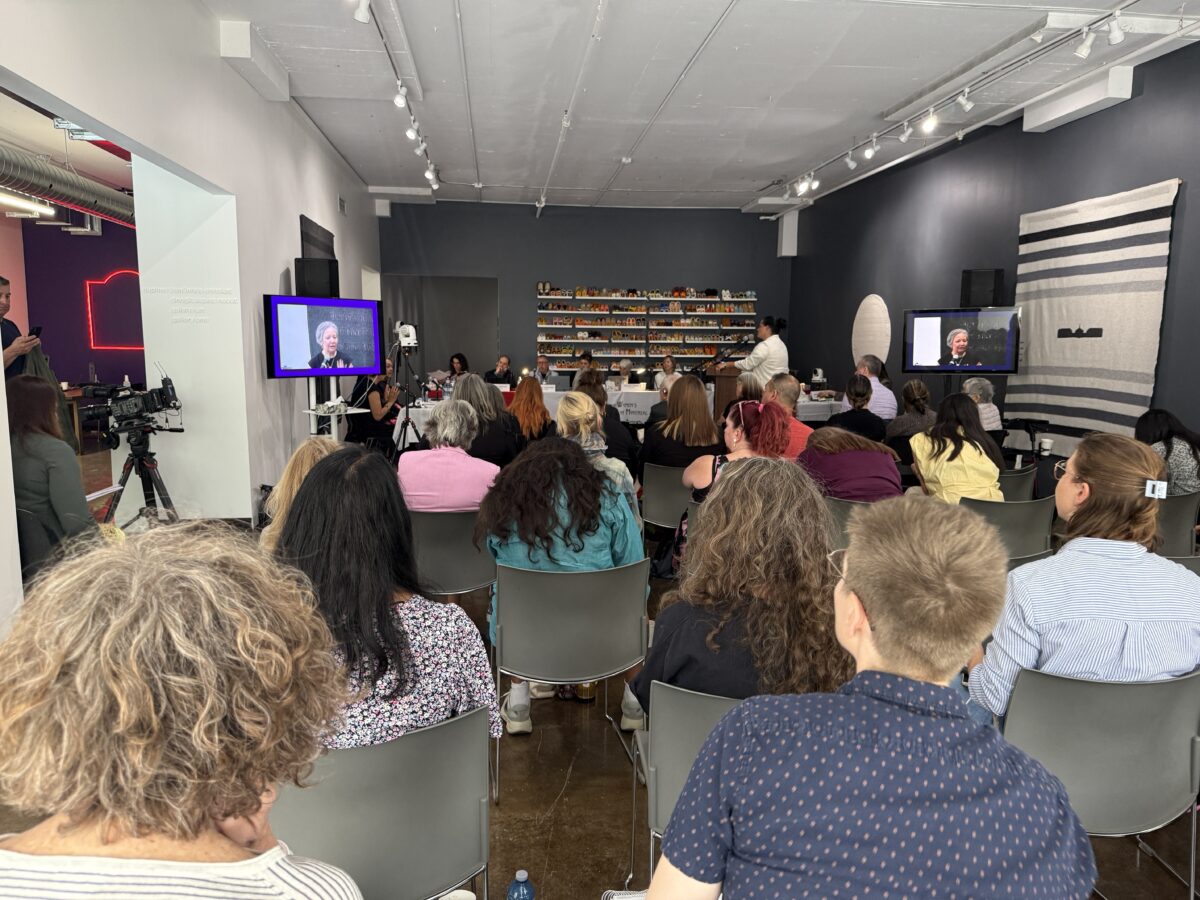
She was at the Permanent Peoples’ Tribunal this week to listen to survivors and other advocates give evidence about missing Indigenous children and unmarked burials associated with residential schools to a panel of seven international judges from the Permanent Peoples’ Tribunal.
The Tribunal is an international organization founded in Italy in 1979 that rules on serious crimes related to human rights. The Tribunal holds sessions worldwide to investigate human rights violations with the aim of “ensuring the participation of peoples and social movements and creating a working agenda for human and peoples’ rights at the global level.”
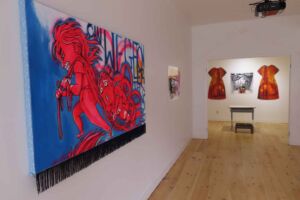
This week, a panel of judges from the Tribunal came to the daphne art centre in Montreal to investigate the residential school system and hear from survivors about the ongoing trauma they experience.
Those judges include Kanehsata’kehró:non Katsi’tsakwas Ellen Gabriel, as well as judges from the United States, New Zealand, Spain, and the United Kingdom.
The Tribunal was requested to visit Canada by the Native Women’s Shelter of Montreal, which will also hold a five-day recovery gathering next week.

The organization has been supported by other advocacy organizations, including the Survivors’ Secretariat, who research the Mohawk Institute and support survivors. They also gave evidence in front of Tribunal judges this week.
“Being a part of this Tribunal is critically important to the survivors. For them, it’s a way of them saying ‘We’ve done absolutely everything we can to let the world know what happened here,’” said Survivors’ Secretariat lead Laura Arndt.
She said it’s been a welcome opportunity to have frank discussions about not only the harm that was experienced during the time that residential schools operated in Canada, but also the ongoing trauma that survivors and communities face, including generational trauma.
“We’re living in one of the wealthiest countries in the world, a country known for human rights, and yet here we sit talking about a legacy that’s over 200 years and in many ways systemically still happening through different services and systems,” she said.
The Secretariat prioritized making clear the role that federal legislation played in creating a “slow, methodical, and systemic genocide,” Arndt said.
“The mechanism (of the Tribunal) isn’t intended to be anything other than an independent insight into the realities of what happened, and then based on everything they hear, we can make informed decisions about where we go next, and that comes through their recommendations,” Arndt said. “The question will be whether Canada follows through on the recommendations.”
No federal government representation attended the Tribunal hearings this week, though Jacinthe Goulet, a spokesperson for the office of Crown-Indigenous Relations, said they are working to respond to the Calls to Action of the Truth and Reconciliation Commission of Canada.
“Residential schools are a shameful part of Canada’s colonial history whose painful legacy continues to be felt across the country today. The Government of Canada recognises the profound harms caused to Survivors, their families, and communities through the residential school system,” Goulet said via email.
“We will continue working with Indigenous partners to support education, commemoration, and community-led healing initiatives for Survivors, families, and future generations.”
For Arndt, the government’s absence in person was noted.
“It’s disappointing for survivors, because when they were in Indian residential school, they asked for help and none came. When they got moved into child welfare they asked again for help and told people about the abuse they were suffering, and no one came. And now they’re before the world, telling them, ‘This is our truth, this is our legacy,’ and nobody came,” Arndt said. “I think, if anything, based on the pattern of Canada’s behaviour, this would be what many would say is status quo.”
The former federally appointed special interlocutor for missing children and unmarked graves and burial sites associated with Indian Residential Schools, Kimberly Murray, was also in attendance at the Tribunal, and gave expert witness testimony as part of the hearings.
As special interlocutor, her mandate ran for two years, and saw Murray hold seven national gatherings and compile reports related to the experience of communities and survivors related to the residential school system.
She focused on sharing with the Tribunal governments what she calls a “settler amnesty” in Canada - a cultural impunity that prevents Canada from holding itself accountable for the legacy of residential schools.
For her, it was meaningful to share the evidence she had found during her tenure as special interlocutor with an international Tribunal.
“Survivors have done everything they can domestically, and now they’re turning to the international community,” she said.
Sign up for email updates from The Eastern Door
“Survivors have been saying these things for decades, and it’s time we get some of that external pressure put on, and I think this is a first step for that.”
An interim ruling will be made at the end of the hearings today, (Friday, May 29), with a full ruling expected on September 30, the National Day for Truth and Reconciliation.
Bomberry said that she will be awaiting the ruling and recommendations, and hopes that the testimony of survivors will be heard around the world following this week’s Tribunal hearings.
“I want people to understand. I want my kids, I want everyone to understand what we went through, I want people to understand our lived experiences,” she said. “My body is reliving the traumas, it’s tiring me out, but it’s a good thing. Everyone needs to understand why we’re doing this right now.”