Continuing the legacy at Ratiwennahní:rats
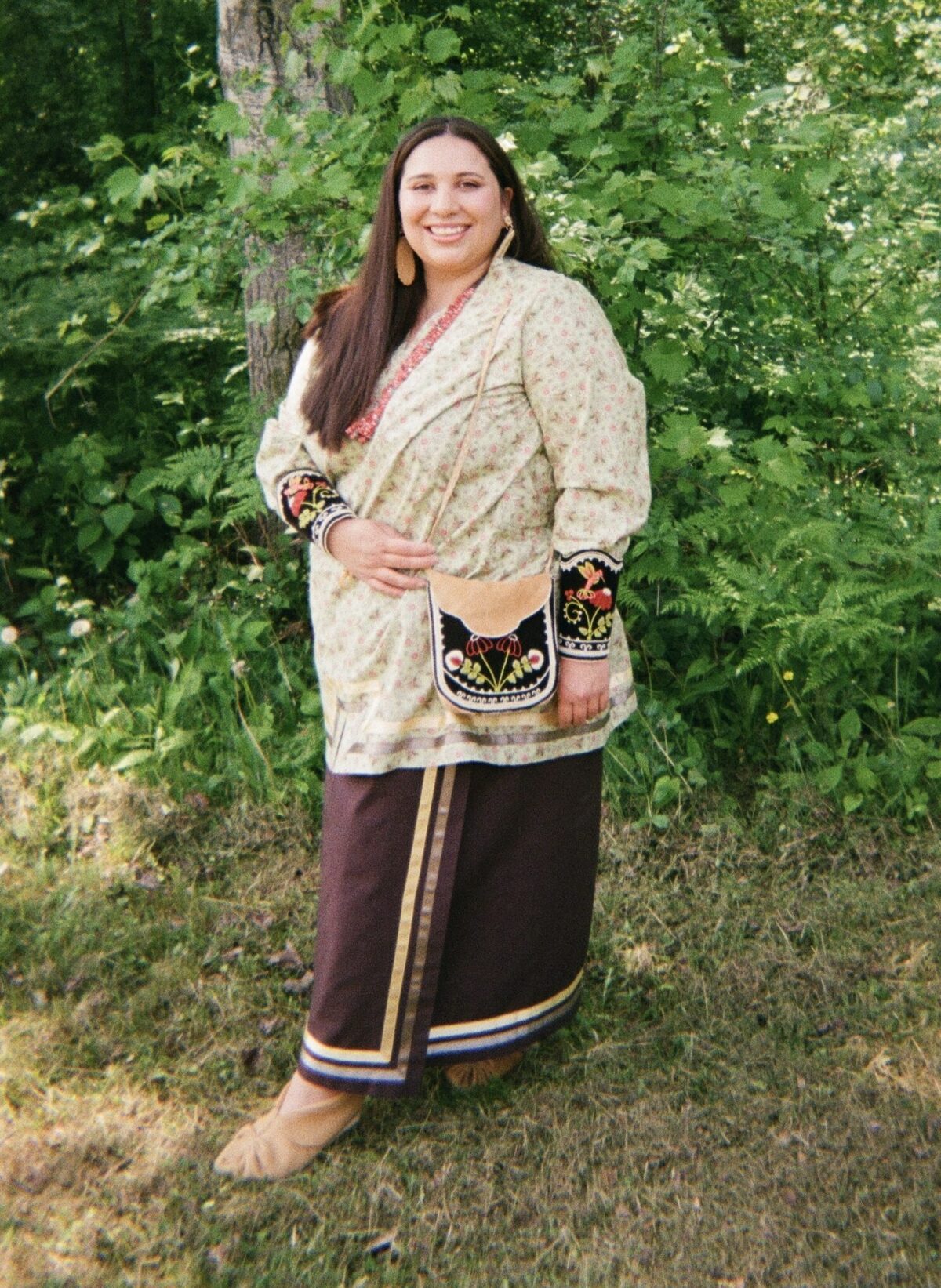
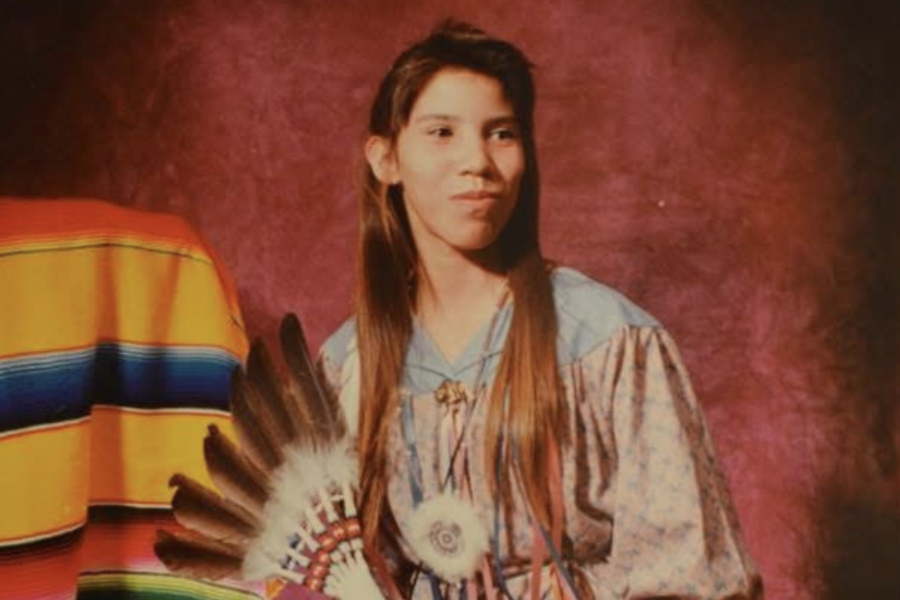
Ionhiarò:roks McComber at Ratiwennahní:rats graduation day. Courtesy Ionhiarò:roks McComber
The Kanien’kéha Ratiwennahní:rats Adult Immersion Program has always been in Ionhiarò:roks McComber’s blood. As a child, she remembers her mother, Holly Pinsonneault, spending spare moments studying, and later her sister, Tekawennanoron McComber, graduated from the program too.
“I have that good cultural foundation,” Ionhiarò:roks said. “Language was always on my mind, it was always there.”
Though Ionhiarò:roks grew up speaking Kanien’kéha with family members and in an immersion environment at Karonhianónhnha Tsi Ionterihwaienstáhkhwa during her elementary school years, she noticed a creeping insecurity related to her language abilities as she matured.
“I could feel my language skills waning over time, as you get older and you’re not using it, it just goes,” she said.
After graduating from Bishop’s University with an education degree, Ionhiarò:roks started working at Step By Step. She was supposed to continue there as a language and culture facilitator, but though she felt confident in her cultural knowledge, she had a nagging feeling that her language skills weren’t up to par.
“I ended up not doing it, but that insecurity of not having the language bothered me,” Ionhiarò:roks said.
Soon, applying for Kanien’kehá:ka Onkwawén:na Raotitióhkwa Language and Cultural Center (KOR)’s Ratiwennahní:rats program became less of a concept and more of a reality. After two years at Step by Step, she knew it was time.

“It was something that was always in the back of my mind that I always wanted to do, I just didn’t know when,” she said. “When the applications went out, my sister told me I should do it, and I was like, ‘You know what? Yeah. I’ll apply, and I’ll just see what happens.’”
It wasn’t long before KOR came calling with good news. Ionhiarò:roks had been accepted and would be continuing her family legacy at Ratiwennahní:rats.
Pinsonneault was delighted to find out that Ionhiarò:roks was taking such a major step in her language journey.
“I was over the moon, I was just so happy,” she said. “I’m so proud of her.”
Pinsonneault graduated from Ratiwennahní:rats in the early 2000s, when it was still a one-year program. She said a lot has changed since then.
“It’s a lot harder now than when I took it, now it’s structured so well so that everybody can learn, and everybody gets better. There’s a lot of grammar, a lot of rules, and you really have to commit yourself to education because it is work, it’s not easy,” she said.
“You have to commit to it, you have to study if you’re going to succeed.”



And commit to it Ionhiarò:roks did. Though she had some back-to-school jitters being back in the classroom, she thought about her own teacher training, and how much she’d been taught to encourage her students to speak up. She took her own advice and just started speaking.
“Coming from my teaching background, I know what it’s like to ask questions and then just have that silence, and have nobody talking,” she said. “I ended up answering the questions because I couldn’t take those silences with nobody talking, and I just carried that through the program. I thought ‘I’m just going to talk, it doesn’t matter if I mess up, because we’re here to learn, and that’s the whole point.’”
There were moments where the immersion environment made things hard, when Ionhiarò:roks was reaching for words to describe what she was trying to say that she didn’t yet have in the language. Still, she forged ahead.
“Sometimes there’s a fear of making mistakes, and that’s something you have to beat, because you can’t succeed if you don’t speak,” she said. “If you let that fear hold you back from speaking, it really hinders how much progress you make.”
Once the whole class was speaking, progress was noticeable. Ionhiarò:roks’ cohort was extremely close, spending hours outside of the classroom studying together, even playing board games in Kanien’kéha to extend the immersion environment.
“Even in our recesses and lunch breaks, we’d still hang out with each other. It’s nice to have those people to speak the language with, and it’s nice knowing that it doesn’t end there, it’s going to continue, and we’re going to keep speaking with each other for life,” she said.
This September, Ionhiarò:roks will be combining her passions for teaching and for Kanien’kéha at Karonhianónhnha Tsi Ionterihwaienstáhkhwa, where she’ll be starting as a kindergarten teacher.
Sign up for email updates from The Eastern Door
Pinsonneault, who is a grade four teacher at the school, is especially proud to know that Ionhiarò:roks will be a part of the language journey for the next generation of learners in Kahnawake.
“It’s so gratifying when you’re teaching a student in the language and they’re having a hard time, they’re having difficulties, and you sit with them, give them feedback, and all of a sudden that light goes on and there’s that sparkle of ‘Oh, I got it!’” she said.
“Teaching is difficult, but you get so much satisfaction from it.”
Ionhiarò:roks said that participating in Ratiwennahní:rats has been one of the most valuable experiences of her life, and she encourages everyone in the community to consider applying.
“Everything about this experience changes your life, it changes what you care about and what you see as important,” she said. “Learning Kanien’kéha becomes lifelong, it really becomes a part of your daily life.”