Decide first, consult later
Megan Kanerahtenha:wi Whyte The Eastern Door
When was the last time you called up Bayview, ordered a large pepperoni, and then turned to your partner and said, “Honey, what do you think about getting pizza tonight?”
Chances are you didn’t, since there’s no real choice there, but if that rings a bell, let’s at least keep this kind of strategy to the eternal dinner debate.
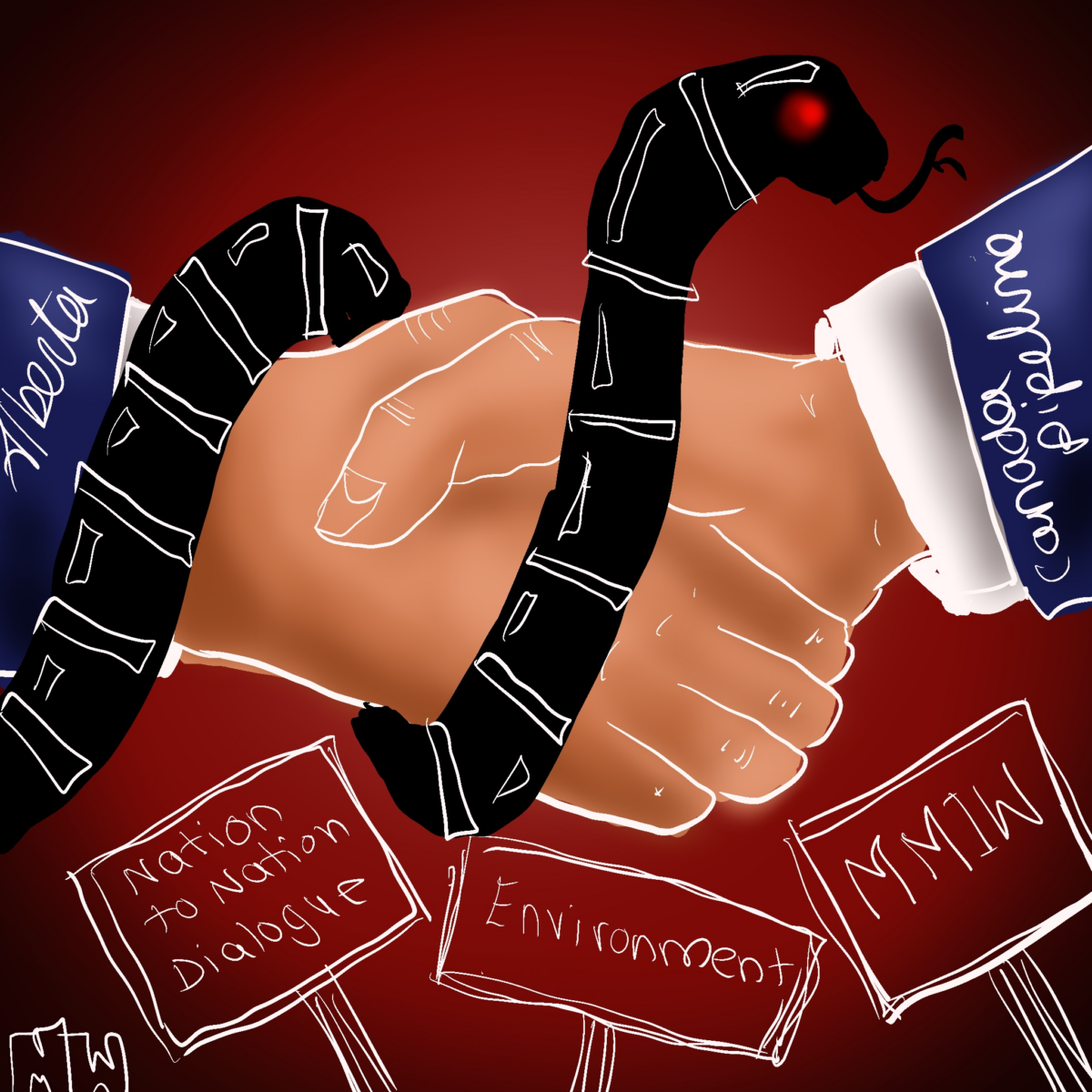
It’s certainly not the route to go when it comes to something as serious as a new pipeline to deliver bitumen, the dirtiest oil there is, to the west coast of Turtle Island. The thought that the ol’ “better to beg forgiveness than ask permission” thing is employed by the government when it needs to steamroll the fundamental rights of its own so-called partners is just maddening.
We don’t have to tell you this, but the Canadian government isn’t fooling anybody when it turns to Alberta and says, ‘hey, what do you think about announcing a new pipeline running through Indigenous territories to the other side of British Columbia,’ and then shows up to the Assembly of First Nations (AFN) the next week to pitch the project after it’s already established.
They certainly weren’t fooling the nations that comprise the AFN, with these communities taking the opportunity at the assembly in Ottawa this week to demand a withdrawal of the plan.
Who wants this, anyways? As it happens, this proposal has very few friends, besides those who stand to make a killing on it. The loyal constituents of the premier of Alberta? Even they booed it, since they already stenciled F*ck Carney on their cars, and that’s not cheap to remove.

Meanwhile, British Columbia isn’t liking the idea either that a plan was made without their consent for a new pipeline the whole width of the province. But we won’t waste your time talking about a bunch of folks arguing over what to do with the stolen land they occupy.
The main thing here is that this is a show we’ve all seen before: stomping all over Indigenous sovereignty to expedite environmental destruction in the name of the almighty dollar.
What we’re seeing is the same old playbook that we’ve seen on national, provincial, and regional scales since the government even saw a need to pretend like they were taking First Nations’ will into account.
After all, did Quebec bother to ask Kahnawake about the habitat of the spiny softshell turtle and copper redhorse in the Richelieu River, part of Kahnawake’s traditional territory, that the project threatened - not to mention the impact to the preservation of traditional practices?
Kahnawake had to drag the government to court to be heard.
And when the project was axed? Financial considerations, of course.




This situation with Alberta’s pipeline is just another example of how governments in Canada view consultations: it’s just a box to tick off, generally one at the bottom of the list.
This is exactly the kind of thing we were worried about when the Carney folks were running around bandying about phrases like “Building Canada strong.”
The fact is, the interests of Canada and the Indigenous peoples who were here first might sometimes align, but they usually don’t. And even when they do, like our shared need not to turn Mother Earth into a burning ball of fire, the voting public doesn’t seem to know it.
So a policy that aims to lift everyone together while appealing to the populist instinct of the masses, who truly believe this land is theirs despite all evidence to the contrary, is not a winning strategy for reconciliation.
The government might argue it has done its job, as far as the environment is concerned, by extracting some concessions from Alberta designed to ease carbon emissions. But look no further than Steven Guilbeault, the bona fide environmentalist who was environment minister until this deal was brokered over his opposition.
He is only the latest in a long line of Liberals who have been stained by trying to play a muddy game without getting dirty.
Sign up for email updates from The Eastern Door
Guilbeault learned that as far as leadership was concerned, his principles were for sale, and what else is new? Everything’s for sale. This is colonialism, after all.
Despite the fact this deal hadn’t been cleared with any First Nation, the memorandum of understanding between Canada and Alberta boasted that, if approved under the Building Canada Act, there’d be opportunities aplenty for Indigenous co-ownership and economic benefits.
But First Nations from coast to coast are sick of being used as props when the decisions that matter have already been made by someone else.
TED Staff