Teaching the real history

Megan Kanerahtenha:wi Whyte The Eastern Door
Anyone who has set foot in a non-Native school in this province - or even just seen the ignorant comments from some of Kahnawake’s neighbours rage-posting in traffic jams - knows that education about Indigenous issues in this country gets a big fat F-minus.
The education system in Canada has, first of all, been failing Indigenous students, who don’t recognize their own perspectives in the curriculum, but it has also failed to make sure non-Native kids understand the truth when it comes to the shameful history of this country.
That’s a well-known fact, of course, with the atrocity of residential schools not even discussed in public classrooms until very recently. Meanwhile, today’s white adults grew up with textbooks that squeezed hundreds of years of genocide, land theft, and broken promises into a few Eurocentric paragraphs.
Things are changing, even if much too slowly. The latest sign of the times is the news, reported by Radio-Canada, that Indigenous literature - a minimum of two texts - will become mandatory in French-language secondary and elementary programs next year, which is being billed as a first in Quebec education.
This is a step in the right direction (assuming the selected authors’ claim to Indigeneity runs deeper than their father’s brother’s nephew’s cousin’s former roommate, of course).
We’re not the only ones who are glad to hear about the change to the curriculum. Numerous Onkwehón:we authors have already lauded the move. We’re always in favour of inclusion, and while some teachers have already taken it upon themselves to include Indigenous literature in Quebec classrooms, that’s not enough.
We want to see how it pans out, of course. Are the teachers in Quebec’s French-language schools-at-large even equipped to competently teach these texts, especially the educators who weren’t savvy enough to be doing it already?

And a text is not necessarily a tome - even a poem or song will count, apparently. These forms of art also have tremendous cultural and educational value, of course, but only if teachers don’t treat the requirement as something to get out of the way in one period and still break early for recess.
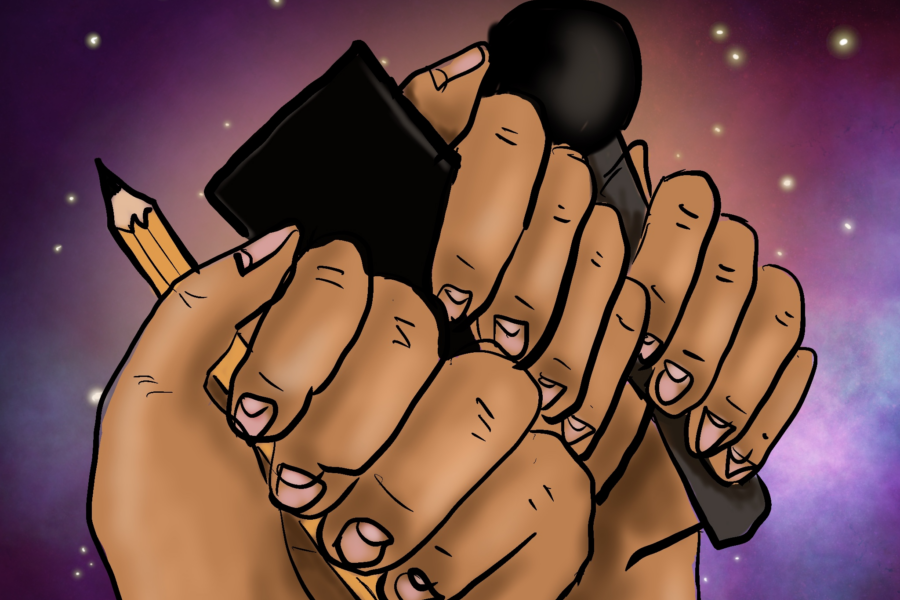
Greater inclusion of Indigenous writers, musicians, poets, filmmakers; there’s just no path forward without it. After all, Onkwehón:we are not a monolith, and there is no one single Indigenous perspective that any individual or nation can express.
Literature and other literary art forms are a great way to learn, because they can teach (or reach) readers and listeners on both an intellectual and emotional level, connecting specific insights or experiences with something broader, giving folks a chance to receive a sliver of perspective with which they might not have otherwise wrestled.
It also can’t be underestimated how important it is for Onkwehón:we students to recognize themselves in what they’re learning. Representation can never be underestimated.
Last year, the province’s auditor general put out a report calling out the province for watching Indigenous students’ success languish behind that of other groups two decades after recognizing there was a problem.
That’s owing to a number of systemic barriers (also known as systemic racism to anyone who is not the premier of Quebec), and adding a couple Indigenous texts won’t fix everything, but it won’t hurt either. Who would be motivated to learn in the confines of a syllabus they can’t relate to?
Ultimately, education should be about empowerment, and Indigenous people taking control of not only their own narratives, but their own education system, like here in Kahnawake, might be one of the most powerful tools there is in the fight for equity.
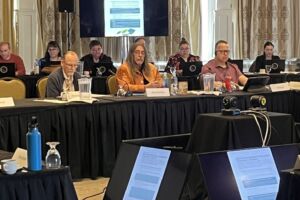



Just this past weekend, Indigenous educators from across Canada, including some from Kahnawake and Kanesatake, gathered in Winnipeg to connect, share, and learn about what Indigenous education means.
After all, as technology shifts, there are both opportunities and pitfalls for Indigenous teachers and learners.
How can VR be used to help students understand the history of residential schools? How can ChatGPT, when used improperly or relied upon as a crutch, rob students of developing their own voice as Onkwehón:we, or end up sanitizing their research so it parrots the whitewashed drivel polluting webpages from A to X?
Kahnawake even presented at the conference, sharing how Survival School has succeeded in tailoring education to students’ interests and needs, including practical, hands-on training, for those who might want to pursue a trade. That’s a great thing, too, because there is no one-size-fits-all when it comes to learning.
The cultivation and expression of one’s own voice, linked inextricably to identity, has always been one of the best assets in the quest for understanding, so there is no substitute for taking control of education, because education furnishes us with knowledge of ourselves and our own gifts.
But expression is also the ultimate weapon in the fight for minds, and as a battleground, this one is as high stakes as it gets. There is no change without understanding, and it’s long past time for the country to face up to harsh truths.
And while it may be the inclination of any parent to shield children from things that might be hard, and we can appreciate that there are age-appropriate ways to explain things, Kahnawake’s young ones certainly don’t have the option to live in ignorance. Neither can anyone else’s child if the world is to one day be a just one. How else will those children grow up prepared to be partners in reconciliation?
Sign up for email updates from The Eastern Door
But it’s not only the painful true history and all that comes with it that children must learn. This country’s students must have an opportunity to absorb the diversity, richness, and humanity of Indigenous perspectives and talents.
And all Indigenous children, whether in public schools or community-run ones, must have the same opportunity.
TED Staff