Royalty comes to town
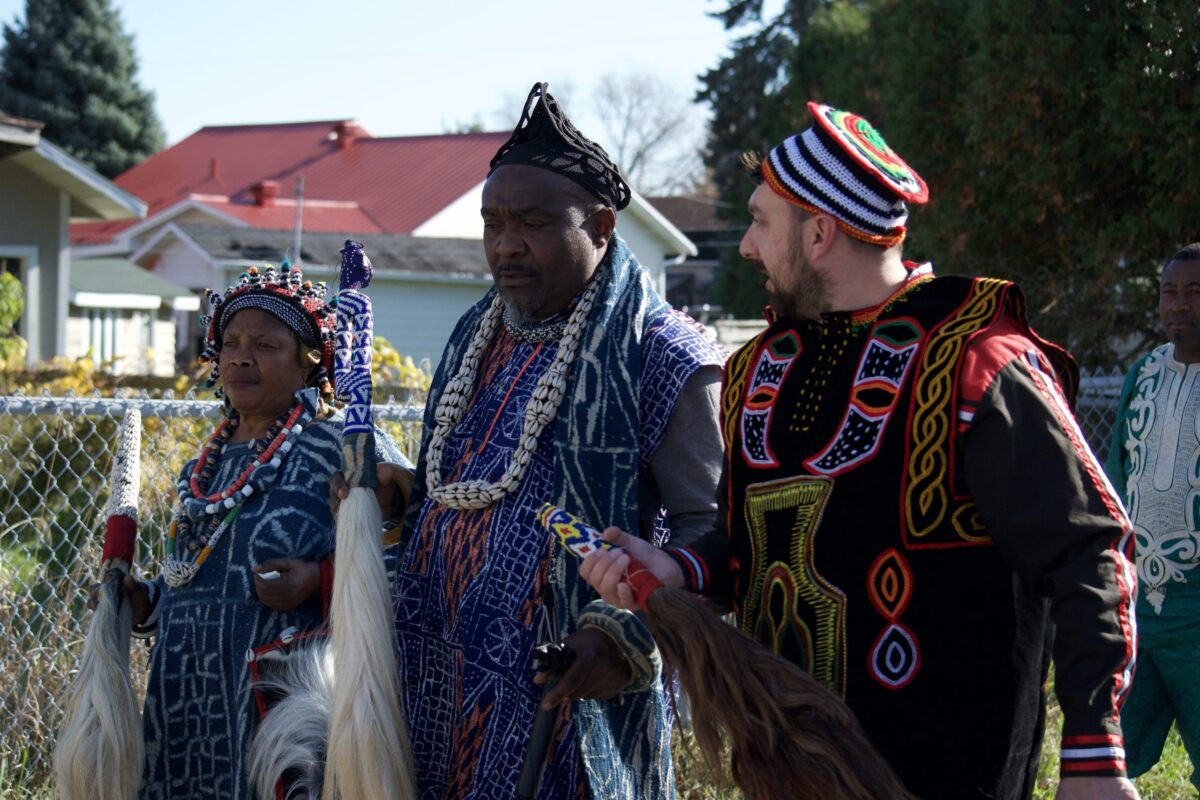
If you were driving last week, you might have spotted his majesty Kenfack Tanga Fouotsop II and his entourage in the village area. The traditional king from Cameroon is in Quebec until mid-November, and made a point to visit Kahnawake last Friday so he could learn about the land’s original inhabitants.
The traditional king hails from Balatchi, a village in Bamboutos, a region located in the west of the country. He’s currently visiting to celebrate the naming of Kuete Appolinaire as the official representative of his village in Quebec, a province many from the village have come to call home.
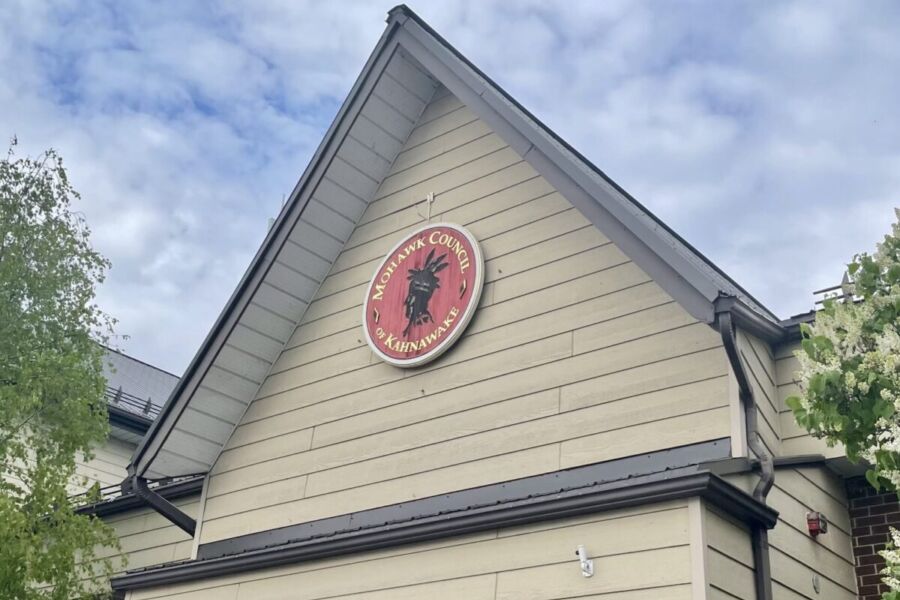
Mohawk Council of Kahnawake (MCK) grand chief Cody Diabo welcomed him at his office that day, using the occasion to exchange gifts and explain the significance of the Ohén:ton Karihwatéhkwen.
“This is just to give thanks to all the people that are here. We also give thanks to the Earth, Mother Earth. We give thanks for all the water, the oceans, the rivers, and we give thanks for the fish and all the marine life,” Diabo said as he spoke in French to the king across from him at the table. “We give thanks to all the birds, to all the insects, to grandfather thunder and the four winds.
“When we say those words, it clears our mind, so that we can have discussions peacefully.”
An interpreter also helped facilitate the conversation between the two.
While there, the leader from Balatchi was gifted with a beaded belt in the pattern of the Great Tree of Peace, as well as a medicine pouch.

“This represents our culture. The Tree of Peace, that’s the belt you have there. It represents that peace is always growing,” Council chief Jeffrey Diabo said as he explained the significance of the belt. “The roots, deep in the earth, represent our homeland. Underneath is where we buried the weapons of war. We don’t fight amongst ourselves.”
Kenfack Tanga Fouotsop II also came with gifts, which included colourful horse-hair tail staffs, and the garb of a traditional village chief, which Diabo got to try on.
“Everything that he gave you are symbols of a chief in our land,” said Joseph Tchinda Kenfo, the interpreter sitting alongside them.
The staffs are adorned with horse hair to mark the survival of their people against their adversaries who came to conquer their village on horseback, the leader explained to the room.
“We are a warring people. The land we occupy today is land that we conquered through struggle, through war,” Kenfack Tanga Fouotsop II said as he spoke in French. “For us it’s a symbol of pride, and a symbol of victory.”
He reiterated his gratitude multiple times for having been so kindly welcomed in the territory. His community, like Kahnawake, is also no stranger to outside governments trying to assimilate them.
“What I’m really struck by is just how much people from Kahnawake have fought to protect their culture, and how hard they’ve fought to stand up against the oppression of the federal government,” he told journalists in the room.

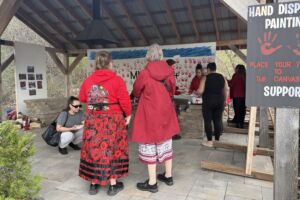



The leader also got the chance to visit the Mohawk Trail Longhouse.
“His curiosity had to do with our traditional ways,” said Niioieren Eileen Patton, who was there for his visit alongside her husband Otsitsaken:ra Charlie Patton.
While there, Kenfack Tanga Fouotsop II was taught about the creation story, ceremony, and the forming of the Haudenosaunee Confederacy. The traditional king and his entourage also got to learn about the Papal Bulls used by the Catholic Church to justify the colonization of the Kanien'kehá:ka, as well as the harm inflicted on the country’s Indigenous population through the Indian Act.
“It was quite impressive. They were all dressed in their own way,” Niioieren said. “They came looking like the people that they are. That's what Charlie always says, when you go somewhere and you meet people who are not like you, you dress and you show them by your clothing who you are.”
Ka'nahsohon Kevin Deer and his daughter Kahsennenhawe Sky-Deer, the prior grand chief of the MCK, also welcomed him there at the Longhouse.
Joseph Tchinda Kenfo, who served as the king’s interpreter, was also behind organizing the leader’s first ever visit to Canada. He said the decision to name Kuete Appolinaire as Balatchi’s official representative in Quebec comes in response to a growing number from the village choosing to establish themselves in the province.
“The community is bigger here in Quebec than it is in other provinces,” he told The Eastern Door, saying it amounts to roughly 1,000 from the village.
Sign up for email updates from The Eastern Door
Appolinaire immigrated to Quebec over 20 years ago, he said, and has a long history of bringing the community together.
“You need the legitimacy, and that’s what the chief came to do, to give him the legitimacy to do what he started to do,” Tchinda Kenfo said.
The traditional king also visited Montreal and Quebec City prior to making his way to Kahnawake and is expected to stop for a visit in Ottawa before he returns back home to Cameroon on November 11.