Northvolt project officially axed

A mock-up image of what the Northvolt project was meant to look like – construction never got off the ground before Quebec pulled out of the project this week. file photo
Quebec’s involvement in the controversial Northvolt project is officially over, with the province announcing this week that they won’t be investing any further money in the company.
The move spells the end of the project, which has been riddled with controversy - including a lawsuit filed by the Mohawk Council of Kahnawake (MCK) in early 2024 accusing both the provincial and federal governments of failing to consult with the community before approving the project on traditional lands.
“It’s a real lesson in hubris,” said MCK chief Ross Montour, the lead portfolio chief for environment, who has overseen much of the Council’s opposition to the plant.
The project would have seen the construction of a $7 billion battery plant in Saint-Basile-le-Grand and McMasterville in the Monteregie region, supported by a $510 million investment from Quebec. The province had also pledged $2.9 billion in financing for the project, with the federal government initially pledging $4.4 billion long-term.
MCK’s lawsuit had included concerns about the impact the project could have on wetlands, with Quebec taking the position that they had no duty to consult the community on the issue.
After the filing of the lawsuit, a Quebec Superior Court judge dismissed an injunction request aimed at halting the clearing of trees and wetlands, despite ongoing concerns about the potential environmental impact in the area.
In court, representatives from the Kahnawake Environment Protection Office (KEPO) warned that the project could also have cumulative impacts on the Richelieu River, including increased erosion and reduction in biodiversity, as well as that the company may be underestimating the impacts that their effluent discharge might have on the river itself.

“It’s a win for the Richelieu River, for now,” Montour said. “But the damage to the wetlands is damage that’s already been done.”
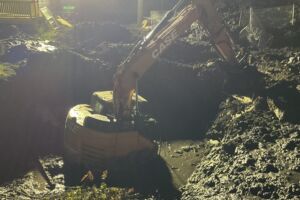
Though construction wasn’t started on the plant, swathes of wetland were cleared in preparation. The clearing of those wetlands destroyed the habitats of animals like the spiny softshell turtle and birds like the least bittern and bank swallow - a move that could impact the population of those species, with no clear answer for how the remaining habitat could support their continued existence in the area.
As the project has progressed, concerns have extended beyond just the potential environmental impacts. Northvolt’s parent company filed for bankruptcy in Sweden in March of this year, and while Northvolt North America didn’t declare bankruptcy, the news cast financial uncertainty over the project.
Quebec lost $270 million of its initial $510 million investment during the parent company’s bankruptcy filing, but had initially remained in support of the project, expressing hope that a buyer would step in to invest in the company.
In a statement this week, Quebec’s minister of Economy, Innovation, and Energy, Christine Fréchette, said the government intends to recover the remaining $240 million guaranteed loan that they’d invested in the project.
“This venture proved unsuccessful, and we are obviously disappointed,” said Fréchette. “However, the outcome of the project does not mean the end of the battery industry here.”
Fréchette said the end to the partnership comes as a result of Northvolt failing to “present a satisfactory plan with respect to Quebec’s interests,” with potential buyers of the company demanding more money than Quebec was willing to give.




Though the Northvolt plant is off the table, Fréchette said that Quebec plans to continue investing in other, similar initiatives.
“The outcome of the project does not mean the end of the battery industry here. On the contrary, our industry is very much alive, with several companies active in this ecosystem” her statement reads.
The government also intends to conduct analysis of the 352 megawatts of energy they’d reserved for the Northvolt project, which they say could be used for other economic development plans in the area.
Montour said he’s glad that the Northvolt plans won’t be proceeding, but that he has concerns about other initiatives that the province or the federal governments could greenlight in the future – particularly in the context of the recently passed Bill C-5, now known as the Building Canada Act.
That Act is supposed to facilitate the fast-tracking of certain major infrastructure projects with the intention of strengthening Canada’s economy, but many First Nations leaders have expressed concern that it could come at the expense of Indigenous communities’ rights, with proper environmental studies being potentially overlooked in the name of efficiency.
“With Northvolt, they didn’t feel they needed to speak to us,” Montour said. “They said there was no need for an assessment, they said the duty to consult wasn’t required. They took a lot of unreasonable positions.”
MCK’s lawsuit has been continuing to wind its way through the courts, with a judge ruling earlier this year that Canada must participate in Superior Court proceedings alongside the province. But the end of the project likely means an end to the court proceedings, Montour said.
Sign up for email updates from The Eastern Door
“We’d asked ourselves ‘How far should we go?’ and we decided to leave it in the courts when we were watching what was going to happen with Northvolt itself, and then the Swedish office went belly-up,” Montour said. “Quebec is going to have to suffer that loss.”
It remains to be seen what the land may be used for now that the plug has been pulled on the project.
Northvolt North America did not respond to The Eastern Door’s request for comment in time for our publication deadline.