Sewage discharged into St. Lawrence
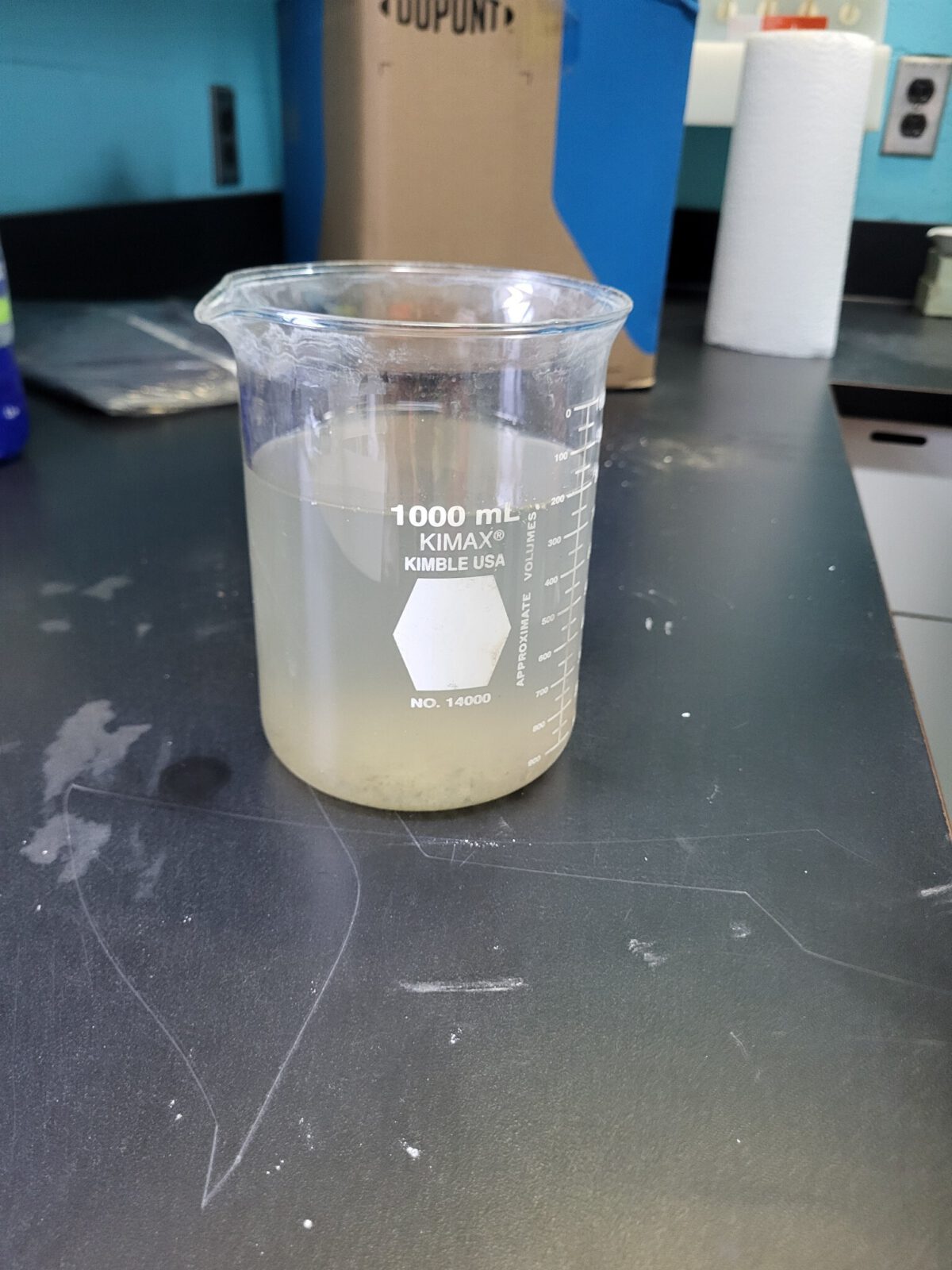
A maintenance operation at Kahnawake’s sewage treatment plant this week saw more sewage than expected discharged into the St. Lawrence River – though the Kahnawake Environment Protection Office (KEPO) maintains that the environmental impact of the discharge remains “low.”
“Any amount is never something that we want to do,” said Mohawk Council of Kahnawake (MCK) grand chief Cody Diabo. “But we took all the precautions possible, and this is what happens with aging facilities.”
Initially, MCK had told the community that the operation could potentially require the dumping of up to 200 cubic metres of untreated sewage into the St. Lawrence River, an operation that needed to take place due to clogging in the town system that had slowed the sewage treatment process down.
The amount that ultimately did need to be discharged was 500 cubic metres, about 300 cubic metres more than MCK had estimated in their press release – though MCK’s director of public works Martin Morris and MCK chief Arnold Boyer both confirmed that estimates prior to the operation were in fact more like 200 to 800 cubic metres.
That amount was untreated sewage collected in lift station reservoirs, which had been shut off at 4 a.m. on Wednesday morning. Though teams had been initially optimistic that all the sewage could have been contained in the lift stations for the duration of the operation, Morris said that there was no choice but to discharge the sewage at 7:56 a.m. when a plant worker had to be sent into the clogged tank to remove debris that a specialized vacuum couldn’t lift.

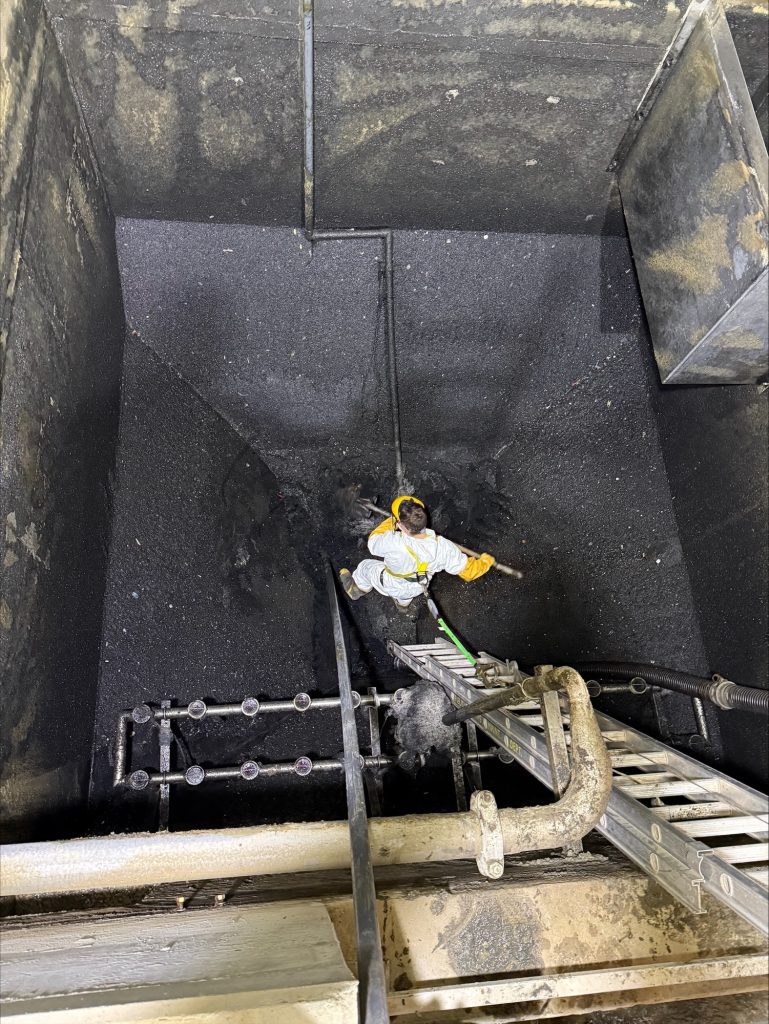
Courtesy MCK Public Works
While the worker was in the tank using a shovel to dislodge debris, the plant had to be put on bypass, meaning sewage flowed directly into the river rather than through the treatment tank. This was in part for the worker’s safety, said Morris, but there was also a large volume of sewage in the main lift station in the centre of town, which was alleviated while the other lift stations stayed shut.
“The lift station outside the sewer plant, the main lift station, was getting pretty high, so we would have had to do it anyway,” said Morris, noting that the bypass occurred for 79 minutes, until 9:15 a.m.




Patrick Ragaz, KEPO’s general manager of field science, said that KEPO staff were on-site to monitor the operation, including with use of a drone to visualize the discharge. He said that they were able to confirm that the discharge didn’t get hung up on the shoreline, and was mixed with the main flow of the river, getting carried downstream. Ragaz said this signals that the discharge won’t cause problems in the river.
“The amount that we saw release I don’t think would have a significant impact,” Ragaz said.
Because community members had been encouraged to stop using their showers, bathrooms, and other water-related facilities during the operation, most of the sewage contained in the lift stations that was involved in the discharge was “greywater,” from sinks, dishwashers, laundry, and showers, though it would have included any type of sewage produced in that time period.
“At the end of the day, it’s still sewage, so we want to limit it entering the river as much as possible,” Ragaz said.
Though the amount is more than double what MCK originally predicted, the increased volume shouldn’t cause more environmental harm, Ragaz said.
Sign up for email updates from The Eastern Door
“That volume when compared to the volume of the river, whether it was 50 or 500 doesn’t change much. Just for reference, the flow rate of the river right now is 7,500 cubic metres per second,” Ragaz said. “I’m certainly not promoting dilution as a solution, but in the context of assessing environmental impact, it’s safe to say that it was low.”
A new sewage treatment plan will be essential to ensure that this type of event doesn’t happen again, with plans currently in the preliminary stages for a new plant in the next three to four years.