Complications for creek restoration
The North Creek Restoration project is underway in the territory, and while the work by the Kahnawake Environment Protection Office (KEPO) is moving ahead at a relatively steady pace, it has not exactly been perfect so far.
Patrick Ragaz, KEPO general manager of field science, said that right now, the main work being done is replacing the old culvert near the apartment complex in the North Creek area.
The previous culvert had two small channels, and a new, single channel culvert will take its place, to improve water flow and make it easier for any fish in the creek to navigate.
“We’re preparing the area for the installation of the new culvert,” Ragaz said.
“Upstream from the culvert to the next culvert they’re working on, they are preparing the excavating of the muck in the creek and starting the placement of the stone and some of the features in the creek.”
This has involved excavating the bottom and sides of the creek with heavy machinery - which has been a source of the aforementioned complications.
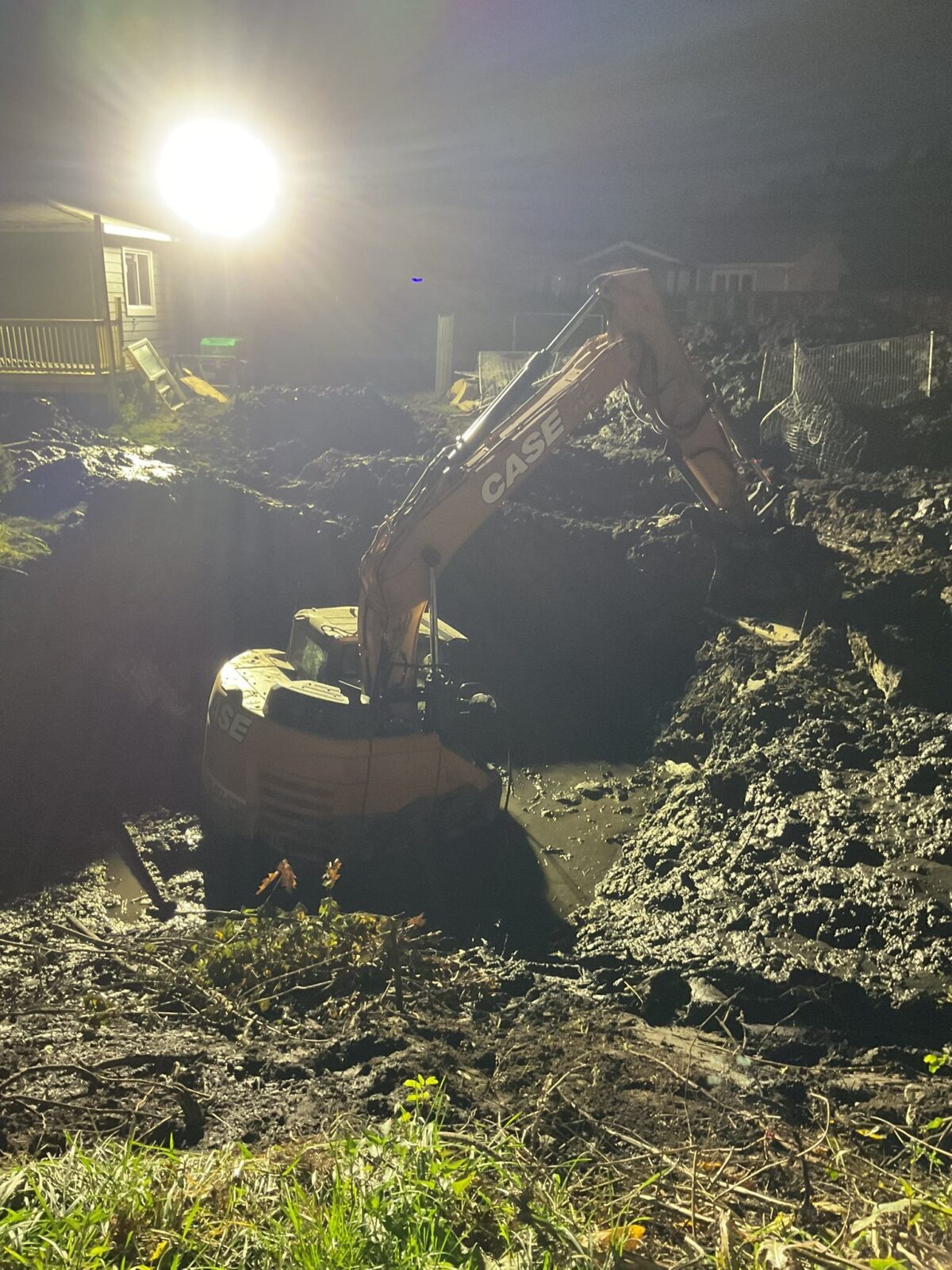
Last Friday, a photo circulated on Facebook of an excavator that had gotten stuck in the muck. Workers tried to dig it out with another excavator, but when they saw that it was not just stuck, but actively sinking.

As such, a heavy tow truck was called to pull it out of the hole, and it became unstuck around 8 p.m.
“Because it was continuing to sink, we didn’t want to leave it in place overnight and deal with it again the following day,” said Ragaz.
He explained that the creek’s water flow is currently being diverted, which means some areas are supposed to be relatively dry and allow for work with machinery to happen.
“It was a dewatered portion of the creek that the excavator was in, and it got to a really soft spot and ended up getting stuck there,” said Ragaz.
The soft spot it sank in was probably created by heavier than expected rainfall earlier in the week, Ragaz said.
“That has been a challenge for the crew on site. It ended up swamping any efforts to bypass water around the work area. The work area ended up getting totally submerged, so then it takes another two or three days to dewater all of that again,” said Ragaz.
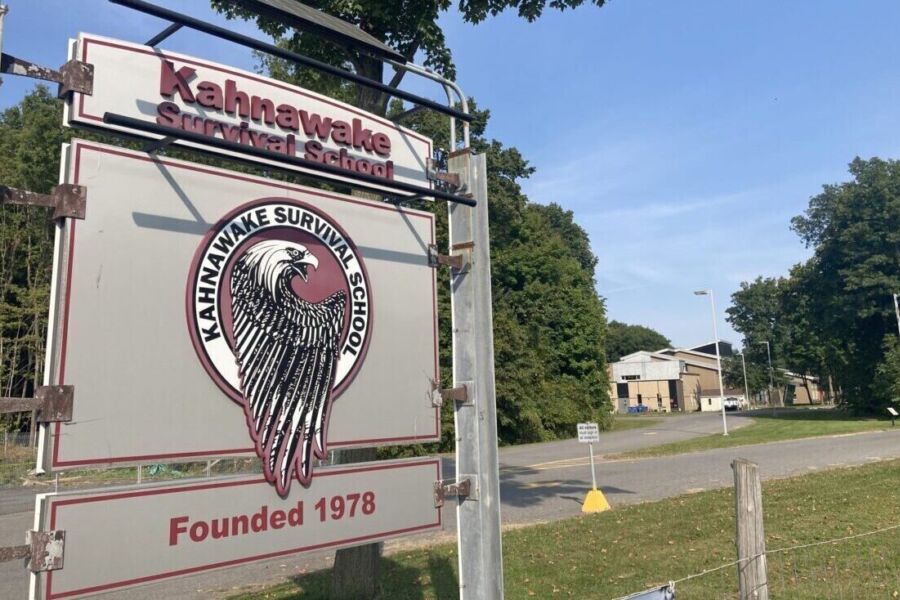
“In this case, the rain gauge that we have located at Kahnawake Survival School recorded 40 mm of rain that day, including about 30 mm in three hours. So that was just too much rain to manage.”



When that happens, Ragaz said that they make sure the water can safely pass through the site by opening up the pit area. That ensures water does not back up so much that it floods houses in the neighbourhood.
In the comments of the same Facebook post, a community member decried the state of their lot, which was being used as a staging area for machinery. When contacted by The Eastern Door, the community member said they were too distraught by the situation to participate in this article.
“The use of staging areas on privately held land is something that has been discussed with the landholders, and we get permission to use lots,” said Ragaz.
“In the case of the excavator, obviously, the landholder or landholders that were impacted certainly didn’t anticipate that level of disturbance on their properties. That’s totally understandable. So, we are working actively to restore the yard and are in communication with people impacted, and we’ll ensure that those lots are restored to a condition satisfactory to the owner.”
He thanked community members for their patience and support as work has continued.
“I can recognize that has been a disturbance for community members in that area, and work in the creek that’s full of muck, it is quite messy at times on the sites, and we do have a number of measures in place to try to minimize that, but can certainly understand it’s frustrating for landholders just living among a work site.”
It has not been all bad news for the restoration project, though, as work still steadily advances, including the removal of invasive phragmites, including excavating the roots to try and avoid quick regrowth.
Sign up for email updates from The Eastern Door
“What you see above ground is about twice as much again underground,” said Ragaz.
Another way is overplanting plant species that are native to the area, to try and outcompete phragmites.
“We were able to bring on an environmental project coordinator for invasive species this year, and she’s been working on a number of invasive species management strategies and testing how those are working out,” said Ragaz.
Work will continue until midway through November this year.