Resilience shelter opens new doors
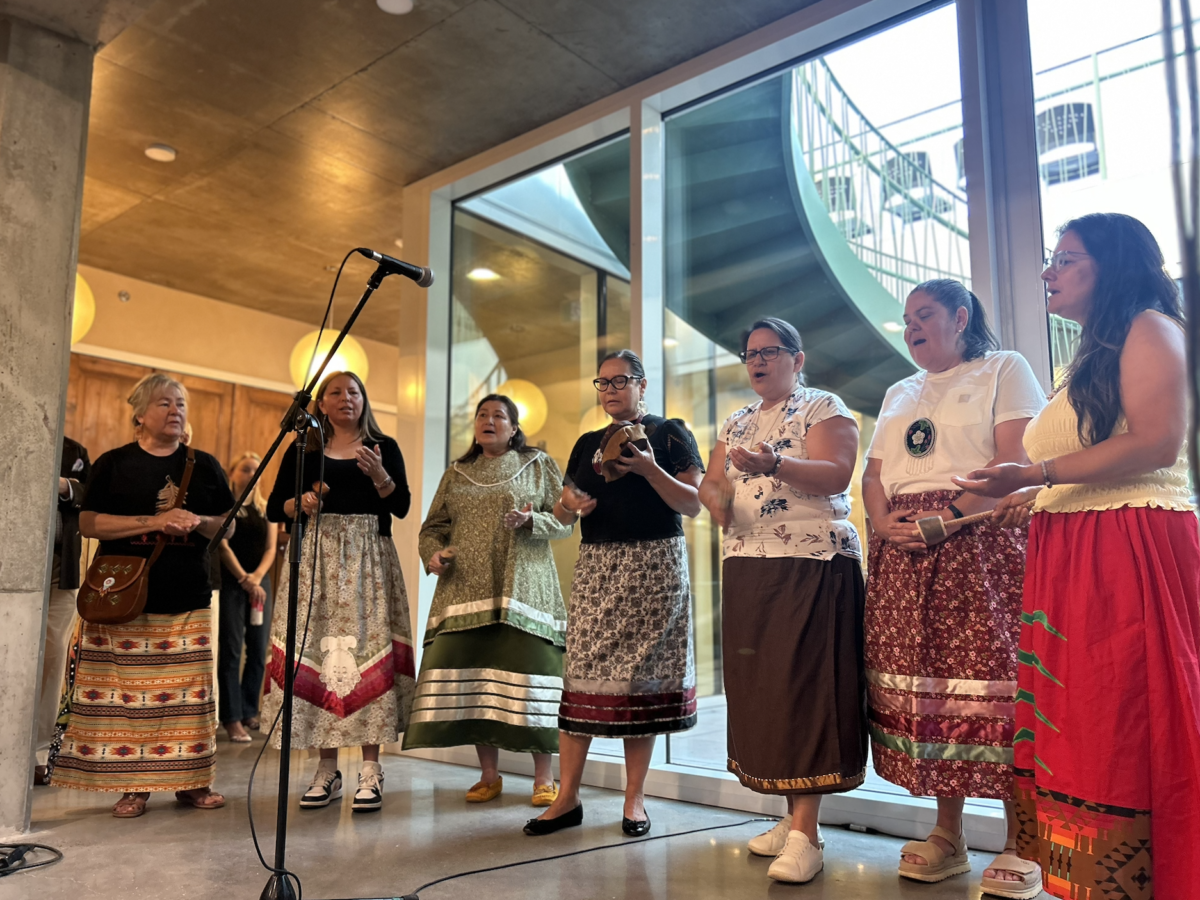
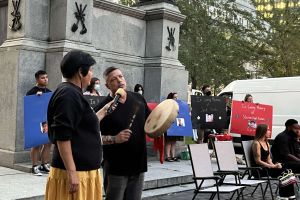
Kahnawa’kehró:non sing to mark the opening of the new Resilience Montreal shelter on Wednesday. Eve Cable The Eastern Door
Na’kuset, the co-founder of Indigenous-led homeless shelter Resilience Montreal, is used to seeing Indigenous people being often left with “the scraps.”
“The whole concept of most shelters I’ve seen in my career are church basements and a granola bar,” said Na’kuset, who is also the executive director of the Native Women’s Shelter.
As she stood at the brand-new Resilience Montreal shelter on Atwater Avenue for its grand opening on Wednesday night, she recalled a conversation with fellow founder and executive director David Chapman.
“When I talked to David about building Resilience, we dreamed about it on a balcony,” she said.
“As an Indigenous person growing up and being told you’re worthless, I wanted to flip that narrative. What if we built something that made people feel good as soon as they walked in?”

That vision led to the design of the new Resilience location, with guests being met upon their arrival by a warm, wooded, open-concept lobby, complete with a “living wall” of green plants. A walk through the shelter reveals a spacious sleeping area with an array of beds, multiple full bathrooms with showers, and multiple well-lit rooms for group activities and meetings.
Architect Claire Davenport said that her main wish was to make the space as “human-centred” as possible, and she consulted directly with not only elders, stakeholders, and shelter workers, but most importantly with shelter users.
“They’re the experts of knowing what they need, and we continued to come back to them throughout the process,” she said.
For her and the rest of the design team, building a new homebase for Resilience Montreal was about even more than creating a safe space for unhoused people to go; it was about creating a space that gave Indigenous people a place to heal.
Through consultation, she incorporated features like a quiet healing room complete with a fireplace, as well as a cedar bath, where guests can practice traditional medicine. A jewel of the building is the large terrasse, where, after an opening from Ka’nasohon Kevin Deer and songs from Kahnawake’s women’s singing group, guests were treated to a performance by Juno award winner Siibii.


In the basement, volunteers and staff have space to sort through donations, and a state-of-the-art freezer keeps cold traditional foods that come through the doors like caribou, arctic char, and beluga. Upstairs, a full kitchen gives staff the tools they need to help unhoused Indigenous clients taste country foods from home.
“The spaces we inhabit every day can become a part of our identity and reflect back to us where we belong, and where the world thinks we belong, and what we’re worth, and that can impact how we move forward or don’t move forward,” she said.
“In that spirit, we were from the very start tasked with not just housing services and activities - that’s part of it - but we were really given the task of creating a healing place, and a place that could be some version of home for this specific community.”
The building is also equipped with dedicated staff rooms and volunteer spaces to grow Resilience’s capacity, something that means a lot to Resilience intervention worker Ronny Laporte.
He said that it means the world to see the first few guests impacted by the new space.
Sign up for email updates from The Eastern Door
“I’m very happy, it’s the reaction of the people that walked through these doors today, you can tell that it changed the mood of a lot of people, they felt a feeling of comfort, and it’s making them feel special,” he said. “Being out there, their reality is not too easy, and I just want them to feel welcomed and loved and heard.”
For him, having a welcoming, well-designed space is a key part of making people feel comfortable reaching out for support.
“We want to make sure people feel safe when they walk through these doors,” he said.
“Everyone is a human. Whether you’re living rich or poor, at the end of the day we’re all human beings and everybody should be treated as such.”