Bills nixed at National Assembly
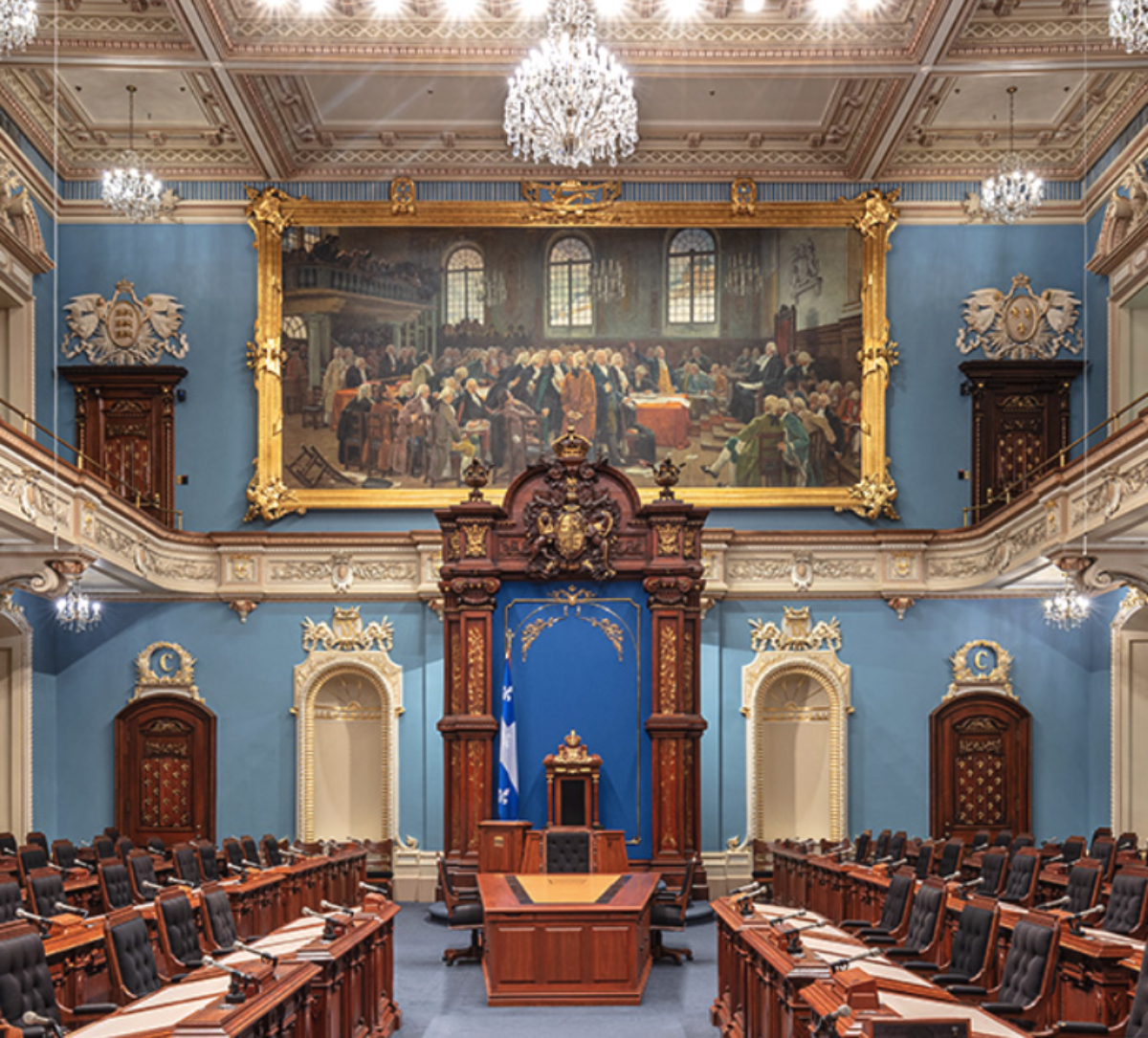
Parliament of Québec. Courtesy assnat.qc.ca
The National Assembly of Quebec saw a flurry of activity last week as the provincial government raced to pass a backlog of nearly 20 bills before the end of the legislative session, leaving some high-profile proposals on the cutting room floor.
June 12, the final day of the session, was the last chance for the CAQ to advance its legislative agenda leading into this year’s October 5 election. Some of the bills that passed or died have been vigorously opposed, or even cautiously welcomed, by First Nations leaders.
Bills that have died could always be reintroduced in a future session, but they would have to start the process over again.
Bill 1
The bill to create a Quebec constitution, surely one of the most controversial bills since it was introduced in late 2025, died with the end of the legislative session.
It had been opposed by the Mohawk Council of Kahnawake (MCK), Assembly of First Nations Quebec-Labrador (AFNQL), and many other groups in the province.
The bill would have codified the CAQ’s vision of Quebec values, with impacts to individual rights.

“We are faced with a text that consolidates ‘a Quebec state’ through a clear
domination-driven endeavour, at the cost of erasing and rendering legally and politically invisible the First Nations, hallmarks of colonialism,” AFNQL regional chief Francis Verreault-Paul said in a statement in February.
After the bill died, the AFNQL published a press release acknowledging the failure of the bill, which had been an initiative by justice minister Simon Jolin-Barrette.
“A true vision of coexistence must be built on debate, listening, recognition, and respect. In this matter, minister Simon Jolin-Barrette bears full responsibility for the failure of his own initiative,” said Verreault-Paul in the press release.
“He chose to turn a deaf ear to the concerns raised not only by First Nations, but also by many actors across Quebec society. He also disregarded the Crown’s constitutional obligations and the principles of international law applicable to Indigenous peoples.”
Bill 4
Bill 4 passed. Its goal is to make it easier for disclosures of personal information to be obtained by individuals who believe their intimate partner or ex-partner may pose a risk to their safety or that of their child.


The law is inspired by Gabie Renaud, a Quebec woman who was allegedly killed last year by her partner, Jonathan Blanchet, who had an extensive history of domestic violence.
A June 2 press release from Quebec Native Women (QNW) and the Quebec Association of First Nations and Inuit Police Directors (QAFNIPD) shared a joint brief for the National Assembly as part of the consultation process. The press release outlined support for the bill’s objectives while expressing concerns and reiterating QNW’s objection to not being consulted before the introduction of the bill.
The bill’s author, Indigenous affairs and Public Security minister Ian Lafrenière, told The Eastern Door last month that no groups had been consulted before the bill’s introduction and that consultations were part of the process that was about to unfold.
In the June 2 press release, QAFNIPD executive director Pierre Simard expressed operational considerations.
“Before implementing the mechanism, clear protocols, appropriate tools, training, and adequate resources must be put in place so that this obligation can be fulfilled quickly, safely and effectively for individuals at risk,” he said.
Bill 4 passed on June 11, one day before the end of the session.
Bill 8
Sign up for email updates from The Eastern Door
This was the proposed expansion to Bill 101, seeking to extend language restrictions to adult and vocational education centres.
“What we intend to do here is protect the French language,” said French language minister Jean-François Roberge at a press conference in early June. “We will not infringe in any way on the rights of the historical anglophone community, and we will work with them to make sure it affects them the least.”
The MCK came out strongly against the bill.
“If it were to come to fruition, we know community members will be impacted,” Diabo told The Eastern Door at the time. “Even if they say we won’t be, we will be.”