Learning for the next generation
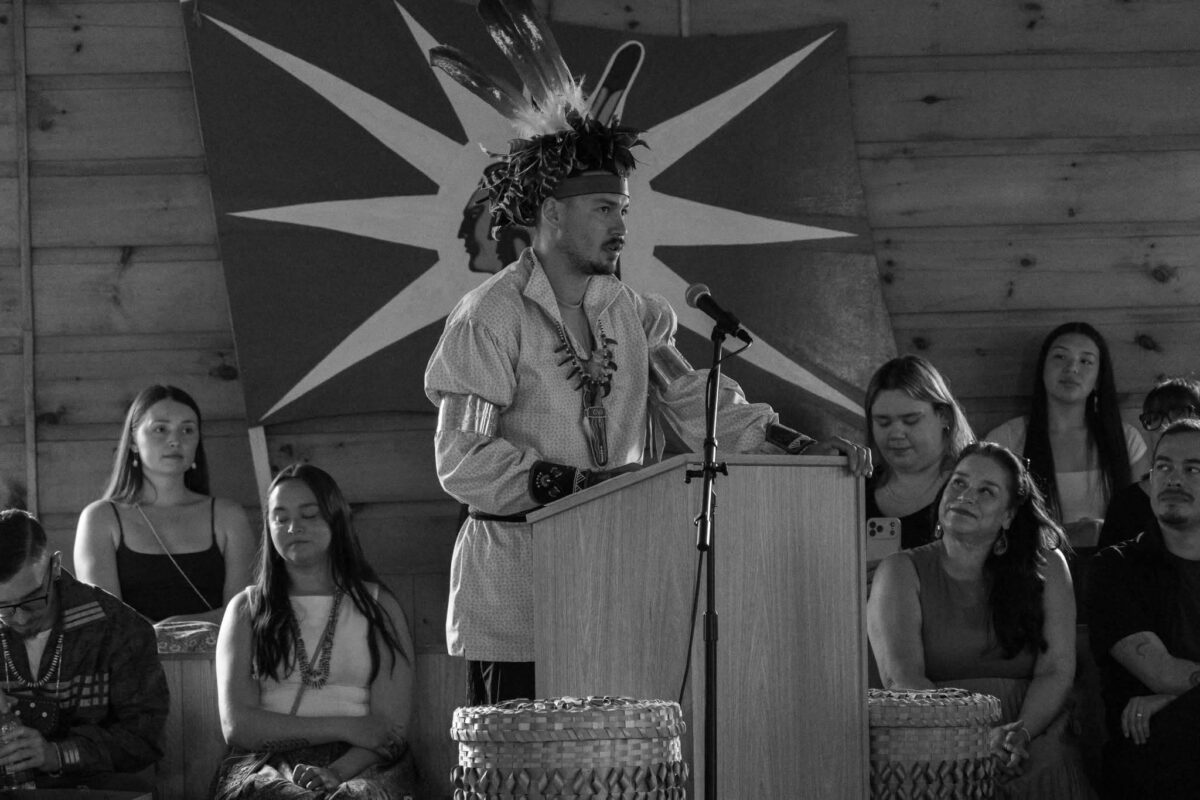
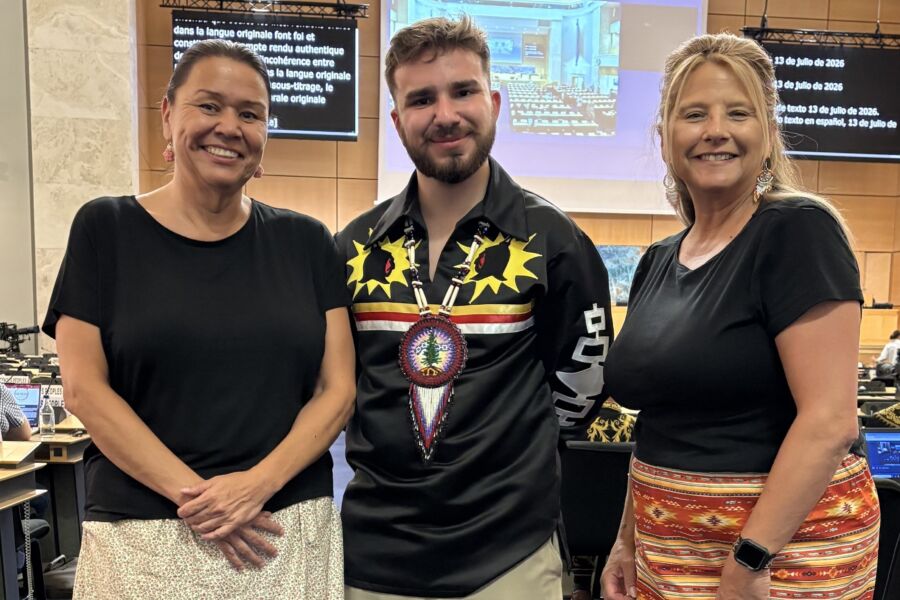
Brandon Atéhrhanonhne Rice speaking to his fellow learners and supporters at the Kanien’kéha Ratiwennahní:rats Adult Immersion Program graduation last Friday. Courtesy Brandon Atéhrhanonhne Rice
When Brandon Atéhrhanonhne Rice decided to pursue the two-year Kanien’kéha Ratiwennahní:rats Adult Immersion Program, he did it for the faces yet to come, the future family he hoped to one day build.
Six months before his graduation from the program, his son, Tehatshatowíhas, was born.
“It just totally changed everything for me,” Rice said. “It made the journey that much more rewarding. Not only am I going to use the fluency at work, and in my life, but I’m going to use it to literally teach my kid. It’s amazing, it was the best thing that ever happened to me.”
Last Friday, Rice was one of 14 graduates from this year’s program, organized by the Kanien’kehá:ka Onkwawén:na Raotitióhkwa Language & Cultural Center (KOR). Though the graduation ceremony at the 207 Longhouse marked the end of this chapter of his language learning journey, he knows that becoming a Ratiwennahní:rats alum means he’s committed to a lifelong journey.
“It’s changed my perspective on life and on language learning, and our culture in general,” he said. “I don’t want to stop studying, but now we’re all going to move on and keep doing things at our pace, and with our own ambition.”
Rice, whose stepmother Sandy Harding is from Kanesatake, and whose father David Rice is from Kahnawake, first embarked on his language journey after finding himself feeling disconnected from his culture as an adult. Going to school off-reserve, he felt that he’d missed out on exposure to Kanien’kéha, and he sought out beginner classes, starting with a few hours of learning per week.

“I got hooked on it. I was really inspired by other people that were speaking who were my age or a little bit older,” he said. “As I got older, I became more aware of not having that exposure, and I got really, really obsessed with trying to learn all of our ways and all of our culture.”
He took classes for about a year-and-a-half.
“I really enjoyed them, but it wasn’t enough. I realized I didn’t just want to learn basic phrases and basic words, I wanted to speak,” he said.
He sought out advice from friends who were Ratiwennahní:rats graduates - they told him that if he wanted to speak with fluency, an immersion program was the way to go.
With his beginner classes under his belt, he applied for the program, and to his surprise, he was accepted on his first application.
Two years on, his level of fluency has jumped two levels, and Rice is now considered an advanced speaker, having started at the novice stage.


“I didn’t know what to expect, but I didn’t look back,” he said. “It was the perfect time. If I’d applied years earlier, I wouldn’t have been mature enough, I wasn’t ready for the responsibility. If I’d waited longer, I would’ve had too many responsibilities with family and work. I took a shot, and I got accepted, and it was perfect.”
The program wasn’t a walk in the park. At times, he felt like he was falling behind, and that he wasn’t seeing improvements.
“I told my teachers that I felt I learned very slow, that it was really hard for me and I struggled a lot, but they told me ‘No, you’re doing really well, you learned on even pace with everyone,’” he said. “Sometimes you don’t see any of the progression, but then you realized that it’s just happened.”
While some learners may notice jumps in their knowledge during the program, it was during Rice’s exit interview that he realized just how far he’d come.
“During that interview I realized I was able to just freestyle everything. It wasn’t all perfect, but I was able to put things together that I didn’t think I could, without any script, and it was really eye-opening,” he said. “It was mind-blowing to not just see it and hear it, but feel it all come together.”
After days spent inside the classroom only speaking Kanien’kéha, Rice relied on support from his family to keep him going.
Sign up for email updates from The Eastern Door
“Having a good family to come home to and support you through everything, even to talk about something other than school, and keep you going, you need that,” he said. “I needed to rely on my family so much in those two years, and they did it without even being asked to.”
Like many Ratiwennahní:rats graduates, Rice credits another support system with his success in the program: his fellow students, and his teachers, many of whom he barely knew when he started out two years ago.
“They put together the best class dynamic for us. They chose good people who can keep us on track, who are determined, who can inspire and push each other. I felt very fortunate that our class of mixed personalities all became really close friends,” he said. “If I could do it all over again with the same exact people, I would.”