International Women’s Day is about justice
Megan Kanerahtenha:wi Whyte The Eastern Door
On March 8, the community and the world mark International Women’s Day, which is not just a moment to express appreciation but also an opportunity to reflect on the place women and girls have in society, culture, and our lives.
It’s something we reflect on a lot, especially as we write stories every week highlighting the women whose accomplishments drive the community forward, anchor the community in Kanien’kehá:ka values, and who support the faces yet to come in innumerable fundamental ways, from giving them life to fighting for a more just world.
This comes in so many forms. Just this week, we explore the stories of two Kahnawa’kehró:non women – Katsitsahente Cross-Delisle and Kelly Marquis – whose work in archeology is challenging preconceived notions in the field, dominated by white men for centuries (there’s a reason repatriation and not rematriation was the word that wound up in the dictionary), bringing a Kanien’kehá:ka perspective to the forefront.
That’s important for countless reasons, not least that Indigenous perspectives in archeology challenge colonial ideas about the land we inhabit.
Similarly, it’s a group of women – the Kanien’kehá:ka Kahnistensera (Mohawk Mothers) – who have led calls to fully explore evidence of unmarked burials at the old Royal Vic site, where excavations have stubbornly proceeded.
Despite legal setbacks, their courage brought a massive wave of awareness and furnished a new generation of allies, even as the group faced off against powerful institutions who sought to stamp out their objections at every turn.
Or consider last night, when Abby Roque – who is not only a Montreal Victoire star in the fast-growing Professional Women’s Hockey League (PWHL), but also the first Indigenous woman to play for the US women’s hockey team in the Olympics – took the time to teach the community’s girls a thing or two on the ice.

Athletes like Roque and Kahnawake hockey star Brooke Stacey, who was herself signed to the Victoire following success in prior high-level hockey leagues, serve as role models for aspiring young female athletes, who are growing up in a world where boys’ and men’s sports have too often been put front and centre at the expense of talented girls and women. These athletes also deserve to dream of being on the biggest stages and to have the chance to work hard to get there, and to benefit from the moral and financial support it takes.
Every human being deserves the chance to explore their interests, fulfill their potential, and to be taught to know and defend their own intrinsic value.
But there are still many inequities, and we all have a role to play in making a better world for women and girls, which in turn makes a better world for everyone – and this is inextricably linked to other fights for justice.
International Women’s Day is no greeting card holiday. It’s turning 115 years old this year, and we must recall its political origins. Its roots are in the labour movement, intertwined with women’s suffrage. In other words, International Women’s Day is about not only honouring women but also the fight for dignity and self-determination.
Much like the fight for environmental justice, the fight for gender parity is one in which Indigenous values offer a remedy to the colonial ones that have wreaked so much damage. After all, in Kanien’kehá:ka culture, women are revered both as the givers of life and as leaders and decision-makers. A lack of respect for traditional culture from outside forces, like the failure to adequately support cultural revitalization, is not only a failure of reconciliation, but a failure to support women.
That’s just one reason Kanatahkwèn:ke, the new multipurpose cultural and arts building that will soon open, is so important – it’s a pivotal step forward in the fight for truth.
This project is largely led by women, from Mohawk Council of Kahnawake (MCK) portfolio chief Melanie Morrison to MCK technician Trina C. Diabo, to Kanien’kehá:ka Onkwawén:na Raotitióhkwa Language and Cultural Center (KOR) executive director Kawennanóron Lisa Phillips to Kahnawake Tourism’s tourism development manager Kimberly Cross, to Kahsennenhawe Sky-Deer, who stayed on as Capital Campaign chair after years of advancing the project as MCK grand chief – when she was the first ever woman to hold that office.




Kanatahkwèn:ke represents the fight against being defined on colonial terms. This is so important in pursuing justice for women, because colonial society – which is predicated on domination and violence – reflects a sick culture, and it imparts a value system that can at times, for some, seem invisible, but which is deeply harmful.
In its gravest forms, this culture furnishes the scourge of Missing and Murdered Indigenous Women and Girls and 2SLGBTQI+ people (MMIWG2S+), which maddeningly is still a countrywide emergency for which not even close to enough is being done.
Or take for example a rise in domestic violence over recent years, including in some years in Kahnawake.
There are countless other examples, such as insufficient attention to women’s health issues and outcomes, especially for Indigenous women, with Joyce Echaquan just a few years ago having to turn to Facebook live to give the world a glimpse of a shocking injustice that usually goes undocumented. The government’s response only solidified the insensitivity of the patriarchal systems that enforce such inequities.
Meanwhile, it’s depressing, to say the least, to watch as social media, which once promised to connect us all and enrich our perspectives, is instead entrenching folks in twisted echo chambers. The technology was even weaponized just last year against the community’s women and girls en masse, and it feels like accountability is absent.
But enough is enough.
We still have a long way to go, even in the most everyday instances of inequality. Even when women are in positions of power (when was the last time you counted the number of women on Council?), how often, even when they’re better prepared, are they drowned out by men who think they’re experts no matter the subject?
Sign up for email updates from The Eastern Door
How many times have we seen in meetings when silence freezes over men when someone asks who’s going to take the minutes, until a woman, often one of the better qualified people in the room, feels compelled to volunteer?
Or how many times, working behind a counter, have we seen women picking up the slack when the sink needs to be emptied because men apparently can’t see it?
These habits come from social conditioning, but it’s no excuse. Rather, the recognition of the harms of a lifetime of societal influence reveals a path for change.
Gender inequality is everywhere, but so are examples of powerful, intelligent, sensitive, influential, determined, strong, hard-working – you name it – admirable women who are leaders on the way to a better future for Kahnawa’kehró:non.
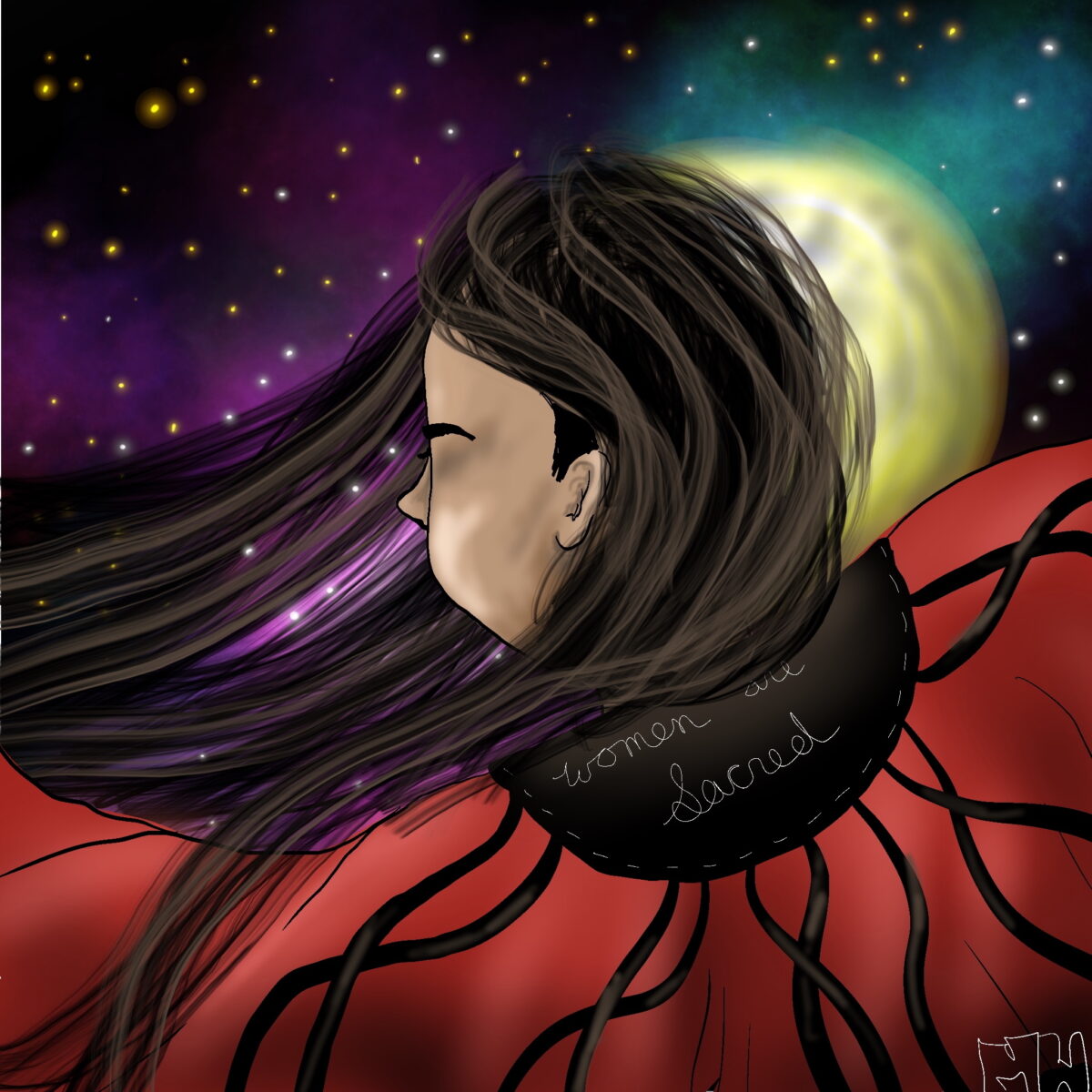
International Women’s Day ought to be more than a moment to honour and respect women, but a time to reflect on what honour and respect mean.
TED Staff