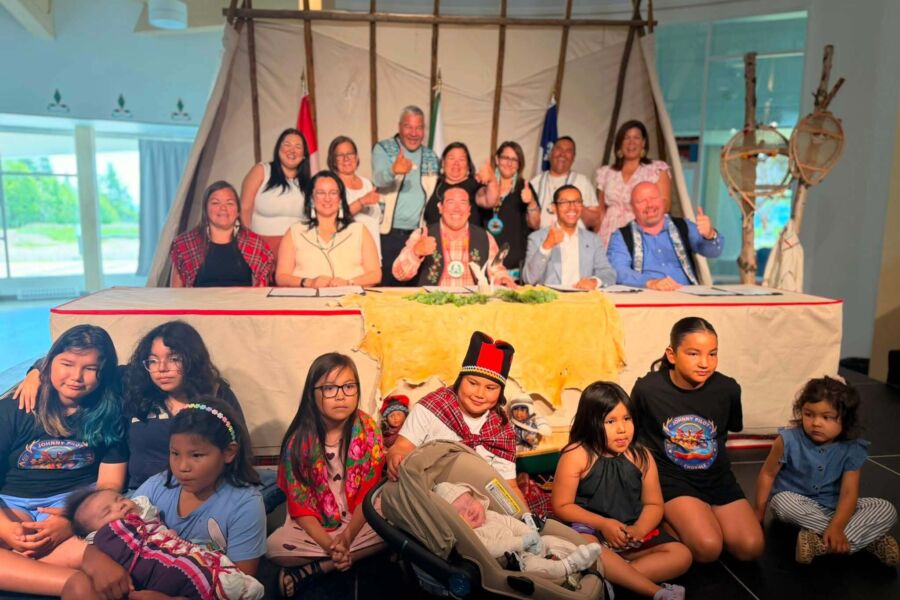
Harvest rights examined at Kahnawake Summit
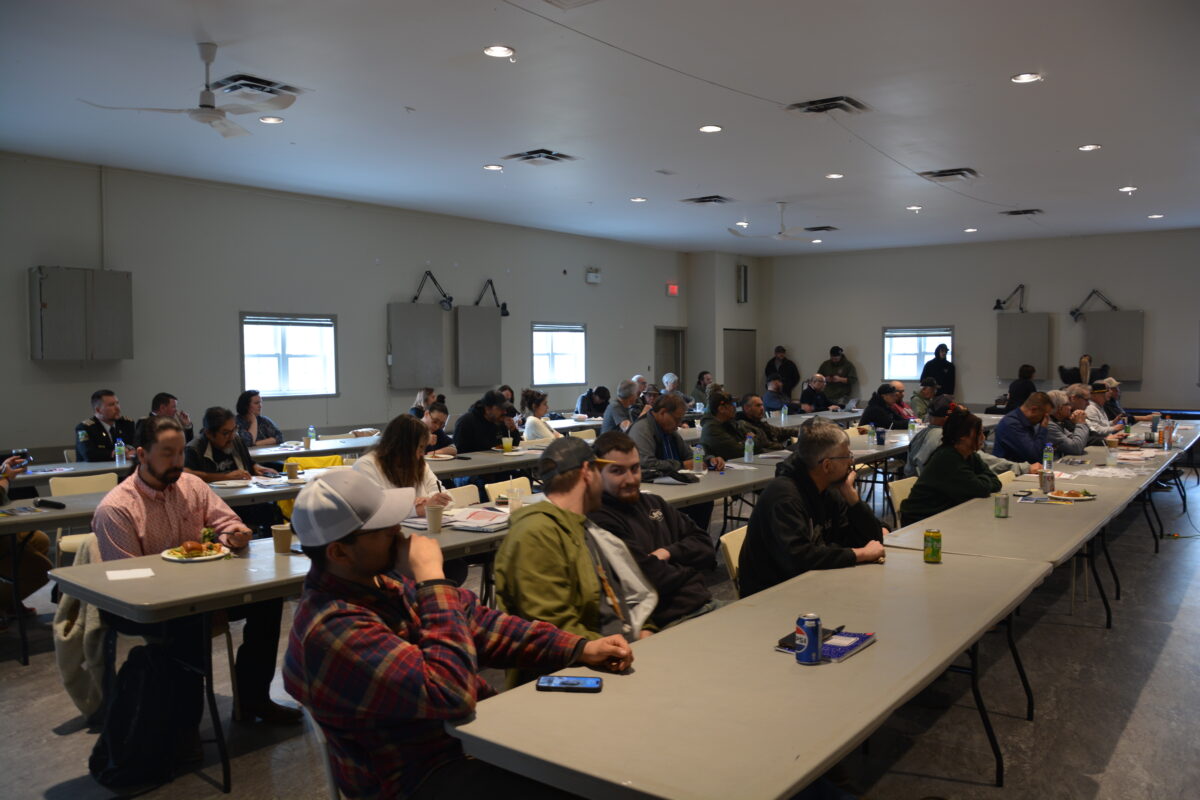
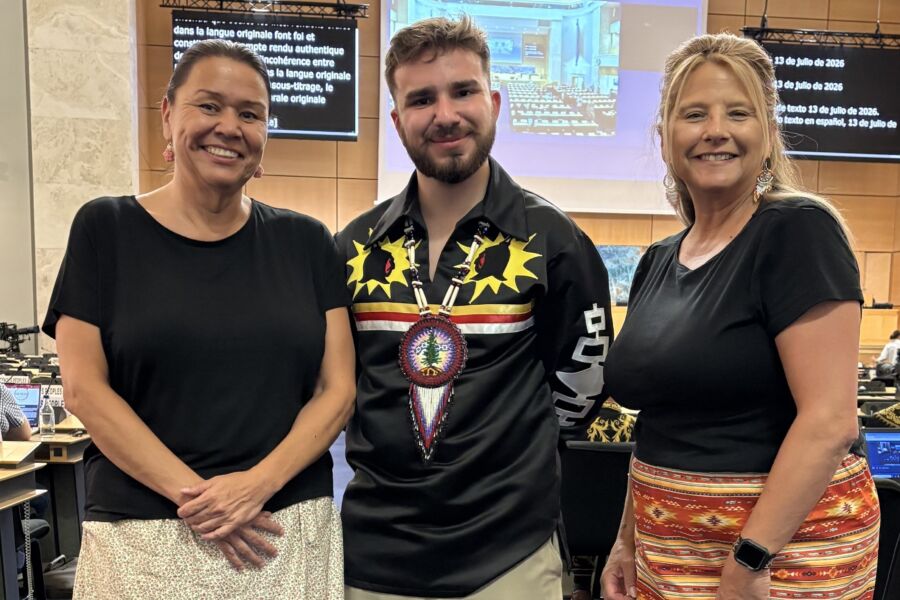
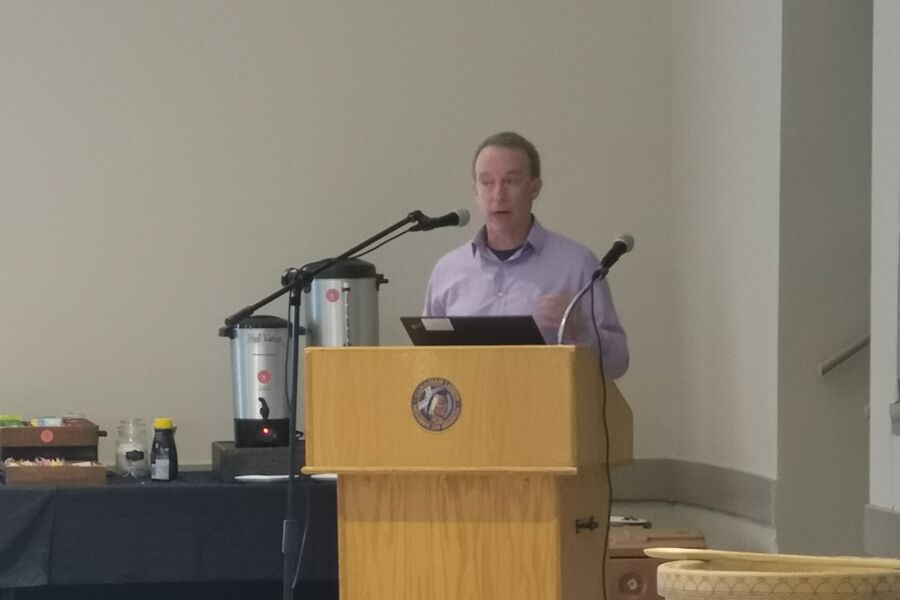
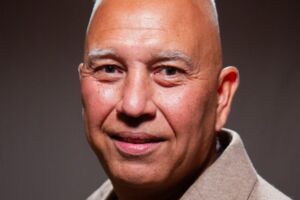
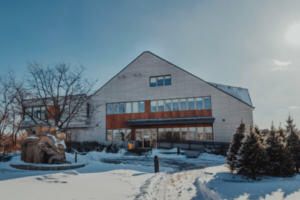
The Harvest Summit was well attended, even with the last-minute change in venue from Montreal to the Royal Canadian Legion Hall in Kahnawake. Richard Watchorn (below), director of the Enforcement Branch of Ontario’s Ministry of Natural Resources and Forestry, presented to attendees of the Harvest Summit on Wednesday.Olivier Cadotte The Eastern Door
Going into this week’s Kahnawake Harvest Summit at the Legion Hall in Kahnawake, Mohawk Council of Kahnawake (MCK) chief David Diabo set out to jumpstart conversations.
And those conversations have been taking place, with the lead organizer of the summit pleased with how much community members and invited guests have participated in making these conversations well rounded.
Part of that has been seeing the different perspectives of community members but also outside guests invited by Diabo, including from other Indigenous communities.
“I think it’s integral to the conversation, because we are talking about our right to harvest within our own jurisdictions. And that’s the basic bottom line here, our rights and our jurisdiction,” said Diabo.
Jurisdiction here meaning Indigenous territories, going back to One Dish One Spoon, the sharing of resources to make sure everyone can benefit.
“We share all of the bounty within our traditional territories, no matter where they overlap, and everybody has enough for everybody. So, the conversations that happen here are examining those aspects of what it means to harvest,” said Diabo.
Fisherman Eric “Dirt” McComber attended multiple days of the Harvest Summit, and he was happy to make connections with people from other communities, particularly within the Haudenosaunee Confederacy as representatives of Akwesasne and other Iroquois Caucus members attended.
“It’s nice and refreshing to meet new people, and to meet other people from other territories is even better for me, because I know a lot of other communities that are not within the Confederacy and I work with them,” said McComber.

“It doesn’t hurt to get more people on board.”
McComber said that as a harvester himself, he hoped more people would participate in these traditional practices.
“People have to understand that when a community comes to a crisis, if you can feed the community, teach the community, show the community that we have harvesting rights, and to give it as collective, that’s better for the community,” said McComber.
He also emphasized that the fruits of harvesting should be given back to the community as well, something he does regularly, he said.
“I need to feed my family, but it’s not at all costs. The fact that you give back should be a no brainer,” said McComber.
With issues arising from Kahnawa’kehró:non hunting in Mi’kmaq territory, including the seizure of moose in the fall, still on many community members’ minds, Diabo invited Richard Watchorn, director of the Enforcement Branch of Ontario’s Ministry of Natural Resources and Forestry; as well as Quebec game wardens to talk at the summit to provide background on their work, their responsibilities, and how Indigenous harvesting rights fall into those responsibilities.
“From a standpoint of understanding the individual, and community and harvest rights associated with activities that are being undertaken, we also want to protect those rights, to make sure that somebody isn’t trying to impose on those rights, or actually pretend that they might have rights that they don’t,” said Watchorn.

He explained how Ontario’s conservation officers were trained to better communicate when speaking with hunters and harvesters. He said he has spoken to and visited many Indigenous communities in Ontario to help develop better practices, including a collaborative system of restorative justice for members of Indigenous communities who commit infractions, that is done all within their community instead of having to pass through the courts or the ministry.
Other aspects he mentioned are how a stop or an interaction with an officer should go and what they are looking for when speaking with hunters and harvesters, and how they are adapting every day to changes to how harvesting rights are handled - in particular the existence of verbal agreements to allow harvesting in other Indigenous communities without necessitating written or formal approval through Shipman letters.
“We’re learning all the time how to do this a lot better, and that’s something that we will never be done doing, because I’m not sure we’ll ever be perfect about it, but we’ll always be learning and always be listening,” said Watchorn.
That includes what he heard at the Harvest Summit and testimonies he heard from harvesters on Wednesday morning, like an eight-year-old from the community who practices trapping.
“Something that we haven’t thought about, actually, is youth,” said Watchorn. “It is a good reminder that we have that next generation also coming.”
A question period followed his presentation, which lasted well over an hour.
Questions regarding the necessity of the Shipman letters as opposed to intrinsic First Nations rights to harvest in Turtle Island and land sovereignty matters dominated the conversation, with questions regarding potential seizures by conservation officers, the differences in protocols in 2026 compared to how things were handled previously, and cultural training were also broached.
While Watchorn said he could not necessarily give an answer that would satisfy questions regarding land sovereignty, he did say that he was open to listening and learning more, and that discussions at a higher level should be held.
Sign up for email updates from The Eastern Door
“I understand you’re here in a functionary capacity - you’re not the higher-level decision maker - but you are still nonetheless representing the imposition of sovereignties over pre-existing rights,” said MCK chief Ross Montour in reply to Watchorn.
He highlighted how the Supreme Court of Canada had limited harvesting to “moderate living” through the Marshall decisions in the 1990s.
“Meanwhile, Captain Highliner can get fully rich off the resource, and it says Fisheries and Oceans Canada has the right to let us regulate the activity, but it’s regulating in limiting ways, limiting our rights.
“So, I think we have to be honest about these kinds of discussions,” said Montour.