New spill at Terrapure
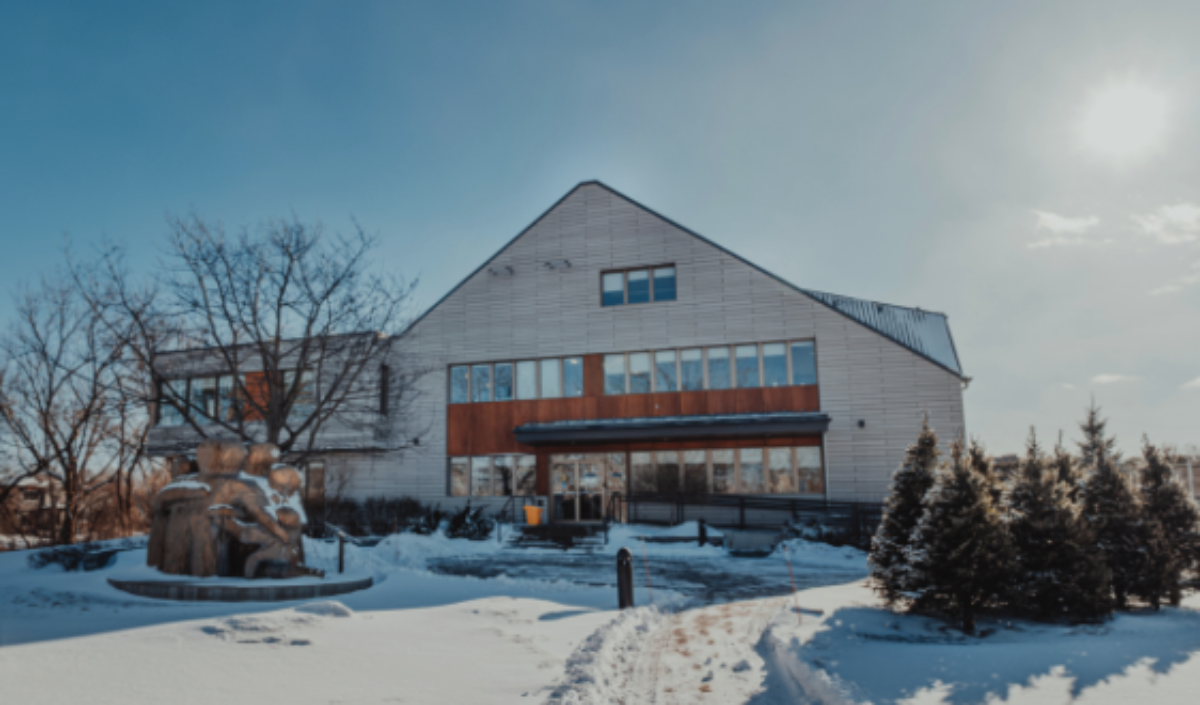
Ste. Catherine City Hall was the site of an intergovernmental meeting on Terrapure. Courtesy city of Ste. Catherine website
With the Mohawk Council of Kahnawake (MCK) gearing up for an intergovernmental meeting on the Terrapure file following a visit from the mayor of Ste. Catherine, MCK chiefs were alarmed to learn of a new spill at the beleaguered facility.
The battery recycling plant, which operates in the Ste. Catherine industrial park abutting Kahnawake near Survival School, was charged in October with more than 50 violations of the Fisheries Act stemming from allegations of discharging toxic water into the St. Lawrence Seaway between 2020-2023. The city of Ste. Catherine itself is facing 38 charges under the same law for allegedly allowing it to happen.
The MCK was incensed to only learn of these charges through media reports in January, a sentiment that was compounded when Kahnawake was omitted in a subsequent French-only Ste. Catherine press release that called for a number of governmental bodies, excluding Kahnawake, to convene an emergency meeting.
MCK grand chief Cody Diabo said a representative of Terrapure called him Monday, four days after the new January 29 spill, to inform him that 500-1,000 litres of process water overflowed from a reservoir in the battery breaking plant into a city of Ste. Catherine maintenance hole.
“It’s overall concerning,” said Diabo. “Is this a facility that should be so close to residential and all different areas? That’s a bigger conversation. It brings up what was coming out from the community. Community members don’t want industrial buildings along our boundary on current boundary lines.”
He went on to emphasize that the industrial park is part of the unresolved Seigneury of Sault St. Louis land grievance.
“We’re talking with the federal government about return of lands, but there are businesses there that are ... contributing to the overall decay of those lands,” he said. Anger about the Terrapure situation was a major theme at the community meeting held two weeks ago, Diabo added.
In response to a request from The Eastern Door, Terrapure Montreal general manager Denis Beaulieu said approximately one cubic metre is believed to have reached the storm sewer, which is equivalent to 1,000 litres.
“The contaminant was recovered using a front loader on the street and a vacuum truck,” Beaulieu said. According to Beaulieu, about 65 cubic metres of process water was spilled in total, mainly contained in the building, with about 10 cubic metres of water flowing into the asphalt yard and about a tenth going into the sewer.
“Our internal procedures were activated, including recovery of the spill material and notification to the various regulatory bodies, including the city of Ste. Catherine,” he said, adding that the company has maintained regular communication with relevant stakeholders, including the MCK.

On January 30, Ste. Catherine mayor Sylvain Bouchard travelled to Kahnawake to meet with MCK chiefs after weeks of consternation in the community about a lack of communication from the municipality.
Bouchard made it clear that Kahnawake is invited to the emergency meeting with other levels of government, which will take place in Ste. Catherine today, Friday, after a Radio-Canada report last month revealed the existence of an internal Monteregie health agency report alleging that Terrapure workers had been exposed to lead.
“It’s about time,” Diabo said. “I plan on going with some very strong words, especially in light of this new incident. Kahnawake has to be at these conversations all the time, and we need to be getting all the documentation.”
In response to a request for comment on the state of this file and renewed communications efforts, the city of Ste. Catherine sent a press release to The Eastern Door expressing optimism about the meeting that took place in Kahnawake last week between the municipality and the MCK.
“Environmental concerns related to Terrapure affect both the citizens of Ste. Catherine and those of Kahnawake,” Bouchard is quoted as saying. “It is essential that our two communities have access to the same information, in full transparency. This meeting marks the beginning of a constructive and respectful relationship based on collaboration and dialogue.”
It is believed Bouchard mentioned the January 29 spill during the meeting with the MCK the following day, which was held with the assistance of live translation technology, but uncertainty was expressed by the MCK on this point. A request for clarification from Ste. Catherine was not returned by deadline. According to Diabo, efforts are being made to facilitate more reliable real-time translation within the MCK to avoid confusion.
A mistranslation of the January 20 Ste. Catherine press release that had called for an emergency intergovernmental meeting led the MCK to mistakenly believe that the meeting had already occurred, precipitating a caustic communique from Council. This event seems to have paved the way to improved communications, however.
The emergency meeting that Ste. Catherine requested aims to clarify environmental concerns arising from Terrapure’s activities by pulling together the relevant authorities, according to this week’s press release.
Here in Kahnawake, a Terrapure working group is meeting weekly, and MCK chief Iohahiio Delisle said Council is ready to fund any additional resources the Kahnawake Environment Protection Office (KEPO) may need to investigate contamination linked to industrial activity associated with the area around the industrial park.
Delisle feels Bouchard’s concerns for the health and wellbeing of Ste. Catherine residents are genuine and acknowledged that the mayor expressed concern for Kahnawa’kehró:non as well.




Still, Delisle told the mayor Kahnawake is in a serious “state of concern” and signalled that the community has had enough.
“I told the mayor as a result of our community meeting, the general consensus from our community is we want that plant shut down,” said Delisle, noting that the industrial park has long been a frustration for Kahnawake.
“We’ve always been in opposition to that industrial recycling plant right next door to our students, KSS (Kahnawake Survival School), as well as our residential lands, our community.”
MCK chief Ross Montour, who leads the environment and Indigenous rights and research portfolios, said there is still a lot of information that needs to be gathered ahead of determining Kahnawake’s next steps, but like many others in the community he favours the plant’s closure.
This is a message he heard loud and clear at the last community meeting, where people vented their concerns not only about this incident but concerns over air quality that put Terrapure on the community’s radar previously.
“To me, Quebec setting limits and so on on what’s allowable to dump in the river is a piss poor way to be responsible about the environment, saying, ‘well, you can poison it, but only to this amount,’ that’s how I look at it,” he said.
He noted that food security is a big concern in the community.
“People express it as food sovereignty,” he said. “We then have the right to be able to harvest from the river, from the waters, in a sustainable, healthy way. We need to trust that our waters aren’t being destroyed by contamination.”
Last month, Environment Quebec confirmed to The Eastern Door that Terrapure’s operating permit was renewed in 2025 with an amendment relating to wastewater discharge standards. According to spokesperson Ghizlane Behdaoui, the plant is “authorized to process lead-bearing hazardous materials for recycling purposes at a liquid lead production rate of 120,000 ton per year.”
At that time, Beaulieu told The Eastern Door the facility operates within the law, according to prescribed discharge criteria, and could not comment further due to ongoing litigation.
Sign up for email updates from The Eastern Door
Montour characterized the location of industrial facilities near Kahnawake, like the kind that led to the relocation of KSS, as environmental racism. He said the failure to include Kahnawake reflects a longstanding pattern of a failure when it comes to the duty to consult.
To emphasize Kahnawake’s expectations, he told the mayor about the significance of the Two-Row Wampum at last Friday’s meeting.
“I was there to tell him these are our concerns in terms of the health of the community, the health of the waterway, and how our rights are being ignored,” Montour said.
He compared governments passing the buck on their responsibilities to Kahnawake to a well-known childhood bullying game, monkey in the middle.
“You’re running around trying to get your hat back,” he said.
Marcus Bankuti, Local Journalism Initiative Reporter