Council slams federal water bill
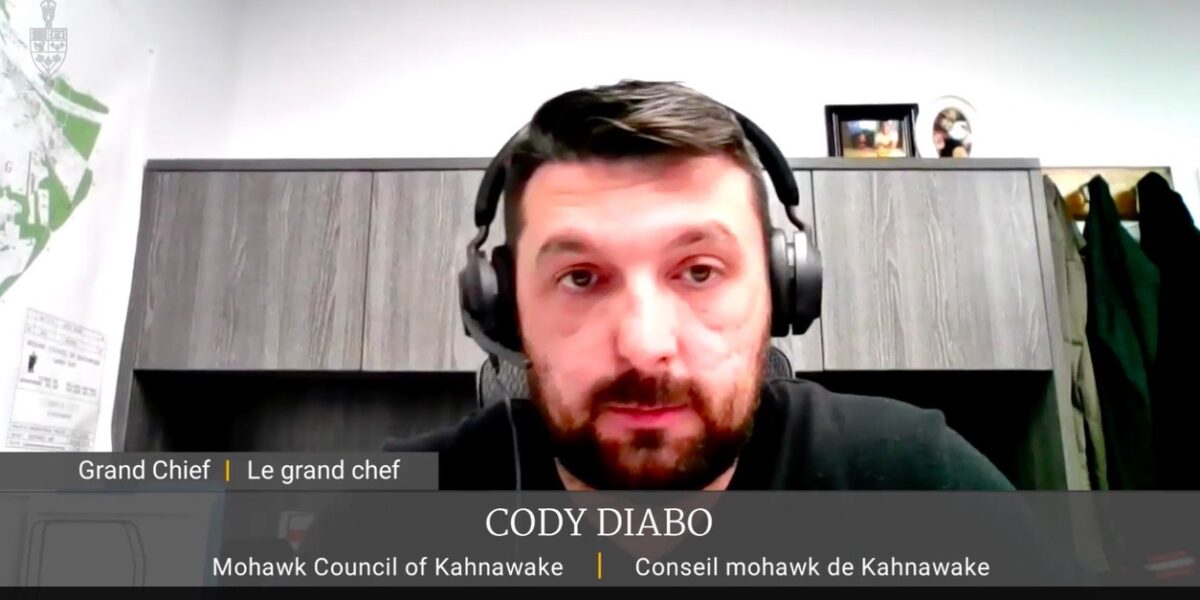
A federal bill aimed at imposing drinking water standards in First Nations communities fails to respect those nations’ inherent right to govern their own waters, Mohawk Council of Kahnawake (MCK) grand chief Cody Diabo told a parliamentary committee earlier this month.
Bill C-61 is currently going through a second reading in the House of Commons. Canada was forced to update its drinking water legislation as part of the terms of a $8 billion drinking water class-action settlement reached with First Nations in the country in 2021.
“The MCK stands with Indigenous peoples across the land who struggle for clean water, however we oppose Bill C-61, which reproduces Canada’s flawed positions on the inherent governance rights of Indigenous peoples and limits Kahnawake’s right to govern the waters in our own backyard,” Diabo said on October 7 as he addressed a standing committee on Indigenous and northern affairs, one the parliamentary committees that’s been tasked with studying the bill.
The proposed law would set updated standards relating to the protection of water sources in First Nations. It would also apply Canada-wide drinking water and wastewater standards relating to water filtration plants in those communities.

The MCK also opposes the proposed law because it does nothing to affirm Kahnawake’s right to participate in the governance of the St. Lawrence River and the Seaway that runs through it.
“We ask you to amend the Canada Marine Act to include the recognition and protection of our rights, on your end that is,” Diabo added in his opening statement. “The MCK has also repeatedly requested changes to Seaway governance to honour our rights to participate in the governance of these crucial waters that are firmly within our territory. Our concerns have been met with total silence.”
Diabo reiterated that while he appreciated the chance to take part in the parliamentary committee meeting remotely, he said Kahnawake should have been consulted in depth prior to Bill C-61 going through a reading in the House of Commons.
“You need to include First Nations in the drafting ... rather than saying, ‘We’re going to legislate this, and you’re going to fall in line,’” he told Sébastien Lemire, the Bloc Quebecois member of parliament for Abitibi—Témiscamingue, after he asked about how to strengthen collaboration relating to the bill moving forward.





Both Lemire and Jaime Battiste, a Mi’kmaq member of parliament for the Liberals in British Columbia, addressed the MCK grand chief throughout the committee meeting to respond to concerns brought up in his opening statement.
Battiste in particular asked if he’d like to see an amendment proposed that would better affirm First Nations’ inherent rights and their treaty rights. Diabo said that wouldn’t be enough, as the proposed law would still fall short of adhering to the United Nations Declaration on the Rights of Indigenous Peoples.
Canada has been failing to meet the terms of the declaration through its refusal to do away with the Van der Peet test, Canada’s current legal standard for defining which Indigenous rights merit protection under its constitution.
Coming out of a 1996 Supreme Court decision, that test was rejected by Superior Court of Quebec in the recent White-Montour ruling, which recommended a modernization of the test. In instances of litigation, the Van der Peet test requires nations to prove their practices, customs, or traditions existed prior to colonization.
Sign up for email updates from The Eastern Door
“Why do First Nations have to prove their rights to a settler nation?” Diabo asked Battiste.
The MCK grand chief couldn’t be reached this week for an interview about the proposed law.