Montreal remembers every child matters
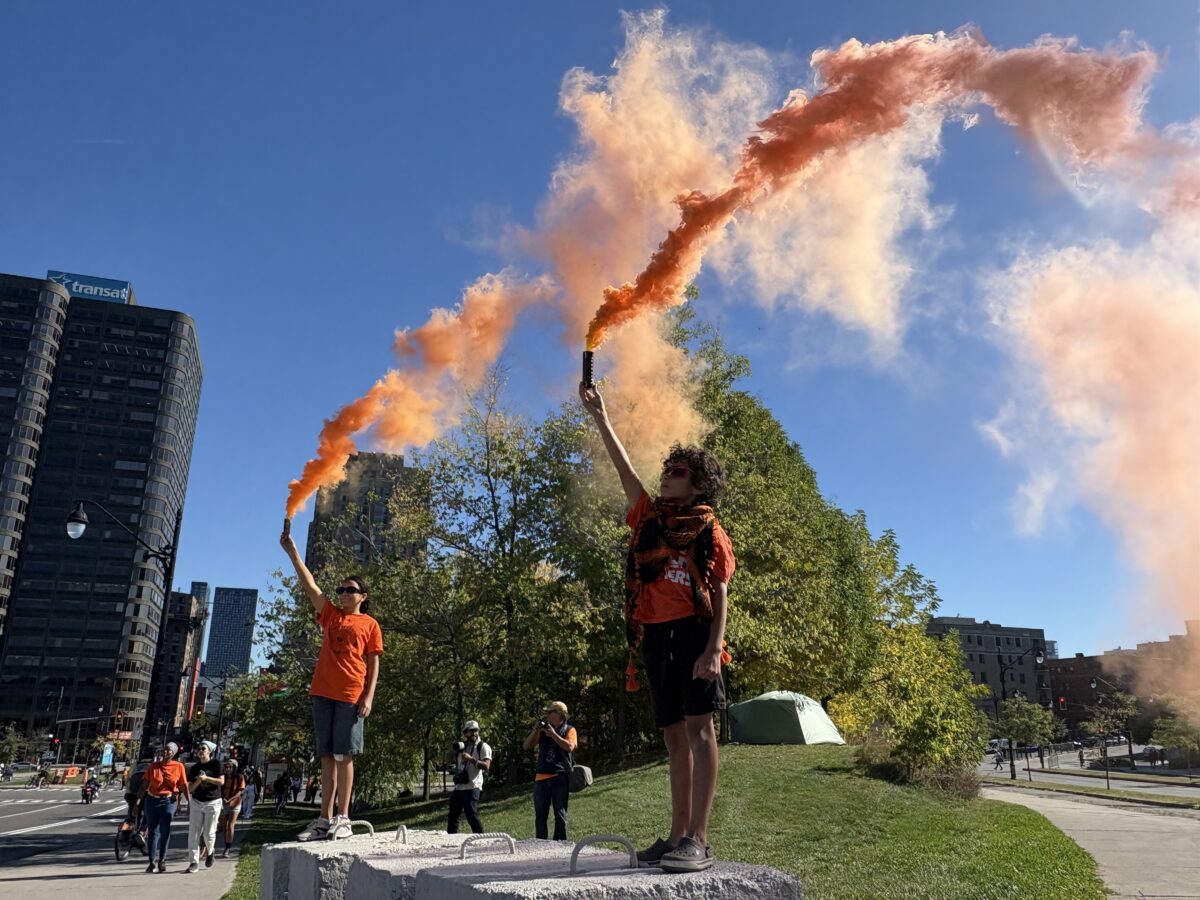
Marchers raise orange smoke flares at Mont Royal during the Truth and Reconciliation Day march, honouring survivors and victims of residential schools and calling for justice and remembrance. Raven Katsit’siio Edwards Brown The Eastern Door
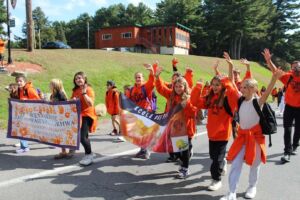
On September 30, Montrealers gathered at the Sir George-Etienne Cartier Monument in Montreal for the National Day for Truth and Reconciliation, also known as Orange Shirt Day. With drums, medicine, smudging ceremonies, speeches, banners held, and hundreds dressed in orange shirts, the march served as both a memorial for the children who never returned home from residential schools, and a demand for systemic change that still hasn’t come.
This annual day of reflection was created to honour the victims and survivors of the residential school system. For Indigenous leaders like Na’kuset, executive director of the Native Women’s Shelter of Montreal, the day is about far more than remembrance, it’s about truth.
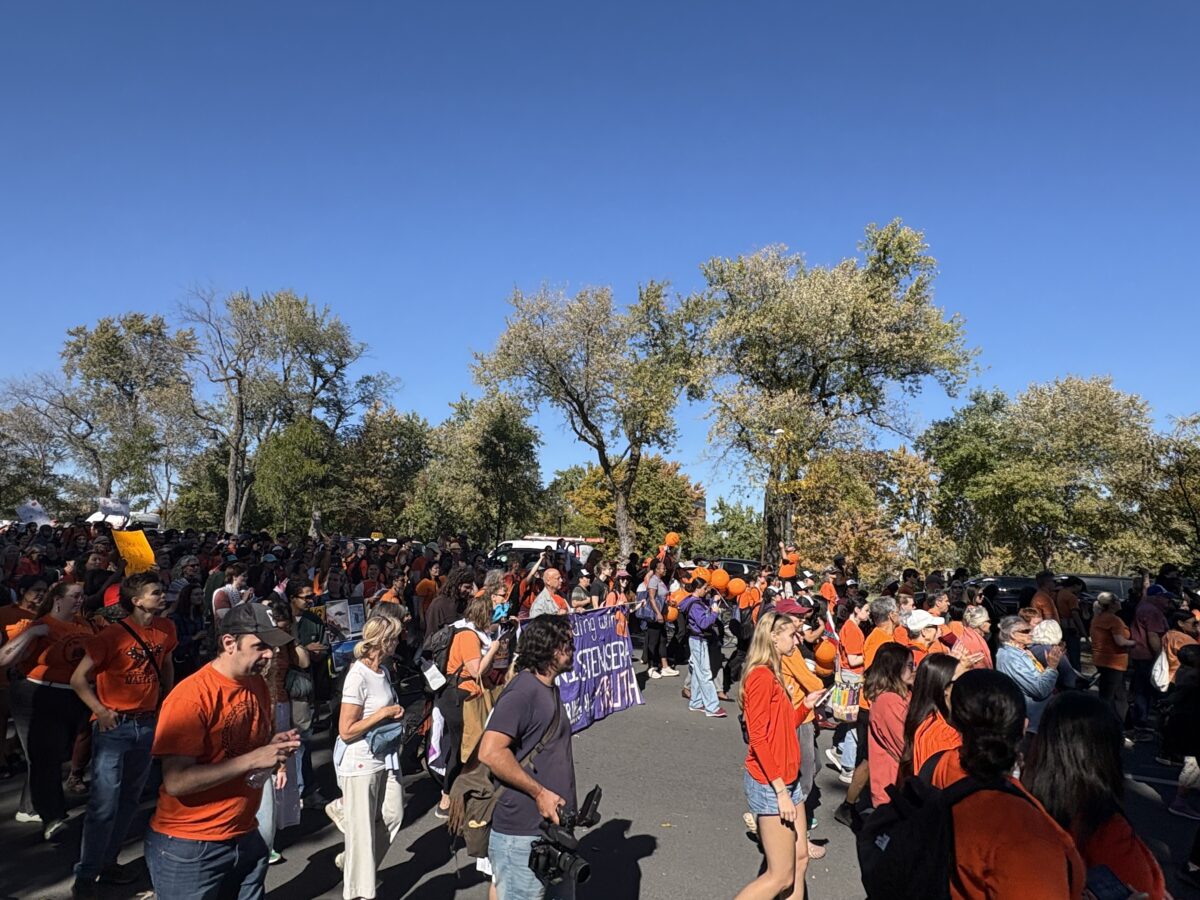
United in orange as thousands gather in solidarity for the Truth and Reconciliation Day march, standing together to honour Indigenous survivors and remember the children lost to Canada’s residential school system. Raven Katsit’siio Edwards Brown The Eastern Door
“It really concerns me that there’s not enough information in the history books,” Na’kuset said. “You’re not going to find anything about mass graves because they’ve only recently been discovered, and they don’t want to share that.”
Na’kuset emphasized the need for non-Indigenous people to do their own research, speak with survivors and elders, and actively seek out Indigenous voices, and have the difficult conversations.
“We have a residential school survivor here, and she’s going to share her story. That’s why I do these events, so people can learn from others,” she explained.
At the heart of the event was a call to educate, amplify Indigenous voices, and hold governments accountable for decades of harm and ongoing colonial violence.
Kanehsata’kehró:non Ellen Gabriel reminded marchers that Canada’s crimes against Indigenous peoples did not begin or end with residential schools.

“Cultural genocide isn’t even a legal term, but Canada doesn’t want the world to know: it happened. And it wasn’t just residential schools. Our land, our resources, our children, they’re still being taken. Our languages are still called inferior. But we are Onkwehón:we, and this is Kanien’kehá:ka territory. We are here to stay.”
Gabriel also addressed the ongoing denialism of residential school atrocities.
“Indian residential school denialism is a crime. This was an education system, but not for education. It was made to extinguish our rights, make us forget those ancestral teachings that helped us survive,” she said.
“They brought war and disease, and still Canada doesn’t recognize this as genocide. Between 1936 and 1954, Canada was already destroying files from residential schools, and they continue to this day to try and erase us from this land’s history.”
Despite a decade having passed since the Truth and Reconciliation Commission (TRC) released its 94 Calls to Action, only 15 have been fully implemented.
“Ten years, and only 15?” said Na’kuset. “That’s a failure. I find it super discouraging. If the government wants to move fast, they can. But they choose not to, and it’s important to ask ourselves why not now?
While progress is slow, Na’kuset and her team are taking matters into their own hands. The Native Women’s Shelter has opened second-stage housing, a social pediatric clinic, and provides legal support for Indigenous women and children. “If someone has a youth protection issue, we’ll pay her to help them get their children back, that’s how far we will go to protect and support our Indigenous community,” Na’kuset added.
“If they won’t do it, we’ll find our own solutions,” she said.

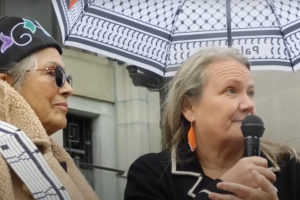



Kevin Deer, a respected Kanien’kehá:ka elder and speaker at the march, delivered a powerful message on the interconnectedness of truth, land, and climate.
“Why do we have to go through this?” he asked. “Because over the great salt water, there was an attitude of superiority. When they came here, we weren’t of the same belief system, so we were seen as less than human.”
Deer emphasized the spiritual damage inflicted by residential schools and colonial policies aimed at “killing the Indian in the child.”
“They wanted to kill the Indian to save the man and get rid of our language, our songs, our dances. Because if there are no more Indians, then there are no more land claims,” he said. “But we’re all equal. We’re all children of Mother Earth.”
For Kay (Kelly-Ann) Bernier and Lorena Naiden, two social work students who attended the march, Truth and Reconciliation Day is a moment of accountability, particularly for settlers.
“As an allochthonous person, I find it really important to learn about past history, especially the violence that my ancestors participated in,” said Bernier. “Our profession has colonial roots. It’s my duty to unlearn those and to be present educating myself and showing awareness.”
“Marching is the least we can do, coming to the march is one small way we can show up and support Indigenous people,” added Naiden. “We try to share resources and push for education. One day isn’t enough.”
The two noted the importance of education and symbolic visibility, like wearing orange and marching but also stressed that more is needed.
Sign up for email updates from The Eastern Door
“I think we should be activists every day of the year. But this is a start,” said Bernier.
“We are resurrecting Indigenous spirituality and wisdom,” said Kevin Deer. “We’re going to make the change; there’s no doubt in my mind.”
Truth and Reconciliation Day is not a celebration, it is a call to action. A reminder that while many Canadians may wear orange on September 30th, true reconciliation requires consistent, informed, and respectful engagement, every day of the year.
“You’re on Indigenous land,” said Na’kuset. “If you’re not First Nations, Inuit or Metis, you came from somewhere else. It’s your responsibility to learn who’s land you occupy, listen and educate yourself, and critically think about the effects of colonialism.”