Canada refuses child welfare negotiations
One of Canada’s leading child welfare experts says that Canada has committed “a huge breach of good faith negotiations” after the government announced that it would not be participating in national negotiations on a $47.8 billion settlement deal regarding child welfare, instead pursuing discussions for a deal with only chiefs in Ontario.
“I would have never, ever, in all these years, ever even contemplated entering into an arrangement with Canada that satisfied some children and left other children out,” said Cindy Blackstock, executive director of the First Nations Child and Family Caring Society, which is a party in the Canadian Human Rights Tribunal (CHRT) complaint that the settlement stems from. “That’s just unacceptable.”
The Caring Society has filed another motion with the CHRT, demanding that Canada be forced to restart negotiations at a national level. Right now, the government said it is negotiating a deal with the Chiefs of Ontario (COO), which serves the whole of Ontario, and the Nishnawbe Aski Nation (NAN), which represents 49 First Nations in Ontario, both of which are also parties to the original complaint.
The Ontario regional chief, Akwesasne’s Abram Benedict, who heads up COO, said that his regional leadership felt that the deal couldn’t wait any longer, and decided to forge ahead with an Ontario-specific agreement in the best interests of children.
“This is not a process that we’re arguing for Ontario to get a better chunk of the pie,” he told The Eastern Door. “The rights holders are the communities, and I have 133 of them in our region that have overwhelmingly said ‘We want to advance reform today,’ so that’s what we’re going with.”
Benedict said that the timing of the deal is particularly urgent - with a federal election looming, it’s likely that the next federal government will be a Conservative one, which he said leaves the future of the settlement agreement uncertain.
“We know the political climate now,” he said. “This cannot wait.”

But by negotiating separately with COO and NAN and refusing to resume negotiations at a national level, Blackstock said that the government could be putting the welfare of First Nations children in provinces other than Ontario on the line.
“If this is the precedent, that Canada is found to be discriminating against all children in the country, and then Canada gets to pick and choose where it ends the discrimination and how, then how is that lining up with the overall goals of self-governance and reconciliation?” Blackstock said. “The Truth and Reconciliation Commission said that discrimination needed to end for all children, not just some of the children.”
The settlement agreement had been proposed after nearly 20 years of negotiations, after the CHRT said that the federal government’s chronic underfunding of on-reserve child welfare services amounts to discrimination. The CHRT ordered Canada to compensate children who had been discriminated against and make an agreement with First Nations leadership to reform the system.
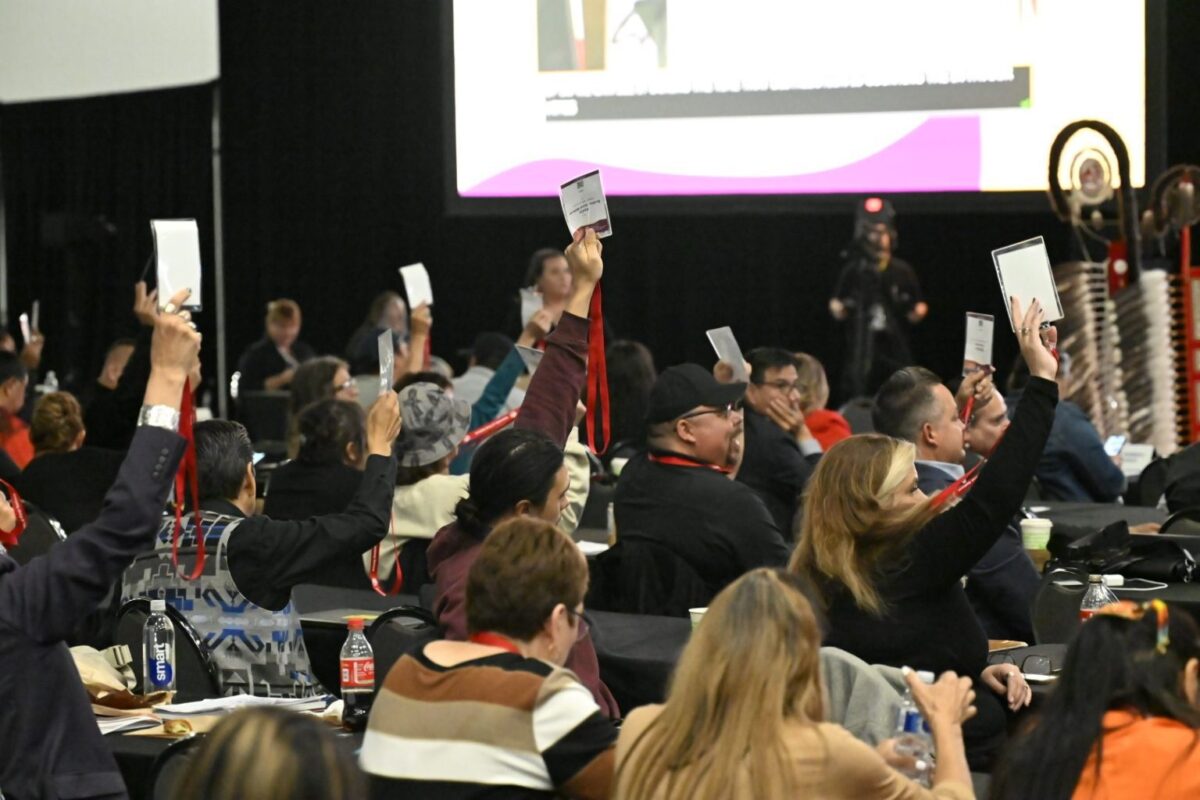
The deal had been brought before the Assembly of First Nations (AFN) in October of last year, with around 65 percent of chiefs ultimately voting against the settlement deal.
Some advocates, including the Caring Society, argued that the deal didn’t go far enough and included measures that would potentially diminish communities’ rights in protecting their children.
Benedict said that after the deal was rejected, Ontario chiefs discussed their opinions on the matter, and leadership was ultimately given the mandate to push for an Ontario agreement.
“We immediately began pushing politically and lobbying the government for that,” he said. “It took some time and a lot of pressure, a lot of lobbying the government. But they came back and said that they’re in a position that they will advance an Ontario-specific reform for the First Nations child welfare program.”

According to Benedict, negotiation teams from COO, NAN, and Canada have been meeting to review the existing agreement and pare it down to an Ontario-specific agreement.
In a written statement to The Eastern Door, Jennifer Kozelj, press secretary for Patty Hajdu, the government’s minister of Indigenous services, confirmed that negotiations had already begun with COO and NAN to reach a standalone deal in light of the vote at the AFN last year.
“If approved, this agreement would have ensured the long-term sustainability of key investments already being made to prevent children from being taken into care, supported First Nations to have flexibility in using their resources to support their children who are currently in care to stay connected to family and community, and helped young adults transition to independence,” Kozelj said. “However, the Assembly of First Nations voted to reject the deal.”
Blackstock said that the Caring Society’s motion aims to force the government to continue speaking with chiefs other than just those in Ontario, and that they should be compelled to listen to the decision made by the majority of voting chiefs at the AFN.
“The sad part of all of this is that we have an evidence-based plan to end the discrimination, we have a workable plan, it’s not that this is a problem without a solution. But Canada has to be willing to do it,” Blackstock said. “We’re not talking about asking for billions and billions of dollars more. We’re talking about structuring the money in a way that ends the discrimination for kids.”
The Caring Society has been successful with multiple CHRT motions against Canada, and Kahnawake Shakotiia’takehnhas Community Services (KSCS) executive director Derek Montour said that he’s confident in Blackstock’s leadership on this issue.
“Cindy is a fighter, she’s what got us to this point, because of her drive, her determination, and her will to keep going,” he said. “To me, their latest offer is an attempt to not go the full nine yards. They want everyone to say ‘Oh, they have an agreement, we better jump on the bandwagon so that we actually get an agreement.’”
Sign up for email updates from The Eastern Door
He said that Canada must negotiate with all First Nations - not just those in Ontario - to ensure they comply with the CHRT’s orders that they end discrimination in the child welfare system.
“They gave specific orders on how to end that discrimination, and so I’m confident and hopeful with the motion that the Caring Society has made, and I’m supportive,” he said. “But at the end of the day, it’s in the court’s hands.”
Ghislain Picard, head of the Assembly of First Nations Quebec-Labrador and AFN regional chief, said that Canada’s refusal to negotiate with other regions could have implications for the kind of compensation and supports places other than Ontario might receive.
“It’s very, very frustrating that it’s come to this, as a region I think we’re probably better suited than anyone to respect the realities that we have in our province,” he said. “To hear that there’s negotiations at the regional level for one region but the door is closed for other regions is very frustrating.”
This announcement is the latest in ongoing disappointments from the federal government regarding child welfare, Blackstock said. At the end of December, it was announced that Canada would be challenging a separate CHRT order that said the government must urgently address backlogs in the Jordan’s Principle program.
“The concern is that when Canada deploys these manoeuvres, it’s children who pay the price, time and time again,” she said. “Canada never learns that lesson. They always put themselves first.”
CHRT decisions can take several months to be reached, but Blackstock told The Eastern Door that the Caring Society has asked for an expedited schedule as part of their motion.