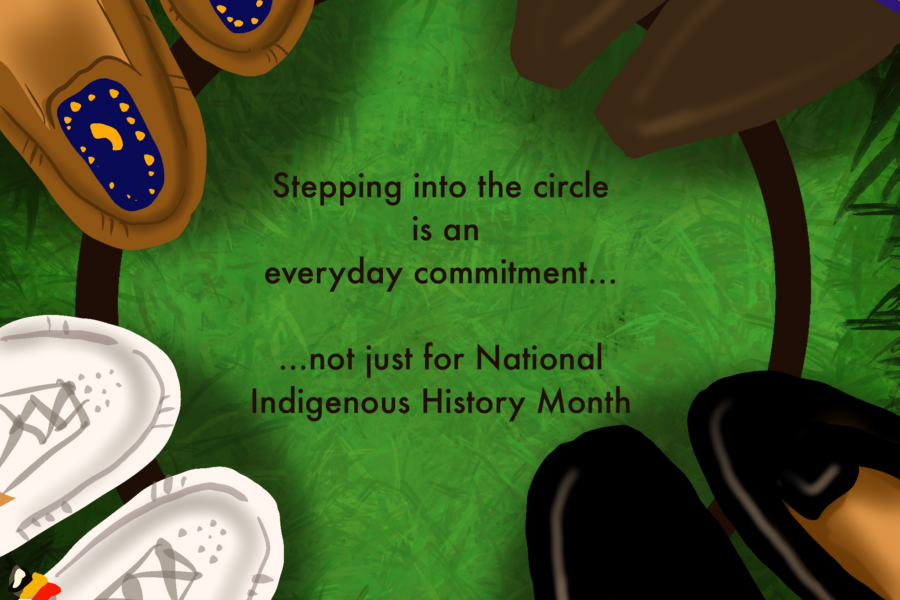
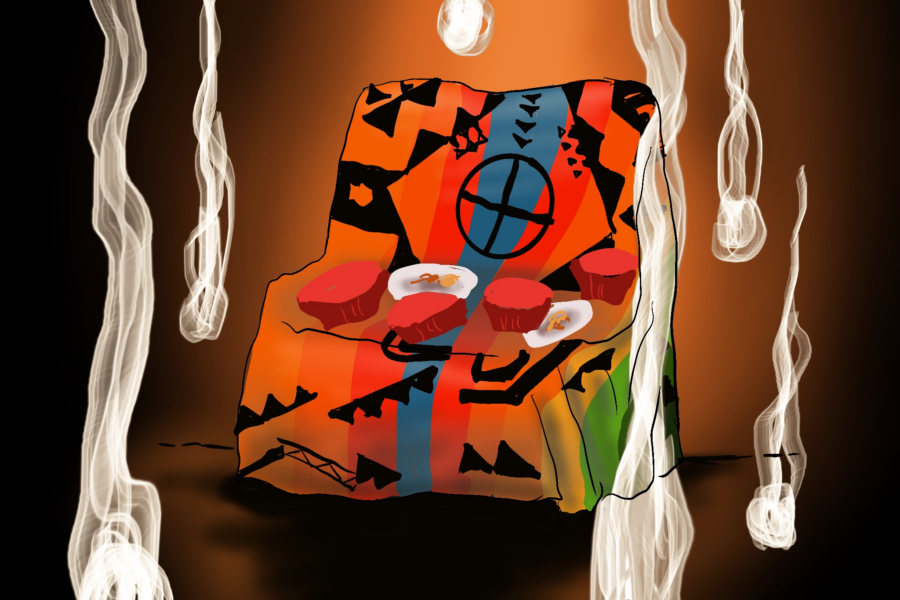
When will it end?

Megan Kanerahtenha:wi Whyte The Eastern Door
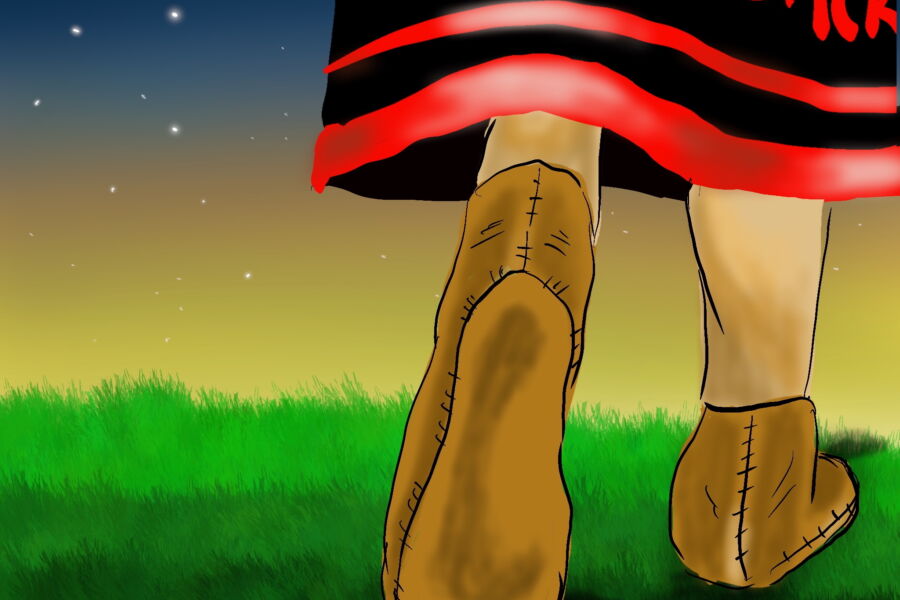
October 4 marked the National Day of Action for Missing and Murdered Indigenous Women and Girls, the counterpart to Red Dress Day on May 5, which is the National Day of Awareness.
Two days is better than one, but it’s far from enough when we’re talking about what is not just a tragedy, but a countrywide emergency. This is a crisis, and every day must be marked by awareness and action, especially for those who are in a position to enact change.
As we have noted before, when the final report from the National Inquiry into Missing and Murdered Indigenous Women and Girls was finally published in 2019, it sounded the alarm on the terrifying rate at which Onkwehón:we women and girls are murdered or disappear - 12 times more often than the countrywide average. That’s one reason the national inquiry concluded that Canada has committed genocide against the Indigenous Peoples of Turtle Island.
The causes of this emergency are many, too numerous to note here in full, but the report highlighted the impacts of intergenerational trauma, social and economic marginalization, and the “clear desire” of institutions and governments to “maintain the status quo.”
After all, for a host of reasons tied to colonialism, Indigenous women, girls, and LGBTQ2S+ people bear a vastly disproportionate brunt of Canada’s intractable socioeconomic inequity, including homelessness, food insecurity, and other forms of poverty.
The report also notes that the agency and expertise of Indigenous women, girls, and LGBTQ2S+ people have been routinely ignored.

Yet by June 2024, according to the Assembly of First Nations (AFN) progress report, only two of the report’s 231 calls for justice had been fully implemented, a pathetic rate of less than one percent over five years.
This is worse than depressing, it is maddening. As the government has wasted years, the lives of Indigenous women and girls and gender-diverse people have hung in the balance.
The federal government’s report for the period spanning April 2024 to March of this year paints a rosier picture, but the executive report’s stated progress, summed up in phrases like “enhancing safety” that don’t tell you much, certainly doesn’t instill confidence that enough is being done fast enough.
For instance, the first bullet point explaining the “enhancing safety” claim boasts an allocation of $1.3 million over three years for a Red Dress Alert Pilot. We previously dedicated a full editorial to the inadequacy of this paltry sum, a rounding error of a rounding error on the scale of a federal budget, yet here it is topping the list of safety measures taken by the government.
That’s not to say productive work isn’t being done on several fronts, including on human trafficking, an area of vital importance when it comes to this issue. But confronting the emergency of MMIWG2S+, rooted in hundreds of years of injustice, takes a level of ambition that we’re not seeing. It’s not just the federal government but all levels of government, not to mention the public at large, who have the obligation to wake up to what’s going on in this country.
Sadly, we’re only a couple years removed from a sitting provincial government in Manitoba campaigning on its refusal to search a Winnipeg-area landfill for the remains of Indigenous women who were victims of a serial killer.

That anyone could have even conceived of that as a useful message to bring to nearly a million registered voters proves that not enough of this country understands the urgency of MMIWG2S+, even in the wake of the national inquiry’s finding of genocide.
The search of the Prairie Green landfill was criticized as too costly, too dangerous, too unthinkable. When the Indigenous politician who ended up winning the election changed course, the remains of Morgan Harris and Marcedes Myran were quickly recovered, bringing some sense of closure to their families.
Any consideration of the cost of overhauling the systems that solidify a crisis of MMIWG2S+ in this country must be answered with the human cost of failing, day after day, to do enough, for that cost weighs heaviest.
None of this works without the government listening to Indigenous experts and voices, for the national inquiry was exactly right when it pointed to the marginalization of the agency and expertise of Indigenous women, girls, and LGBTQ2S+ as key factors in this country’s failures to protect Indigenous lives.
A Red Dress Alert must be implemented quickly and fulsomely. Systemic racism and discrimination must be rooted out of the child welfare system, out of healthcare - something that can only be done when it is named, as Quebec refuses to do.
And material conditions must be lifted to the point that homelessness, hunger, and other forms of poverty are eradicated to mitigate the vulnerability Onkwehón:we women, girls, and LGBTQ2S+ people too often face.
Sign up for email updates from The Eastern Door
This is a country with the resources to do all these things and more, if only it had the will. People in Canada have a responsibility to face up the reality of MMIWG2S+ and other injustices that have colonialism at its root and act accordingly, as partners in good faith.
It is Onkwehón:we who have worked so hard to bring the issue of MMIWG2S+ to the forefront. Some have noted that the powerful symbol of the Red Dress arouses curiosity in the public year after year, but curiosity can quickly grow wearisome.
There’s no excuse for ignorance after so many commemorations, so many vigils. Real action requires real understanding, and real action is needed on October 4, May 5, and every other day.
TED Staff