CanFilmDay spotlights Kahnawake
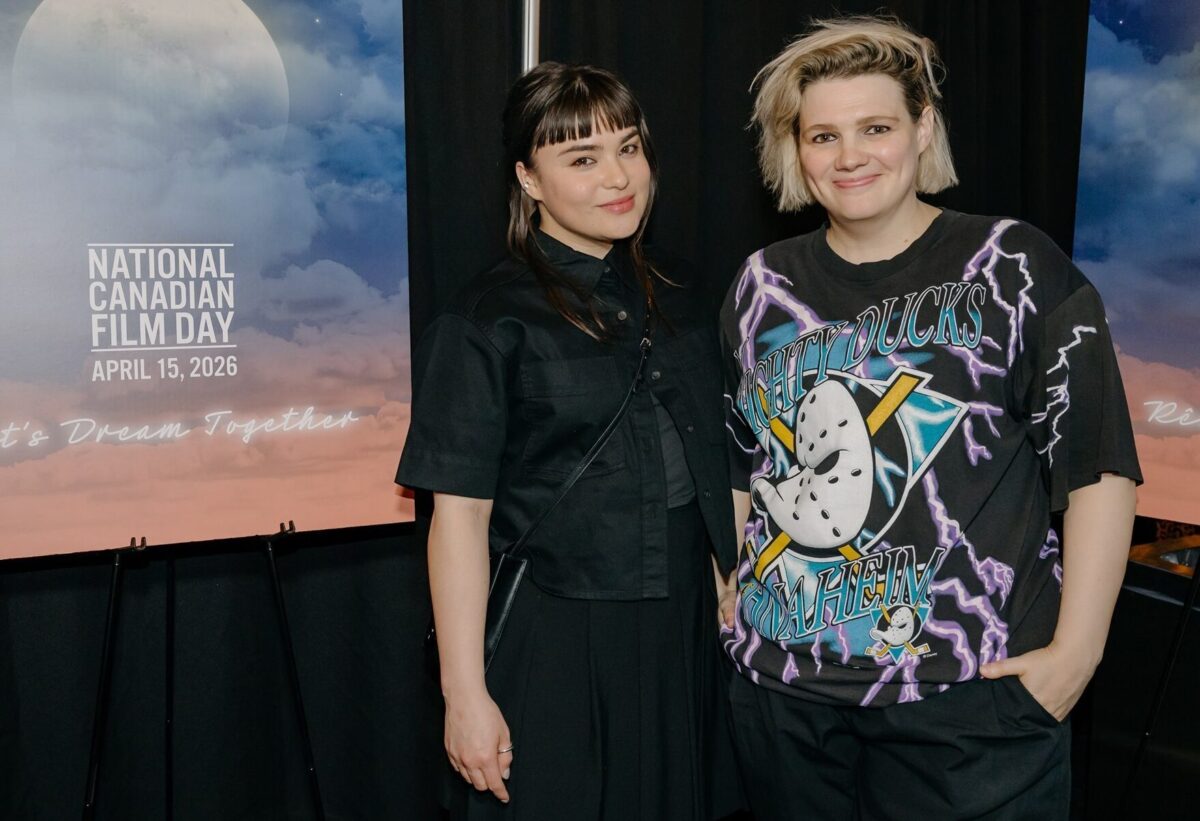
Kawennáhere Devery Jacobs (left) and director D.W. Waterson (right) took part in a Q&A at Scotiabank Theatre in Toronto as part of CanFilmDay. Courtesy Reel Canada
Indigenous talent was front and centre at this year’s National Canadian Film Day, with work by Kahnawa’kehró:non made accessible to audiences for free as part of celebrations on April 15.
Kaniehtiio Horn’s directorial debut Seeds was screened to audiences in Toronto to mark the occasion, as was Backspot starring Kahnawake’s own Kawennáhere Devery Jacobs, who joined director D.W. Waterson for a Q&A after the event.
“I’m happy that initiatives like this exist,” said Horn. “This type of support is important for the growth of the industry in this country. I’m just grateful for literally anyone watching my stuff.”
National Canadian Film Day, also known as CanFilmDay, was first started in 2014, with the intention of bringing together audiences to enjoy home-grown cinema. The day sees screenings across Turtle Island and internationally and gives more people the opportunity to watch films at home for free - this year, more than 2,000 events took place in honour of the day, with 2.5 million viewers tuning in to watch a film at home.

The event is presented by Reel Canada, an organization that aims to bring film into schools across the country and to make cinema more accessible.
“It’s always been important to us to include as much Indigenous-made content as we can in our programming,” said Katarina Gligorijevic, Reel Canada’s special projects consultant. “Indigenous filmmakers are a big part of what’s exciting about our film industry right now, and it’s enormously important to represent that.”
As part of the day, a list of 60 Spotlight Films was also selected by guest programmers, including Alanis Obomsawin’s Kanehsatake: 270 Years of Resistance, which was selected by Cree/Metis filmmaker Danis Goulet.
“We also want to be mindful of the fact that not all Indigenous filmmakers necessarily consider themselves Canadian filmmakers,” Gligorijevic said. “We want to make sure that they’re included in what we’re showcasing, because some of the most interesting and innovative films coming out of Canada are being made by Indigenous filmmakers.”


Jacobs and Waterson participated in a Q&A with audiences at the Scotiabank Theatre in Toronto, an event sponsored by the Inside Out Film Festival, which showcases LGBTQ2S+ cinema. Jacobs had previously been involved in Reel Canada’s programming through the RBC Emerging Artists Programming, when Reel Canada selected her as an emerging artist to spotlight.
“It was really amazing to have her in person, it’s been wonderful to see how her career has progressed because she’s more than emerging at this point, she’s no longer starting out, and it was nice to have her back at an event and have that experience in person,” Gligorijevic said.
For Horn, having events like this that also platform Indigenous work is a positive step for Indigenous representation in the film industry.
“We have a great industry with such an incredible talent pool that I think should be celebrated,” she said. “Having Canadian audiences seeing and appreciating what is being made locally will encourage talent to stay and help it grow.”
Sign up for email updates from The Eastern Door
Gligorijevic said that programming Indigenous content continues to be a key part of Reel Canada’s mandate, including in their in-school programming, where they hope to expose more Canadian youth to Indigenous storytelling.
“We believe that when Indigenous filmmakers tell their own stories it’s a great opportunity for dialogue, for cross-cultural exchange, for connection,” Gligorijevic said.