Calling on Canada to protect Indigenous women

Ella Paulin The Eastern Door
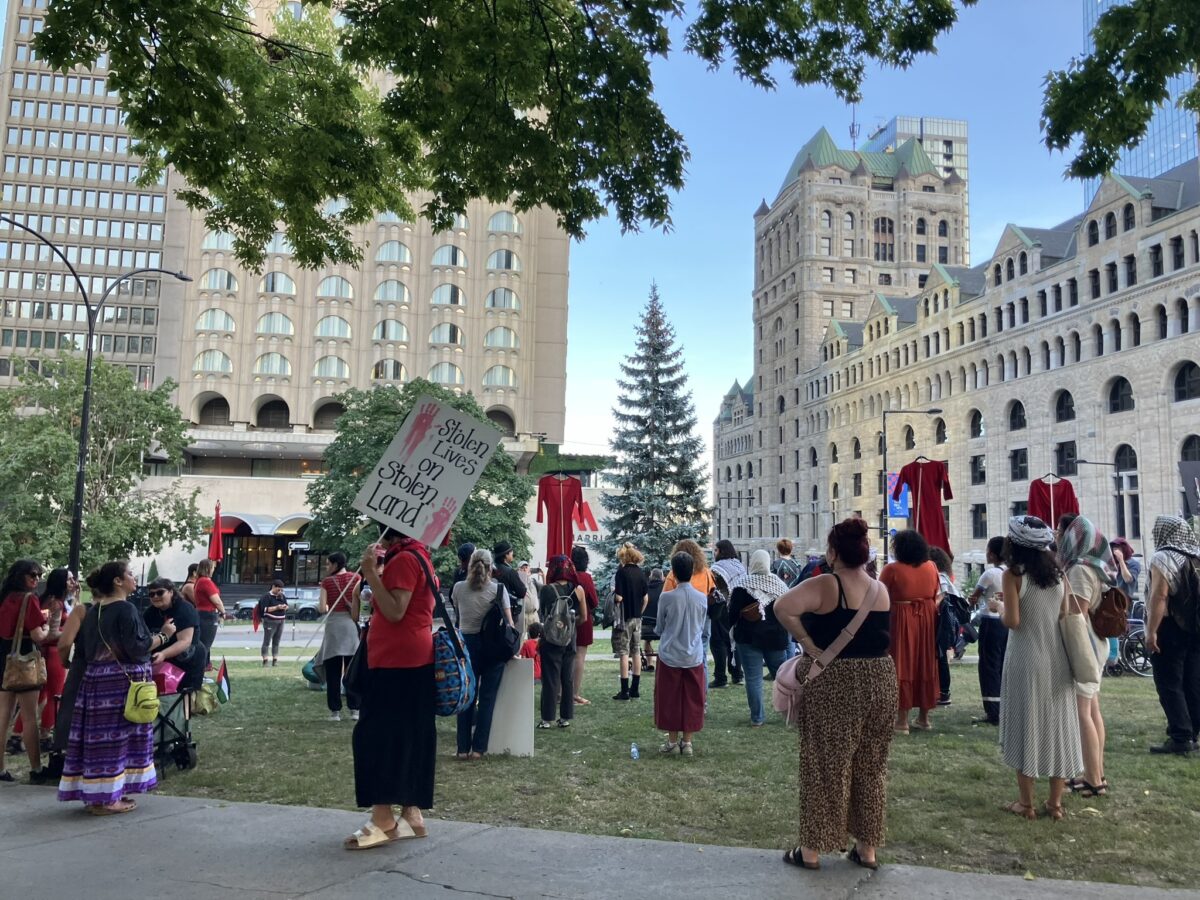
On October 4, protestors gathered in Montreal to mark the National Day of Action for Missing and Murdered Indigenous Women, Girls, and 2SLGBTQI+ People.
The event, which included performances, a vigil, and a march through downtown Montreal, was organized by the Native Women’s Shelter of Montreal (NWSM), its Iskweu Project, and the Southern Quebec Inuit Association.
Native Nam, an author and songwriter, was one of the speakers who opened the vigil, which started at 1 p.m. in Montreal’s Cabot Square. She began her speech with a series of statistics, but also warned that official counts are often underestimates and emphasized the importance of remembering that each number represents an individual person.
“These are not just numbers. These are daughters, mothers, aunties, cousins. They are us,” she said.

On the National Day of Action for Missing and Murdered Indigenous Women, Girls, and 2SLGBTQI+ People, many marched in the streets of Tiohtià:ke to call on the federal government to do more. It also served as a space for people to come together and share their experiences. Ella Paulin The Eastern Door

Siibii, an Eenou singer/songwriter who performed three of her own songs at the vigil, spoke to The Eastern Door about how her personal experiences and artwork are interwoven with the spirit of the protest.
“My stories relate to me as an Indigenous woman, so in that direction, I’m performing a song called ‘Savage,’ which is about colonialism and the impacts of colonialism, and standing against it, and standing in that power - which is exactly what this manifestation is for.”
The protest served a dual purpose, according to Simone Page, project coordinator for the Iskweu Project: to call on the government of Canada to do more to protect Indigenous women, and at the same time to provide a space for people to come together and share their experiences.
“I’m really grateful that our speakers chose to share about these really difficult situations where they’ve lost their cousins or sisters or loved ones,” Page said.
“The march is to remind them that we’re still not letting go of this issue, but it’s also for the people who have been affected by this issue to come together, and I think that was the nice feeling today - that everybody was together, and it felt like there was a bit of medicine in that as well.”


Ella Paulin The Eastern Door
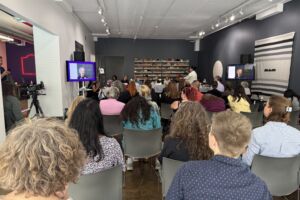
The vigil also saw a drum performance by the Pow Wow Rangers and testimonies from health care support workers, shining a light on the persistent discrimination that Indigenous women face in trying to obtain medical care. Afterwards, attendees began to light candles, take up signs, and assemble for the march.
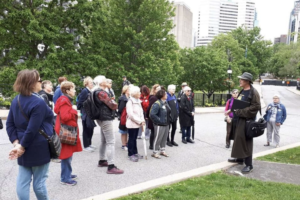
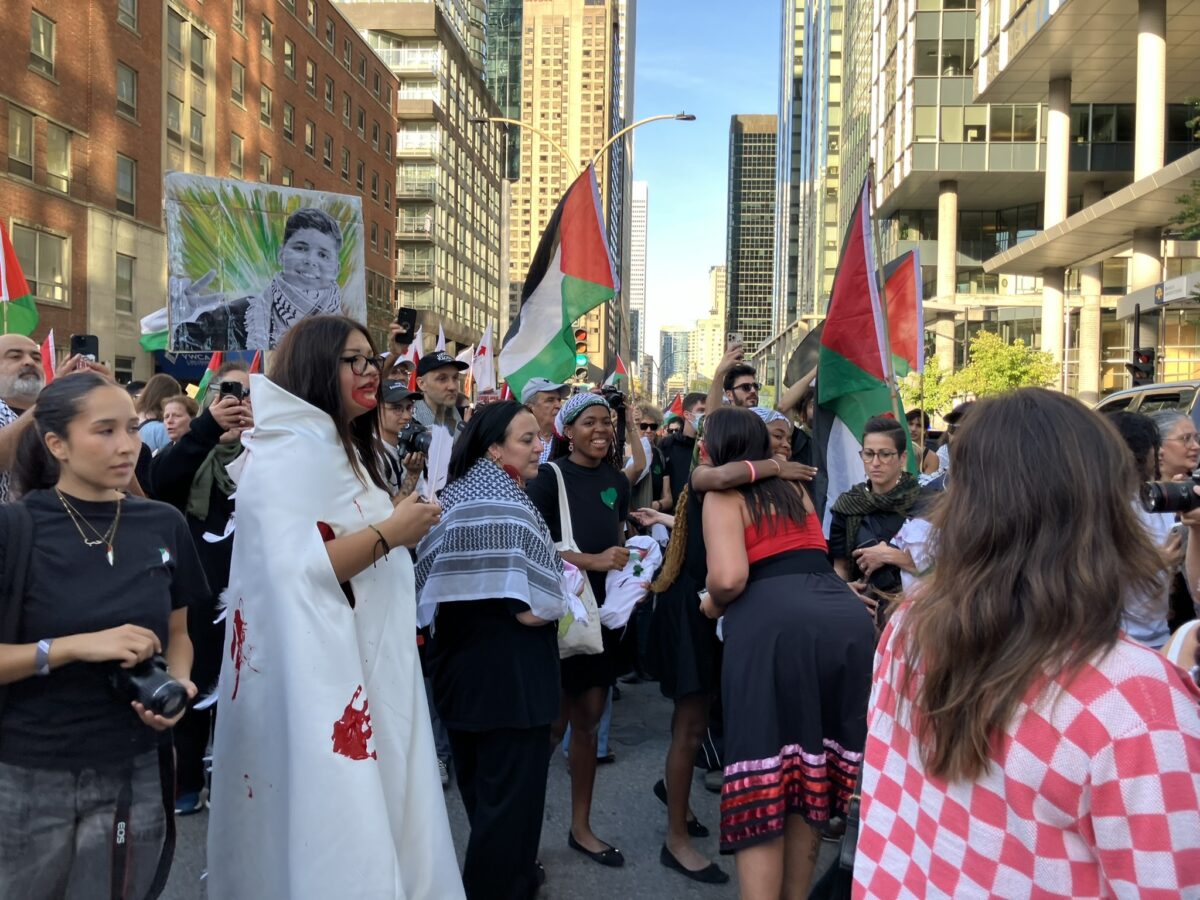
As the group moved from Cabot Square to Place du Canada, protestors danced and sang out in support of missing and murdered Indigenous women and girls and gender-diverse people (MMIWG2S+), calling on the Canadian government to do more to protect Indigenous women and their communities.
Page called on the government, in particular, to make systemic changes like providing housing for Indigenous people who need shelter, combatting the practice of “man-camps” that are established around resource extraction projects and endanger Indigenous women, and ensuring that women who are newly arrived to cities like Montreal are supported so they are not vulnerable to traffickers.
Ella Paulin The Eastern Door
Sign up for email updates from The Eastern Door
“We need to uproot the systems that are continuing colonization,” Page said. “That looks like providing shelter. It looks like providing housing. It looks like actually addressing equity within our society. Because only when we have equity can all these other crises begin to calm down.”
In an unplanned moment, the protestors crossed paths with a pro-Palestinian demonstration that also took place on October 4. While the two groups were intended to pass each other on opposite corners of the street, many took the opportunity to pause and mix together, with chants like “From Turtle Island to Palestine, genocide is a crime!”
The protest, which continued through Montreal’s business district, reached Place du Canada around 5:30 p.m. The demonstration closed with a prayer and a handful of spontaneous speeches from community members who felt moved to share their personal experiences and gratitude towards the crowd.