Second generation cut-off to end
After months of consultations at Senate standing committees, senators have voted 10-1 to pass amendments that would end second-generation cut-off within the Indian Act.
The amendments include the implementation of a “one-parent” rule that would give full First Nations status to an individual even if that person has only one status grandparent. Under the amendments, that individual would not only have full status, but also be able to pass that status onto their own children.
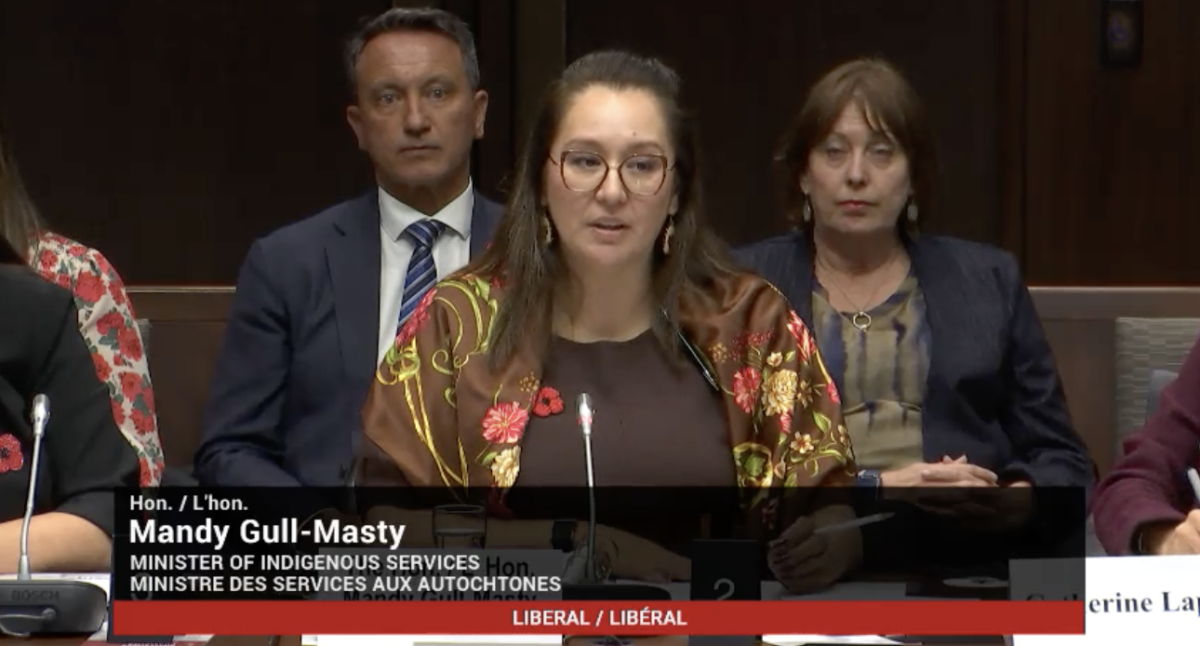
This comes after Indigenous Services Minister Mandy Gull-Masty cautioned that more consultation with communities needs to be done.
Under second-generation cut-off, an individual loses their status after two generations of marriage with non-status individuals.
Mohawk Council of Kahnawake (MCK) chief Jeremiah Johnson had addressed the Standing Senate Committee on Indigenous Peoples about the proposed amendments to Bill S-2, which would amend the Indian Act, earlier this month.
There, he told senators that Kahnawake “adamantly opposes” the bill on the basis that true overhaul and the ultimate abolition of the Indian Act should be led by First Nations communities and not by the federal government.

Johnson said that the amendment to remove the second-generation cut-off still doesn’t fix the overarching problems of the Indian Act itself.
“The Indian Act was designed to remove our people. Amending a broken law is not going to fix the law, it needs to be completely removed, rescinded, revised,” Johnson said. “I don’t believe we should be amending the Indian Act at all. I believe we should be working towards removing the Indian Act and working towards something that better reflects the needs of today’s First Nations people.”
While many First Nations witnesses had advocated for the amendment to remove second generation cut-off, Gull-Masty had told the Standing Committee that more consultations need to take place to determine how that would happen, pointing to the lack of clarity about how the removal of that rule would look in practice, and how communities would be prepared to receive new members that would not previously be eligible to enroll.
“Creating a determination of a solution here at this table and then asking me to go and consult community when this solution is driven from a group that is not of Indigenous descent, and does not realize the impacts of the second-generation cut-off, is racism itself,” Gull-Masty had told senators earlier this month. “I’m sorry, I will not proceed with that. Indigenous People know what solutions are for themselves.”
In an emailed statement to The Eastern Door, Gull-Masty emphasized that the issue of second-generation cut-off is “a critical and deeply personal issue that must be addressed in the right way.”
She added that she’s currently gathering proposed solutions on the path forward, which should be completed by the end of the year, and consultations on those proposed solutions should begin in the new year.

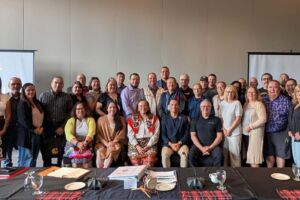

Despite Gull-Masty pressing for Bill S-2 to be passed as is, committee members voted to replace the second-generation cut-off with the one-parent rule, which could mean that thousands of people are eligible for First Nations status that weren’t before.
“That’s rather concerning for me,” Johnson said. “We believe that our community members are for us to determine, we don’t use the Indian Act to determine that, and that’s why we have our own membership law.”
Despite Kahnawake having its own membership law, the new amendments to Bill S-2 could mean that new individuals are given status and registered to Kahnawake’s federal band list.
Johnson said that the MCK is continuing to work with the federal government to ensure that the list of people approved by Kahnawake’s own membership law is kept separate to the federally approved band list, so that the community can keep its own oversight over who has membership.
He said that the federal government has been open to the idea and that they are currently finalizing a funding envelope to explore how that possibility could work in practice.
“It’s been slow-moving, but there has been willingness to move forward from Ottawa’s side,” Johnson said.
Sign up for email updates from The Eastern Door
It’s still a long path for Bill S-2 to become law - the next stage for the bill will be to move through report and reading stages, and it will have to be approved in the House of Commons before being enacted. Amendments could be removed during that process at any time.