Spending, funding don’t match for police services
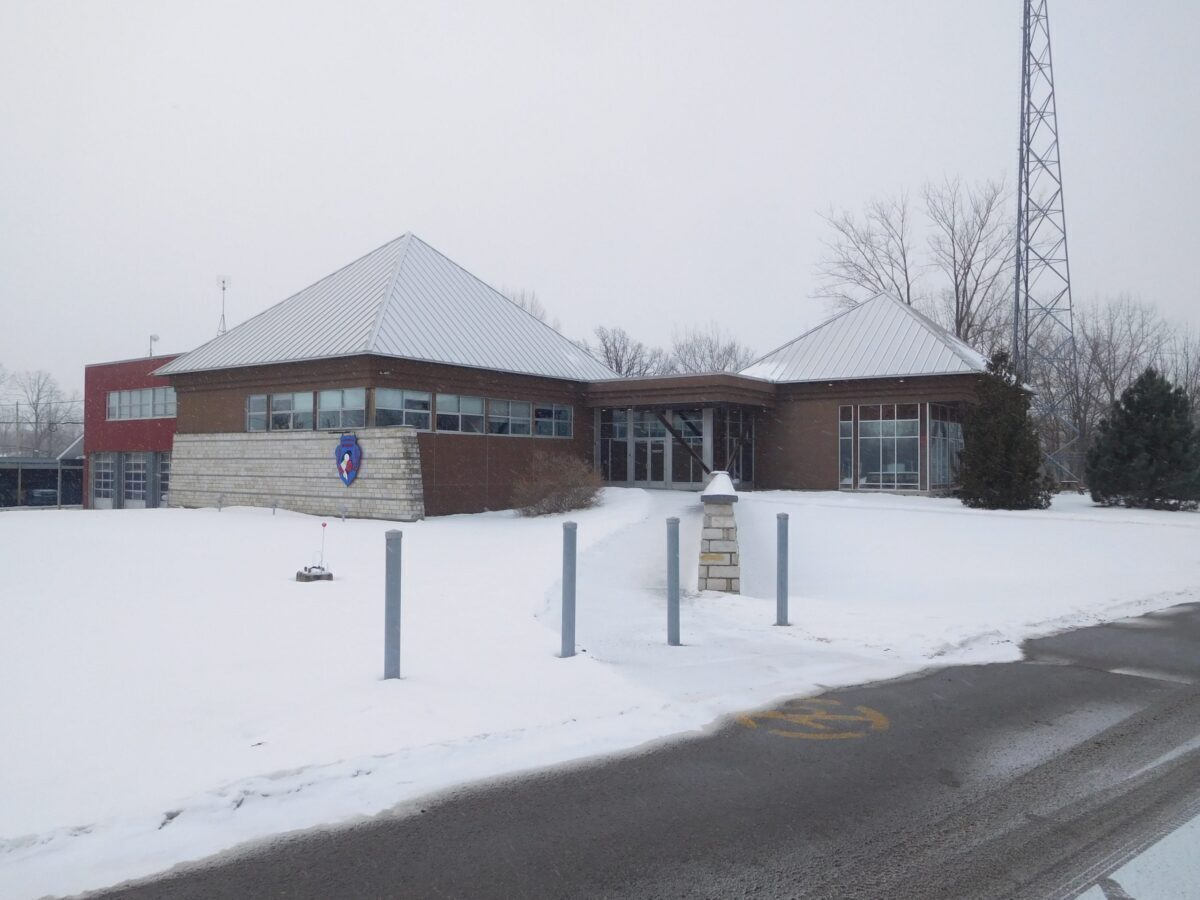
File Photo
A report from the Parliamentary Budget Office (PBO) outlined what Indigenous communities and their police forces already knew: that spending for the First Nations and Inuit Policing Program (FNIPP) has yet to catch up to the needs of these services despite recent increases in funding.
That’s all while these services are still looking for official recognition as being essential in the eyes of the government.
“I just wonder when the government’s going to get it and actually make true, meaningful changes, because the auditor general has made numerous reports saying that the FNIPP is failing to do what it’s supposed to do, and that the government fails in different areas to administer those funds,” said chief Kahnawake Peacekeeper Dwayne Zacharie - also the vice-president of the First Nations and Inuit Chiefs of Police Association of Quebec (ADPPNIQ) and the president of the First Nations Chiefs of Police Association (FNCPA).
The PBO’s report states that while FNIPP’s funding has been significantly increased in the last decade, going from $123 million to $395 million between 2015-2016 and 2024-2025, spending has not matched the funding.
A variety of reasons are cited, including different budget cycles between the federal government, which funds 52 percent of the program, and Quebec, which funds the rest; the COVID-19 pandemic; difficulties in constructing projects in remote communities; delays in approval of projects by Public Safety Canada; and general lack of project management skills within that governmental agency and certain Indigenous communities.
That is also the case for the First Nations and Inuit Policing Facilities Program (FNIPFP), introduced for the 2018-2019 budget to rehabilitate or replace policing facilities in Indigenous communities.
“Each fiscal year, Public Safety Canada works closely with provinces and territories to align planned cost-shared investments with the available FNIPP and FNIPFP program budgets. This is a complex undertaking as investment alignment can be impacted by delays in provincial/territorial cost-sharing approvals, and the capacity of funding recipients to implement initiatives as planned,” said George Haddad, a spokesperson for Public Safety Canada.

Haddad said that improvements have been made to the levels of spending already, with 97 percent of the 2024-2025 budget having been spent, compared to 86 percent of the budget for 2023-2024.
He added that Public Safety Canada “seeks to reprofile” any unspent funds into the budget of a future fiscal year, to keep the funds available.
Despite recent improvements to the program, Zacharie is still of the opinion that the program is failing, and instead, police services should be entrenched in law as being essential services, rather than having to agree to a new police agreement every few years.
He said that while the Kahnawake Peacekeepers are essentially under no threat to have their policing agreement revoked, that’s not the case everywhere, leaving services potentially footing the bill for any costs the government won’t cover anymore.
“In other communities, they rely heavily on that funding that they get from the feds and the province, and at the end of their police agreement, they have no money to continue the next week, even for payroll, so they have to go out and they have to secure loans or lines of credit,” said Zacharie.
“Think about it, we’re already not receiving the funding that we should have, and now here you are, placing this extra burden of going out and securing loans or lines of credit, and now you have to pay back the interest on that.”
While the Peacekeepers are in a much more stable position than many other Indigenous police services, that does not mean everything is perfect.

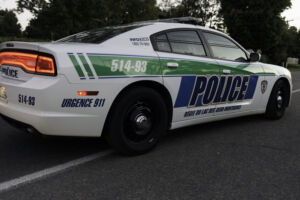

There’s still an almost $100,000 gap between the current cost of training and equipping an officer and the money they receive to do so, he said, on top of having to make choices between training, staffing, equipment, and succession planning that non-Indigenous police forces don’t necessarily have to make.
And that’s on top of extra funding the Peacekeepers have been able to secure by modifying their policing agreement earlier this year.
“Why do we have to make that choice? We should have that equipment, that training, the people to go out and do the job that were mandated to do,” said Zacharie.
“If we had those extra dollars to hire, to recruit, to do succession planning, to do advanced training, to do all of the things that are required to be able to provide the service that our communities are asking for, we’d be in a much better place.”
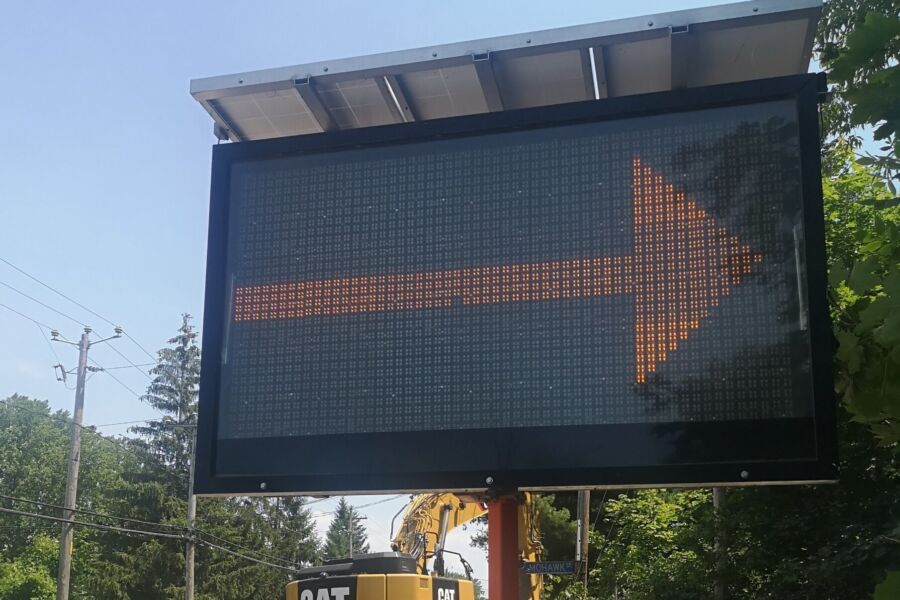
That gap in resources has made itself felt in recent weeks, as Peacekeepers have been present on Kahnawake roads to make sure traffic flows and non-locals don’t cut through in the wake of roadwork in Chateauguay.
“We are feeling it, not only feeling from a budgetary perspective, but also from a human resource perspective,” said Zacharie.
Mohawk Council of Kahnawake (MCK) grand chief Cody Diabo, himself an ex-Peacekeeper, said that the recent traffic crisis has shown the need for services like the Peacekeepers to receive more funding to shore up their needs.
Sign up for email updates from The Eastern Door
“It’s only going to get worse, because the areas around us are growing at an exponential rate, so everything is leading towards the Mercier Bridge. We need to make sure that our emergency services are well resourced,” said Diabo.
“These are things that we have to look at, to start staffing and resourcing adequately now, because doing more with less is not going to work anymore.”