Jordan's Principle changes cause confusion
Chaos continues to strike communities across Turtle Island handling Jordan’s Principle applications, after Indigenous Services Canada (ISC) announced procedural changes to the program this week that could mean a narrowing of eligibility criteria and increased documentation requirements for requests.
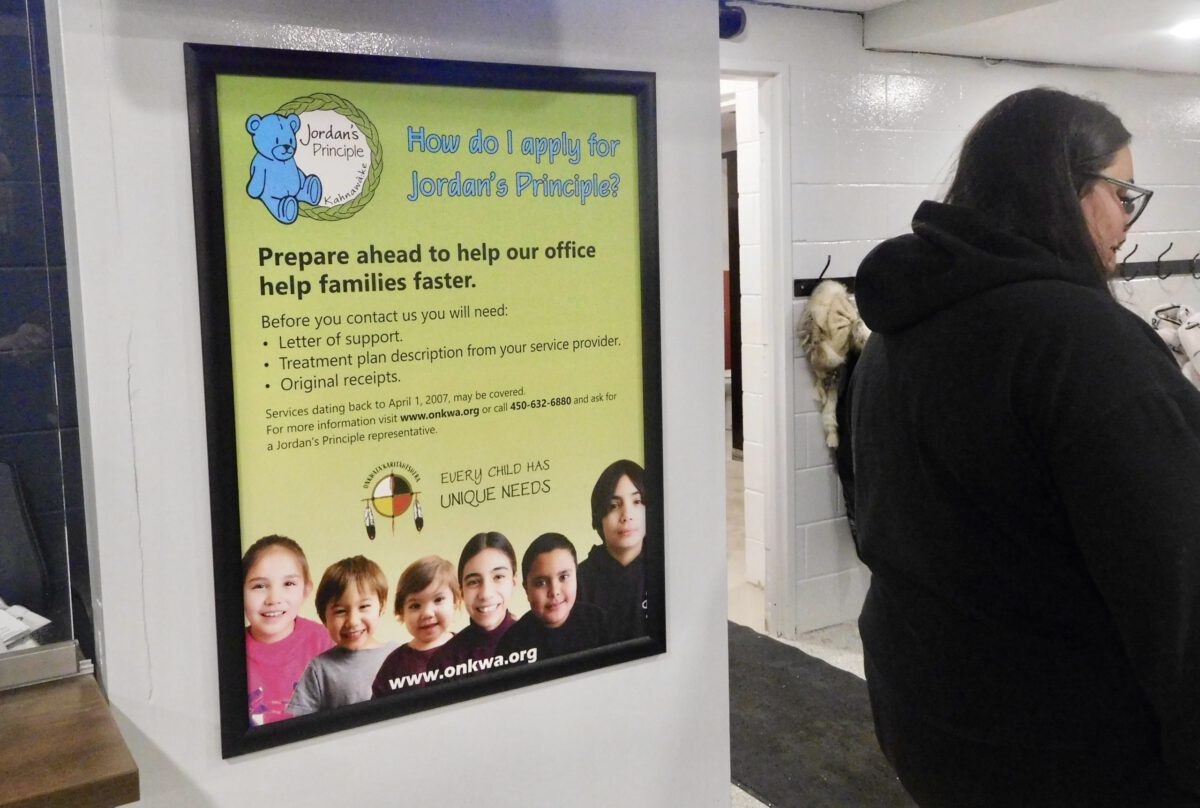
“At this stage, we’re not really sure what the full impact of all of this is going to be,” said Derek Montour, who sits as chairperson of Onkwata’karitáhtshera, the agency tasked with submitting Jordan’s Principle claims in Kahnawake.
“It’s obviously concerning. We have all the same concerns that community members have of what the implications are going to be.”
Montour said that his initial reaction was “shock” to receive the email from ISC outlining changes to the program, which came on Monday this week.
Certain types of requests will no longer be approved unless deemed necessary under “substantive equality” - a term that refers to giving extra supports when needed, in this case so that Indigenous children have equal chance to thrive as non-Indigenous children.
ISC clarified that requests for home construction and renovations, competitive and elite sports and international travel, non-medical supports, and school-related requests that do not specifically address a child’s health, social, or educational needs would no longer be approved unless it’s determined necessary under substantive equality.
All claims that have not yet been processed will be subject to this criteria.
“Any claim that’s waiting, they’re likely going to respond back to us saying you need additional documentation for this,” Montour said. “We want to give all parents a heads up that if you have a claim outstanding, you should now look at what your claim is for and start asking what additional documents you might need to justify the claim.”

Onkwata’karitáhtshera put out a press release on the topic this week, which was shared on the Kahnawake Shakotiia’takehnhas Community Services (KSCS) Facebook page.
While many expressed outrage that Jordan’s Principle had been used to fund support for things like home construction and renovations, international travel, and elite sports, a spokesperson for the First Nations Child and Family Caring Society said that the government has yet to provide evidence that Jordan’s Principle funds have been abused or misused.
The Caring Society has continued to pursue Canadian Human Rights Tribunal (CHRT) cases against Canada regarding Jordan’s Principle.
“I’ve seen even from my desk plenty of requests related to home renovations towards ensuring that a house is accessible for a child in a wheelchair, or mold remediation in the house,” said Brittany Matthews, director of reconciliation and policy at the Caring Society.
“I would welcome any evidence from Canada, if they could point to that misuse, because I’m yet to see it, but what I have seen is Jordan’s Principle being life-changing for many, many kids.”
According to ISC, the changes are being made to “expedite decision-making and address the increased demand” faced by Jordan’s Principle offices.
They report a 367 percent increase between the 2021-22 year and the 2023-2024 year, with almost three million requests approved in the latter period.
Eric Head, a spokesperson for ISC, told The Eastern Door via email that the changes are intended to address the wide range of requests the office has been receiving.






“Since 2016, the range of types of requests has expanded from being primarily requests related to health and education supports, to now include broader social supports. This has also led to increases in overall requests,” he said.
“The updated procedures, providing greater clarity and consistency regarding eligible services and required documentation, will ensure requests align with the initiative’s original intent and assist in addressing the backlog.”
The program is named after Jordan River Anderson, who passed away at the age of five in Manitoba, having never lived in his home community of Norway House Cree Nation, while provincial and federal governments disputed who should pay for his at-home care.
Jordan’s Principle was created to ensure that no other First Nations child experiences discrimination.
Community member Alana Katsi’tsaienhne Thomas has used Jordan’s Principle in the past to help with supports for her children with special needs, including to pay for a private psychologist that diagnosed her son with autism, and for a support aid in school.
“If we wouldn’t have gone that way, we would have been waiting a long time to get him assessed,” Thomas said.
Thomas said that the list of supports not covered shouldn’t cause problems, if they are to prevent genuine misuse of funds.
“I read the obstacles, and I don’t see anything bad with them,” she said. “It’s there to help aid us parents who need help with our children, especially with children that have special needs.”
Sign up for email updates from The Eastern Door
A recent CHRT ruling from the end of January included affidavits from Dr. Valerie Gideon, associate deputy minister of ISC, who said that requests have included laptops, printers, trampolines and playgrounds, and recreational activities, such as movie passes and museum tickets.
Those were approved through the back-to-basics approach, which in-part presumed substantive equality – i.e. applicants don’t have to “prove” that substantive equality applies in a request.
Matthews said that applying these new procedures to requests that are already pending will make things harder for kids.
“Applying this retroactively I think amounts to shifting goalposts, and that’s unfair to the kids,” said Matthews.
According to a report submitted to the CHRT on January 17, Canada has around 129,000 backlogged cases currently.
Community members can reach out to Onkwata’karitáhtshera - though Montour said that the office will be busy with the flood of questions.
“We know that many have been patient for many months now to try and get an answer, but the reality is that this is beyond our control,” he said.