Late caretaker to receive service recognition award
Courtesy Poissant & Fils
During the 1960s to 80s, Quebec attempted to pave the dirt roads in Tioweró:ton. Any new asphalt roads would belong to the province and would result in a territorial loss for Kahnawake and Kanesatake up north.
But workers were stopped by one man who refused to give up his ground.
“He stopped them at gunpoint from paving the gravel road,” said David Diabo, Mohawk Council of Kahnawake (MCK) lead portfolio chief for lands and territories. “They wouldn’t go any farther, they recognized the jurisdiction, and one lone man with one eye stopped them.”
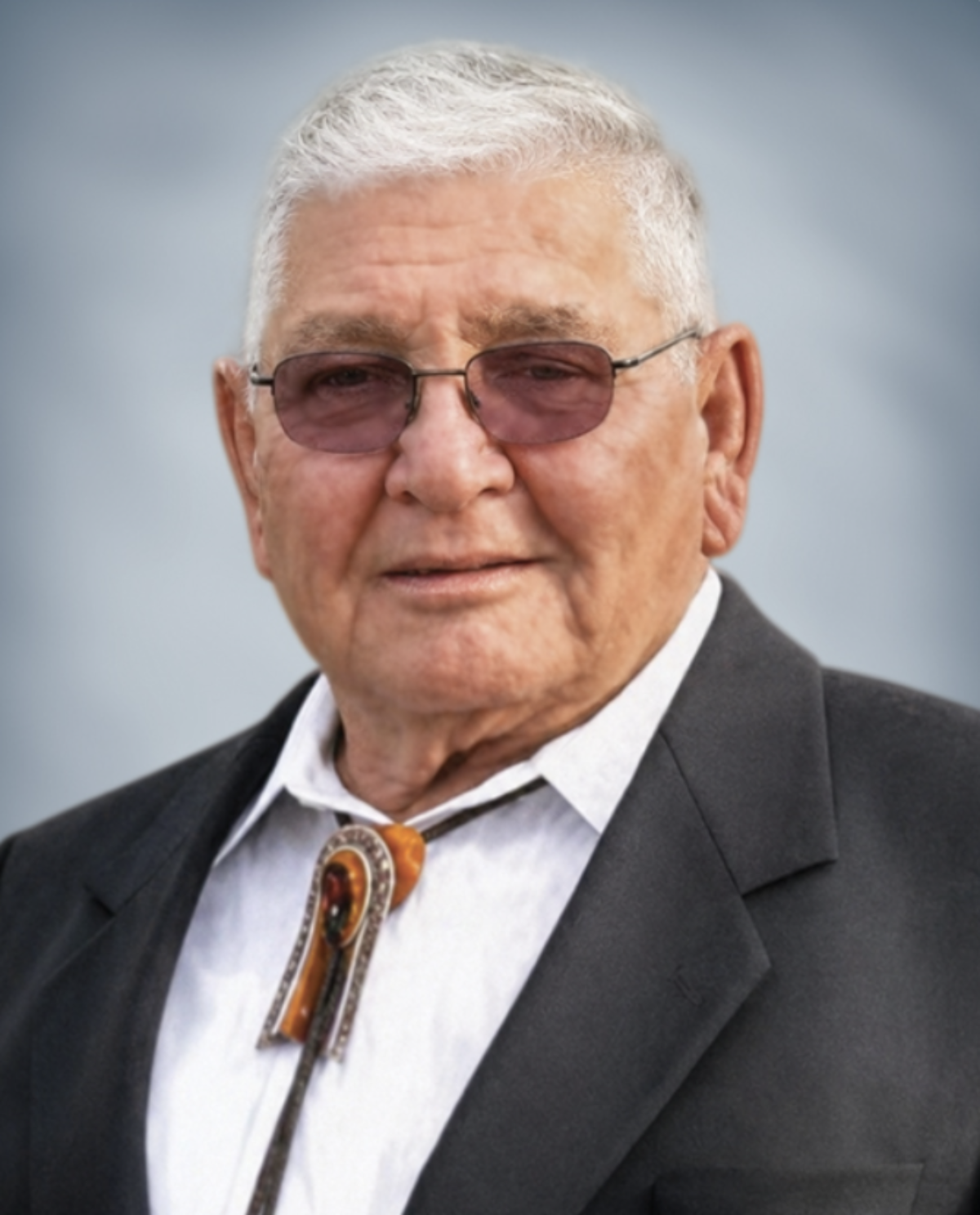
On May 24, 2026, Frank Marquis passed on in his sleep at the age of 95 while he was hospitalized with an infection. He is mourned by his eight living children, 15 grandchildren, 20 great-grandchildren, and four great-great-grandchildren.
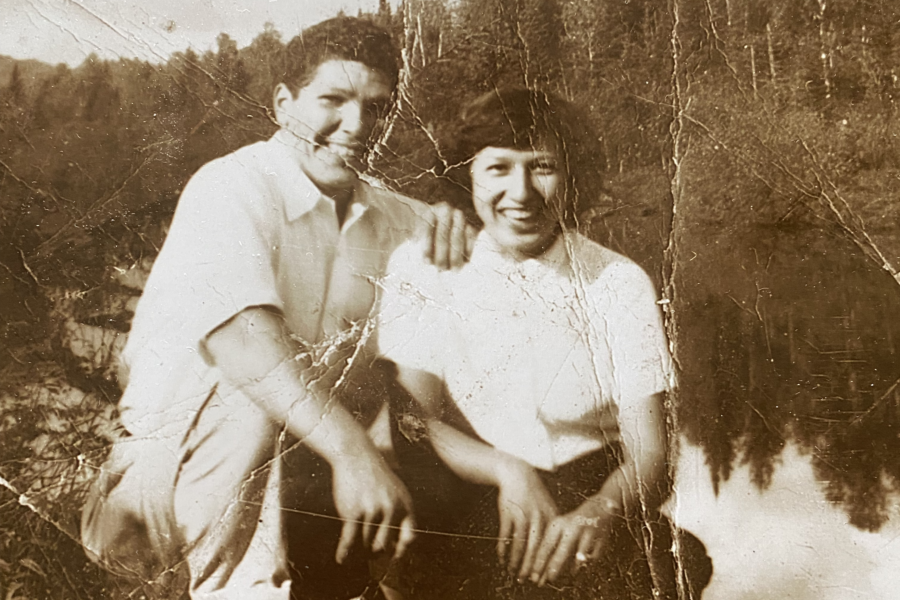
For 22 years, Frank served as caretaker in Tioweró:ton, a stewardship role where he protected and managed more than 23,000 acres of land while raising his nine children with his late wife, Jean Jacobs.
Diabo said a legacy Marquis holds is his defense of Tioweró:ton, helping to ensure Kanien’kehá:ka control over the territory to this day. Along with blocking roads from being paved, Frank also established his caretaker role as the security guard of Tioweró:ton, forcing trespassers out, and demanding police respect Kanien’kehá:ka authority over the land. This leadership decision helped prepare the way for the Kahnawake Mohawk Peacekeepers working in Tioweró:ton today.
Born on December 18, 1930, Frank grew up in Kahnawake and went on to work in New York City as an ironworker for several years before a workplace accident left him blind in one eye and unable to continue in the trade.
After his return to Kahnawake, Frank served the community as council chief for two terms between 1964 to 1968. During his second term he accepted the role as caretaker, and in 1967, the Marquis family moved to Tioweró:ton, called St. Lucie at the time.

Growing up, there were no skidoos or four-wheelers for the family to transport through the territory, said Pete Marquis, Frank’s second-eldest son. The family either walked, snowshoed, or skied in Tioweró:ton and to nearby stores several kilometres away.
“We use skis only because it helped us to stay above the snow. Otherwise, you were going in snow five feet deep, and it’s no fun,” said Pete.
Hunting and fishing were necessary to feed the family, said Slim Marquis, Frank’s fourth eldest child. The caretaker’s salary was low and demanded frugal living and self-sufficiency.
Hunting took place in the fall, when cooler temperatures kept the meat for longer before it was butchered and frozen in a large deep freeze in the family’s basement. Moose was cooked almost daily; meat from two moose were enough to feed the family through the winter.
“When it was time to go hunting, you went hunting,” said Pete.
During the winter, a woodstove fed with more than 22 cords of firewood kept the family warm, said Cory Marquis, the youngest of nine. Starting in the spring and finishing in the fall, the family would cut down trees into logs and store wood, said Tawenrate Marquis, the second youngest of the family.
Frank taught his children the many skills it took to live off the land and instilled in each of them a robust work ethic and responsibility.
“Hard work - getting things done, things that you have to do - carried me into what I do today, and who I am today,” said Cory.
“What he taught us there was not to be lazy, but always active,” said Slim.




“It was more about showing you how to work: you get up in the morning, you’re going to get ready, and you got to do this all day, and we’re not stopping until it’s done,” said Tawenrate.
There were very few cabins in Tioweró:ton when the family moved there, and their numbers steadily increased over time. For many years, most Kanien’kehá:ka only came for the day and had their names recorded in Frank’s work journal.
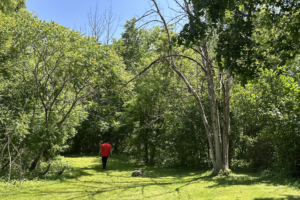
The land was undeveloped and vast. For play, the children had at their doorstep hundreds of acres of wilderness to explore, said Pete. It was not uncommon for the kids to play several acres away from their home.
“We’re rich - we have the biggest yard anybody could have, 36 square miles,” said Pete, recalling how bountiful the land felt for the children.
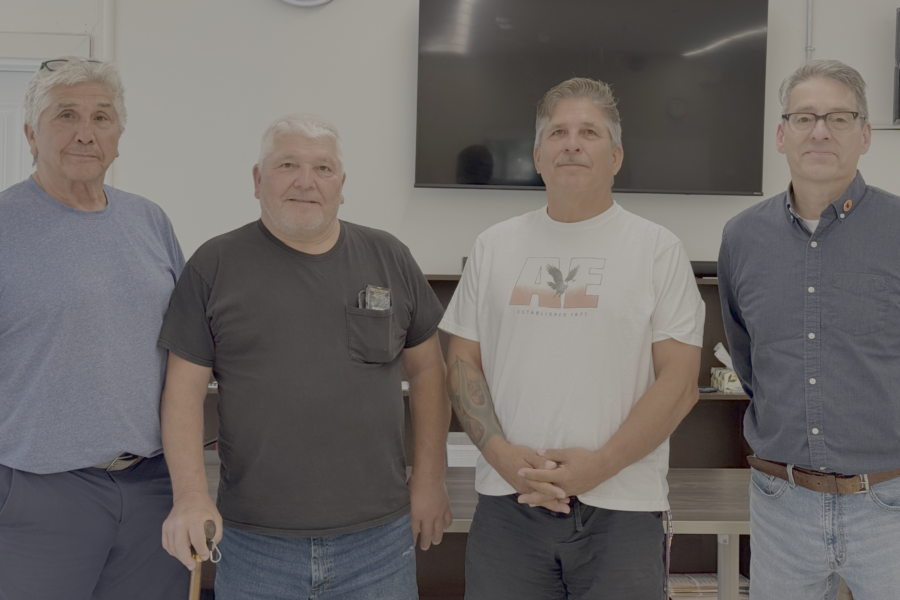
For Janet Wari Marquis, one of Frank’s three daughters, to grow up living off the land and having to depend on each other, developed a close bond between the children.
“My parents had made the best decision to move us to Tioweró:ton to make us the closest family that we are today,” said Janet. “That’s a major point in my life is all our togetherness.”
Serge Otsi Simon, who hunted and fished while Frank was caretaker in Tioweró:ton, recalls Frank’s kindness and generosity.
“He was always available for everybody,” said Simon, a Mohawk Council of Kanesatake caretaker council member. “There was no difference between Kahnawake and Kanesatake.”
Sign up for email updates from The Eastern Door
Kanesatake community member Richard Gabriel remembers Frank’s strict respect for nature, his urging all to take only what they would use, and his helpfulness.
“He cared for that territory. He defended it like a grizzly bear watching over his turf, and it was very respectful. He always was willing to help out visitors to the territory, or people that wanted to build,” said Gabriel.
Frank helped build many cabins on the territory. After quitting the caretaker role in 1987, Frank went on to work in Kahnawake in carpentry work and building cabins over the years.
Living in Tioweró:ton was difficult; Frank and his family made sacrifices to defend the land, said MCK chief Diabo. To honour his contribution to all Kanien’kehá:ka, the council is preparing a service recognition award of $5,000 to Frank’s estate.
Frank is remembered for his joy, strong unity with his wife, his jokes, his love for family, and for his children, to value their roots.
“We grew up poor; we had no vehicle or anything - a lot of times the clothes were hand-me-downs,” said Janet. “But we never felt poor, we were just proud of who we were, and that’s how we were raised: be yourself, be proud of who you are.”
Hadassah Alencar, Local Journalism Initiative Reporter