Inter-school reconciliation event returns
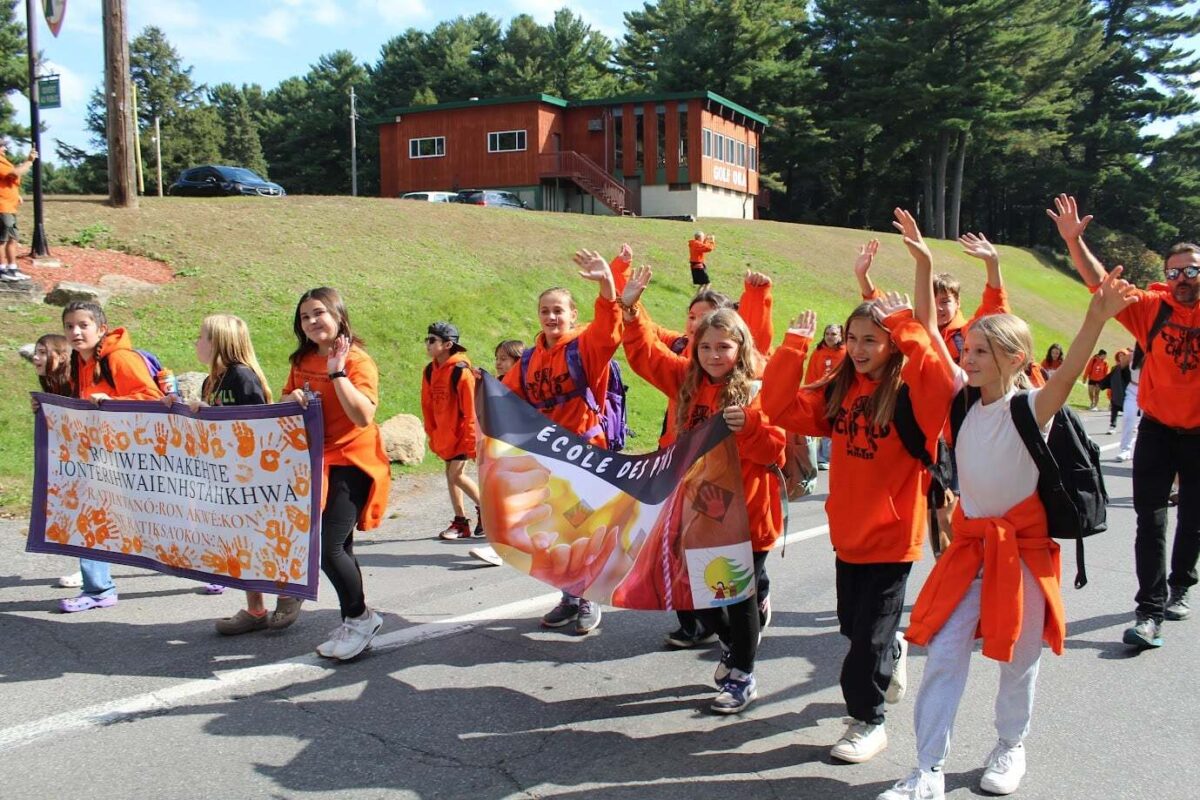
Last year’s Truth and Reconciliation Walk saw 300 students from schools inside and outside the community march together. File photo
Rotiwennakéhte Elementary School and Ratihén:te High School will once again walk alongside students from Oka and Two Mountains in an effort to promote understanding, reconciliation, and solidarity following Orange Shirt Day.
Brenda Etienne, a recently retired language teacher, recited the Ohén:ton Karihwatéhkwen at last year’s walk, the first of its kind for local students.
“It was powerful,” said Etienne. “I did not walk but followed from behind. It gave me chills to see the sea of orange going up that hill. Truly movement to reconciliation. It will take time - one soul at a time.”
The Annual Inter-School Walk for Truth and Reconciliation Walk on October 1 will leave from Ecole Des Pins at 10 a.m. Ecole secondaire d’Oka, Mountainview Elementary, St. Jude Elementary, and Lake of Two Mountains High School will also take part.
It is being held the day after Orange Shirt Day because the school takes September 30 off, giving space for community members to focus on their own feelings and experiences on a day that can be difficult for many.

“I think that’s really important because it allows us and our community to grieve with one another before we start teaching and participating in this walk,” said Watsenniostha Nelson, education director at the Kanesatake Education Center.
All community members in Kanesatake are encouraged to join in and walk with the youth on October 1.
“I’m sure it would be appreciated by the students to see their parents join them, or aunties or uncles or whoever it is,” Nelson said. “Overall, I think it’s just bringing everyone together during a difficult time. I want to make sure everyone knows they’re invited no matter what, just to build that community aspect.”
Last year’s inaugural edition saw around 300 students take part.
“They might not get the chance to learn the true history within their own classrooms unless the teacher themselves knows the history already,” said Nelson.


Nelson will be speaking next week to the English schools that are participating to present information about the Truth and Reconciliation Commission and what the students can expect when they attend the walk.
“We never touched residential schools when I was in school,” said Nelson, who attended outside facilities. “I believe it’s gotten slightly better since I graduated high school, but I think it’s still important for us to lend a hand in order to help them learn.”
It can also help not just non-Indigenous students but also their teachers become more familiar with Indigenous history, which in turn can ensure children in neighbouring communities grow up better educated on Indigenous issues.
“I think it’s just overall important for everyone to learn the history. We say history, but when you think about it, it wasn’t that long ago. The last residential school closed in 1996. I was one year old,” said Nelson.
“It still has major effects in our communities, and I think it’s really important to be reminded this happened not too long ago, and we need to learn and remember to make sure that it doesn’t repeat itself.”
Sign up for email updates from The Eastern Door
After the walk, the Tsi Ronterihwanónhnha ne Kanien’kéha Language and Cultural Center and Kanesatake Health Center’s Indigenous Health and Wellness Team will lend a helping hand in a social that will be held.
“I think it’s just important for them to see some of our culture and our traditions,” said Nelson. “It’s another way of them learning, and I think it does just bring a little bit of a lighter note and it helps with the healing process, with all the grieving that happens during and before the event.”
Marcus Bankuti, Local Journalism Initiative Reporter