The road to recovery through language

Raienthókwas Angus Horne with his daughter, Presley Horne, at his graduation from the Kanien’kéha Ratiwennahní:rats Adult Immersion Program last month. Courtesy Raienthókwas Angus Horne
Six years ago, Raienthókwas Angus Horne was in the throes of addiction. Back then, he could never have predicted the role that learning Kanien’kéha would play in his recovery.
“Part of my recovery was the recovery of my language,” he said. “It was the recovery of my culture.”
In the early days of his recovery, Horne felt a pull to research the Kanien’kehá:ka Onkwawén:na Raotitióhkwa Language and Cultural Center (KOR) Kanien’kéha Ratiwennahní:rats Adult Immersion Program, and he reached out to staff involved to figure out what he needed to do to get to a place of applying.
“At that time I wasn’t in any condition to be going back to school, but I knew in my heart it was something I wanted to do,” he said.
It wasn’t the first time Horne had heard about the program - but it was the first time he pictured himself doing it. He had grown up knowing about its importance in the community because his father, Osehrase Steven Horne, had been influential in its early days, and his grandmother, Kahieriton Josephine Skye Horne, taught new learners and created curriculum. In a way, he felt like Ratiwennahní:rats was in his blood.
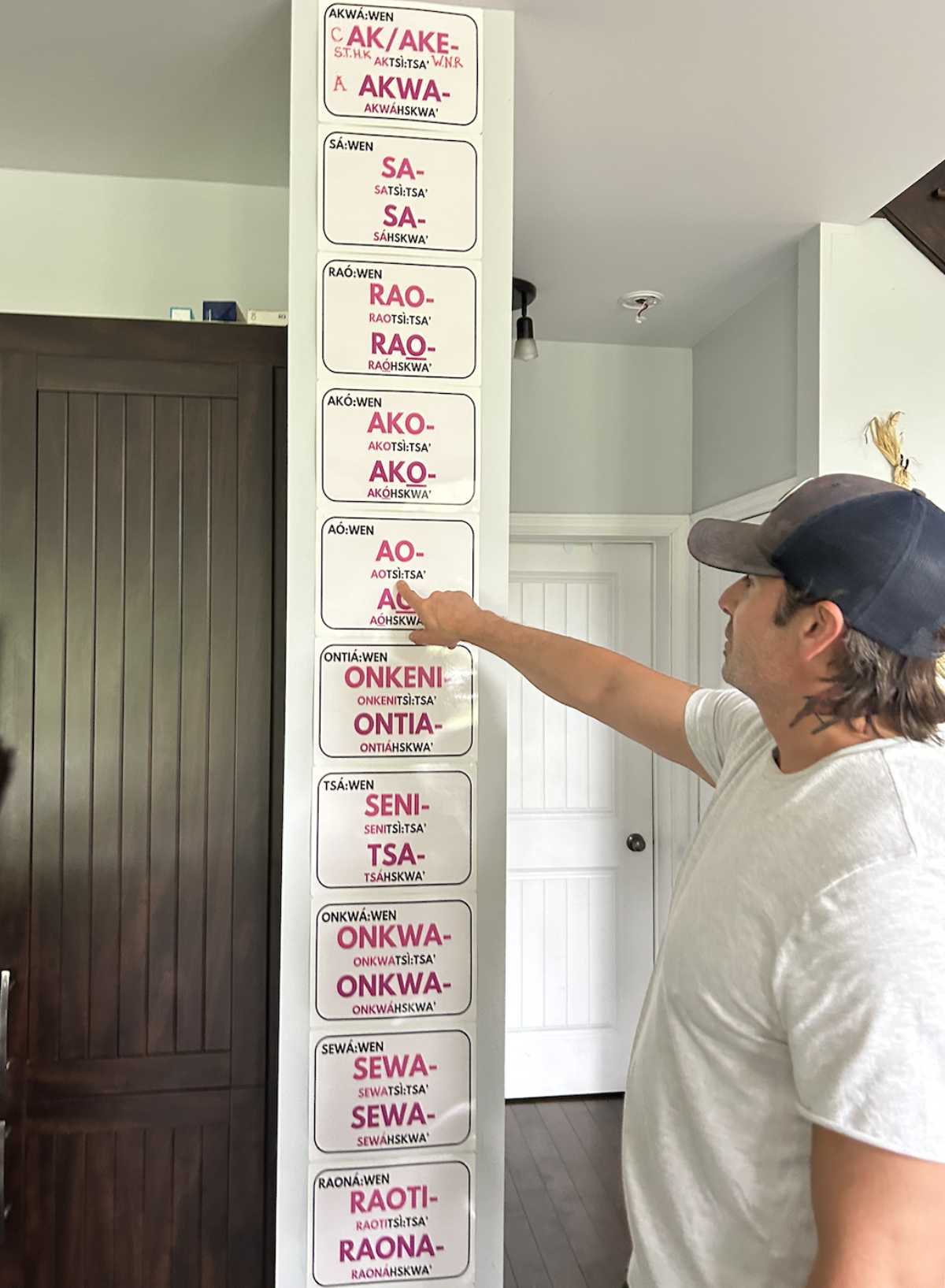
Horne covered his house in study materials, taping verb tables to the walls and labelling every household item he could with its Kanien’kéha translation. Courtesy Raienthókwas Angus Horne
That felt truer than ever last month at the class of 2025’s Ratiwennahní:rats graduation. As Raienthókwas celebrated with his fellow learners who now feel like family, he was approached by some of those people that had first answered his questions about Ratiwennahní:rats all those years ago.
“They were proud of me, and I was proud of myself. It’d come full circle,” he said. “It just hit home. My recovery was one of the hardest things I did, but I recognize the process of doing difficult things and the reward that comes from doing them.”

This year’s Ratiwennahní:rats cohort skews significantly younger than usual - at 45, Raienthókwas was the oldest participant, though it didn’t always feel like that.
“It felt funny to be put in a situation where I was the oldest one in the room, because sometimes I still feel like a kid at heart,” Raienthókwas said. “It turns out that when you’re 45, you still have growing pains.”
Raienthókwas would stay up late with classmates at his kitchen table, trying to imprint verb tables into his brain. Sometimes it would work, but other times it felt like there was a brick wall between him and the language.
In those moments, it helped to remember the people around him that continued to believe in his journey. One of those people is his 19-year-old daughter, Presley Horne.
He recalled growing up in awe of his own father’s dedication to the language, and was spurred on by the idea that he could be a similar kind of role model to Presley.
“When I was watching my father, I didn’t realize the effect it was having on me in the moment. But now I recognize that people are watching, especially your children, so I want to leave a positive impression on her of who her father is, and what she’s capable of at any time,” he said.
“I want her to always have somebody with relative experience if and when she chooses to go down that language path too.”
His father, Steven, said it feels personally meaningful to watch his son pursue the language. He himself grew up as the youngest of four children with two parents who were fluent speakers - but though his oldest sibling was fluent, each subsequent sibling had a lower language proficiency, the ongoing impacts of colonialism being felt in his own family experience of language loss.


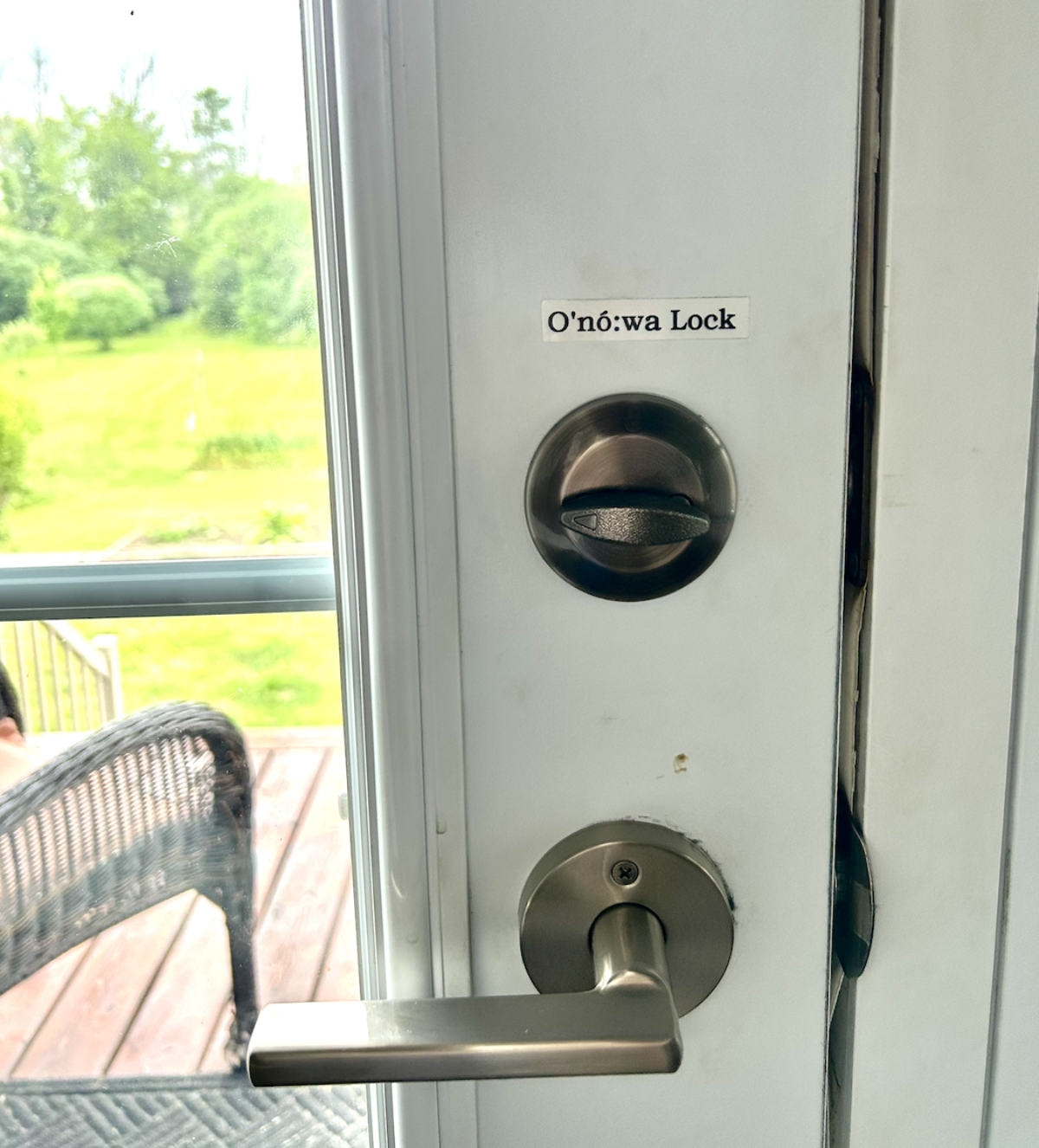
Labelling items like door handles, kitchenware, and plants, helped Horne memorize vocabulary for his day-to-day life. Courtesy Raienthókwas Angus Horne
“When Raienthókwas followed his linguistic journey, I understood and supported his decision 100 per cent. I’m proud of my son and his dedication to reclaiming our language.”
Raienthókwas’ mother, Susan Horne, said she was proud to see her son give so much of himself to his Ratiwennahní:rats experience.
“He put his career and financial gain on hold and dedicated himself to learning our language. We witnessed first-hand the highs and lows of attending such an intense program, but he persevered and achieved success,” Susan said.
Though Ratiwennahní:rats students receive a small stipend, it’s typically not enough to cover all living costs, and so many students maintain intensive jobs alongside their studies. That was the biggest challenge, Raienthókwas said. To make sure he could pay the bills, he worked as an arborist throughout his studies, often complementing the mentally intense work of Ratiwennahní:rats with that physically intense work became draining.
“I’m grateful and I’m proud that I was able to make that sacrifice and do what I needed to do, but in the future I’d love for people to not have that pressure on them,” he said. “When I think about language revitalization I remember that language loss was funded. When you think about residential schools, there was a lot of money put into taking our language. So I would love for people who want to learn to not have that financial struggle getting their language back.”
When staying motivated got hard, Raienthókwas felt supported by his classmates. One classmate in particular, Tekanakeréhkwen Norton, became an especially important person in Raienthókwas’ life - the two started dating after meeting in the program, the second couple to come out of this year’s cohort.
“We study together and she’s very knowledgeable, she has this great understanding of the language, she can listen and just understand everything,” he said.
Sign up for email updates from The Eastern Door
Raienthókwas continues to work as a counsellor at Gwekwaadziwin Miikan, a land-based mental health and addictions facility in northwestern Ontario. He said the lessons he learned at Ratiwennahní:rats continue to impact him daily, as he supports other Onkwehón:we through their own recovery rooted in culture.
“It’s not too late to recover your health, your wellbeing, your language, or your culture,” he said.
Similarly, his own sobriety journey remains informed by his language-learning journey, too. Every day he makes a dual commitment: to stay sober, and to keep speaking his language.
“I follow my instincts, I follow my gut, and I follow what’s good for me,” he said.