Harvesting wild onions responsibly
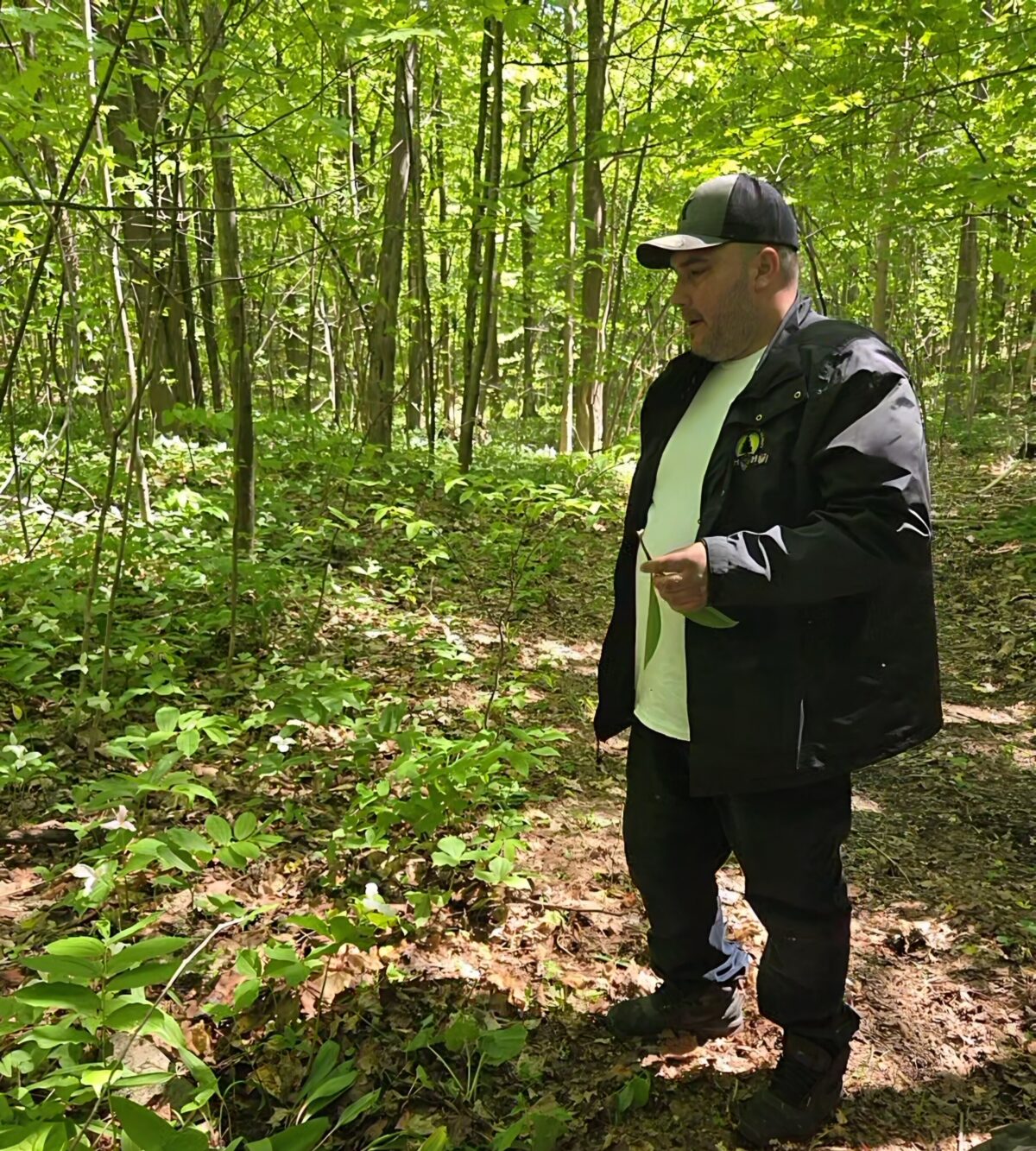
In the lush undergrowth of Blue Mountain, Kanesatake Perimeter Security (KPS) coordinator Kane Montour sat crouched beside a patch of wild onions, carefully twisting one from the soil, making sure to leave the roots behind to encourage regrowth.
“These are the seeds,” said Montour, pointing to a nearby plant with a small flower at the fork in the leaves. “You don’t touch those onions.”
For generations, wild onions, or kahrhakón:ha à:non’k in Kanienʼkéha, have been a spring staple and medicine for Kanehsata’kehró:non. Yet as demand grows and patches dwindle, Montour sees protecting the plant as more and more important.
For the past two springs, KPS has patrolled the mountain trails, watching for and interrupting illegal harvesting. Montour said that he and his workers have encountered people filling whole bags with onions, uprooting entire patches, and leaving little behind to regrow.
Wild onions, also known as wild leeks or ramps, are listed as a vulnerable species by the Quebec Government, due to the fact that it takes seven to 10 years to reproduce from seed.
“When we were younger, you could see patches as far as you could see,” said Montour. “Now you come in here and you see a patch here, a patch there, you really have to look for them.”

Quebec law limits harvesting to 50 bulbs, or roughly 200 grams. But Kane believes that sustainable harvesting matters more than those numbers.
The KPS inspects harvested onions to ensure community members are picking sustainably, such as leaving roots intact, not picking flowering plants. Confiscated bags are given to elders to use for cooking and medicine.
“It’s not that we’re saying nobody can pick,” said Montour. “We’re trying to show people how to do it properly so there’s still something left.”
The issue has also stoked tensions online. Montour said posts of the KPS patrolling the mountain received racist comments, and people questioning why outsiders and non-Indigenous people were being stopped from harvesting.
“We’re not saying we’re the only ones allowed to pick onions, but what we are saying is we’re the only ones that are allowed to pick it here,” said Montour, referring to Blue Mountain.
“This is our territory. What we have left here, we’re trying to protect,” said Montour.


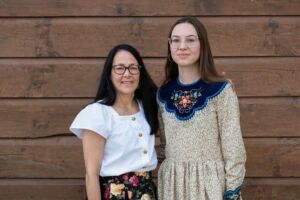
For many Kanehsata’kehró:non, the onions are not just a source of food, but also of memory and identity.
Montour shared that as a child his grandmother would send him up the mountain every spring to gather onions for family meals.
And today he still prepares them the same way, chopped into pesto or slices for hamburgers.
Cathy Beauvais recently gathered a handful while collecting medicines on the mountain.
“It’s best to just take what you need,” said Beauvais. “We don’t pick everything and don’t pull everything out like the whole root, so they keep coming back.”
Beauvais is worried commercialization is accelerating the decline in the onion population on the mountain, as it is common for large batches of onions to be picked and sold.
Sign up for email updates from The Eastern Door
“I don’t think we should be selling our wild onions. It’s sad to see when people take advantage of that,” she said.
“The fact that many Kanehsata’kehró:non still pick kahrhakón:ha á:non’k every spring adds to the cultural fabric of our community,” said Wenhni’tiio Will Gareau.
Gareau added that wild onions are deeply woven into Kanesatake culture, a medicine that is used to cleanse one’s body after the winter.
“If we continue to teach each other how to harvest sustainability,” said Gareau, “future generations will have this connection too.”
Fern Marmont, Local Journalism Initiative Reporter