Company explores niobium mining project
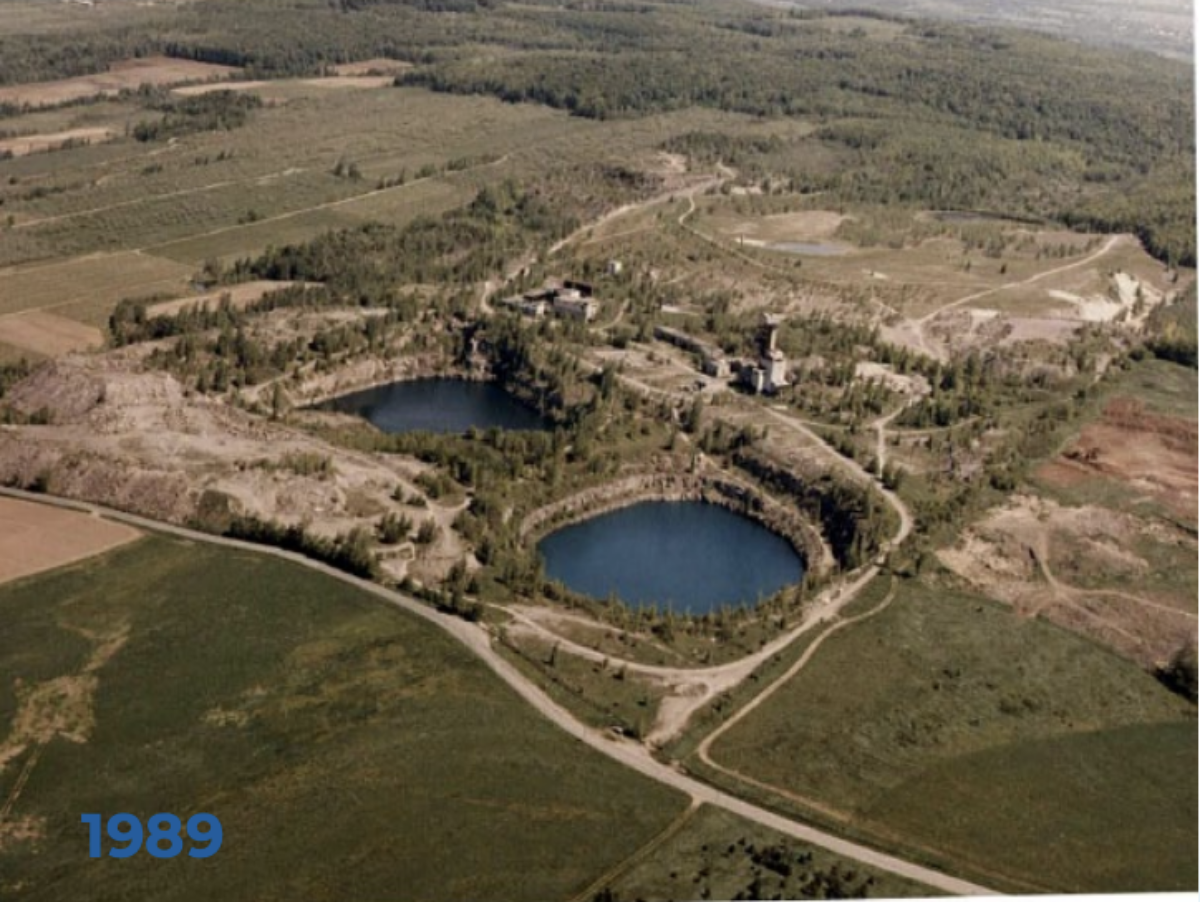
The shuttered St. Lawrence Columbium Mine in 1989. Courtesy Government of Quebec
The claim owner of a niobium mine in Oka has assembled a team of experts to explore the possibility of restoring the site and building an underground operation, but the company is already facing political resistance in its latest effort to try and bring the valuable metal to market.
The work is being undertaken by Nio Strategic Metals, formerly Niocan, both to meet the criteria for maintaining its mining titles and to inform a possible future project, the company said.
But while Nio Strategic Metals vows that it will be guided by data, community engagement, and social acceptability in its bid to possibly renew niobium mining in the municipality, Oka mayor Patrick Hardy insists the company is not welcome.
“The message is, socially, that mine will not be accepted. It’s not going to happen,” said Hardy.
Initially, Oka sent a letter with 40 questions to Nio Strategic Metals, but when the Quebec ministry of Natural Resources and Forests confirmed the municipality was not obligated to allow the company access to the site, the city sent a second letter denying the company’s request to test the grounds, according to Hardy.
While Nio Strategic Metals owns the claim, most of the land is registered to Oka itself, Hardy said.
“They’re trying to wiggle their way. I think it’s normal. There’s a new mayor, they’re trying to see where their wiggle room is. When they came to me, I was extremely prepared,” Hardy said, adding that he hired public relations experts to get him up to speed on all things mining.
He received a letter from representatives of the company after his election, he said, and invited them to City Hall so he could make his stance clear.
“We just said to them this is far from being the right time for a mine, and we’re not sure there’s ever going to be the right time for a mine,” Hardy said.
“I understand niobium is useful in metal alloys; the metal is also useful in springs for Rolexes, but I think we have other priorities, and the world should be turning to other priorities right now.”
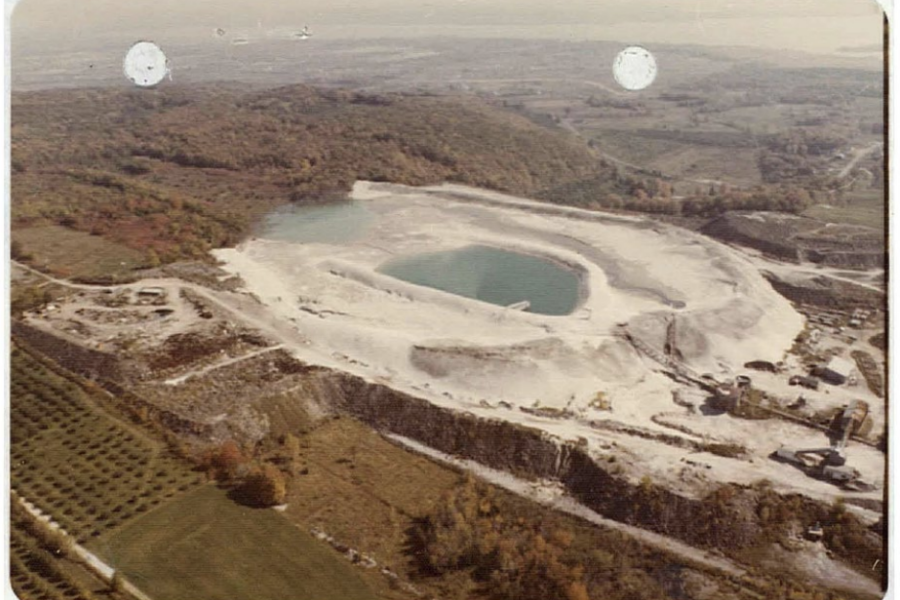
Oka was once among the most prolific sources of niobium in the world, when the St. Lawrence Columbium Mine operated from 1961 to 1976. However, the site has also raised considerable concerns of environmental impacts, including leaving behind radioactive substances.

“There is a bitter taste left in everybody’s mouth with the operations of the mine,” said Hardy, adding that he’s skeptical of Nio Strategic Metals’ assertions about developing plans for a lower-impact mining project.
“They said this is a risk-free operation. My response to that is whenever men are involved and money is involved, there’s always a risk,” Hardy said.
However, Nio Strategic Metals’ president and chief operating officer (COO) Bruno Dumais said the company is taking a responsible approach.
“We understand that niobium development in Oka has a difficult history and that concerns have been expressed for many years by residents, elected officials, farmers, land users, and members of the Mohawk community. We do not dismiss that history. We also do not assume support,” he said.
He emphasized rigorous environmental assessment and tangible benefits for local communities, among other social considerations.
“Trust has been broken in the past,” said Dumais. “That we know, so it has to be executed with transparency, governance, communication, community participation. Those are all the foundation for the next steps.”
His goal is to bring the local population on board with factual data and a modern plan that improves the environment, he said.
He said he is awaiting further data, such as an Industrial Residue Technology Center report, so he can share what a project could look like, what benefits could be offered, and whether the kind of project the company envisions will be feasible, including underground design, a lower impact, and other attributes.
“It also must be respectful of local and Mohawk community priorities,” he said.
The issue of niobium mining last dominated local debate 10 years ago, when Eco-Niobium pursued a revamped operation at the shuttered mine. It faced fierce resistance and was ultimately opposed by both Oka and the Mohawk Council of Kanesatake (MCK).
The MCK of the time backtracked in the face of community outrage after inviting the company to speak. Anger was amplified after a community member posted private messages sent by then-chief Patricia Meilleur alleging two chiefs and a third person supported the project despite taking a neutral stance in public.
The resurgence of the issue of niobium mining comes at a time when major economic development projects are being fast-tracked around the country, with Canada seeking a more stable footing in the face of rocky trade relations with the US, raising renewed concerns from First Nations surrounding the duty to consult.

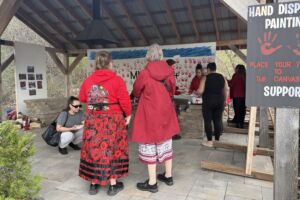
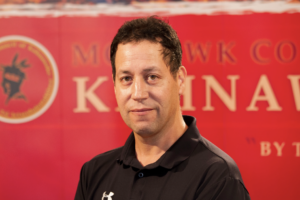
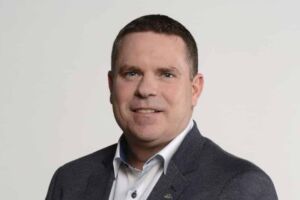


It also comes at a moment of political vulnerability for Kanesatake, which has been in caretaker mode for the better part of a year, limiting MCK council members to an administrative mandate until an election can take place.
The Federal Court hearing that may clarify this is not scheduled until September.
Dumais said his company notified the MCK, but that it did not receive a response. He said the administrative mandate of the council muddles the question of discussions; Dumais said only notifications to Kanesatake and Oka are necessary at this stage, however.
MCK caretaker council member Serge Otsi Simon, who was grand chief during the Eco-Niobium debate, agreed council’s caretaker status poses a problem. “I don’t think this council is anywhere near prepared to deal with something that big. We need to settle this in an election,” he said.
Simon said the Eco-Niobium proposal in 2016 had been interesting but posed a lot of unanswered questions about environmental impacts, adding that concerns had been raised about the company’s honesty.
The MCK of that era had invited Eco-Niobium to the territory for an information session when a group of community members protested. This convinced Simon that the project was too divisive to consider further, he said.
“My position hasn’t changed,” he said, adding that he agrees with Hardy that there is no social acceptability for a mining project in Oka. “I’m not willing to divide the community.”
Ellen Katsi’tsakwas Gabriel, among those most vocal in opposing the Eco-Niobium project 10 years ago, emphasized that mining in Oka means mining on disputed land and suggested that Nio Strategic Metals has no right, despite its claim ownership, to develop operations there.
“It belongs to the Kanien’kehá:ka people,” she said.
Money, she added, is not acceptable compensation for activities that could harm the environment.
“How can you compensate the degradation and contamination of our water aquifers?” she said.
“We have the right of return of our lands, and we’re not getting it. The issue of divisions (in Kanesatake) should not be an excuse for them to just ride roughshod over our lands. It doesn’t change the fact this is still our lands,” she said.
Sign up for email updates from The Eastern Door
“I’ve heard people talk about wanting to bring this back, and we’re up against huge oligarchs who would benefit from mining of these lands, and I think it’s unacceptable. There should be a movement of our people, whether they’re from Kanesatake or not, to try and protect these lands and try and help a community that is practically lawless.
“I just find it’s an exploitation of the current situation we find ourselves in.”
She said when the last niobium mining project was rejected, it was because Oka was against it, and that the will of the people in Kanesatake is routinely ignored outside calls to the band office.
“I hope it doesn’t go through,” she said of the mine. “I know that they have a lot of money to coerce people into seeing their way. I’m sure the checkbooks have been taken out and ready to be signed.”
She said the Quebec government will listen to the mayor of Oka, and she will wait to see if he is true to his word when it comes to opposing the mine.
Hardy sees this issue as one where Kanesatake and Oka can work together and stand shoulder to shoulder.
“I think this is an important chapter in our relationship,” Hardy said. “Money does not solve everything in communities. Making sure we have drinking water in a healthy environment is extremely important,” he said.
He said Oka ought to look at other uses for the land, such as recreation or nature observation, to help protect the site from mining speculation.
According to the US Geological Survey, niobium is produced in only a few countries and it is primarily used in high-strength steel alloys for a number of industrial and structural applications, including infrastructure, aerospace, and data centres.
Marcus Bankuti, Local Journalism Initiative Reporter