Greenland belongs to its people

Megan Kanerahtenha:wi Whyte The Eastern Door
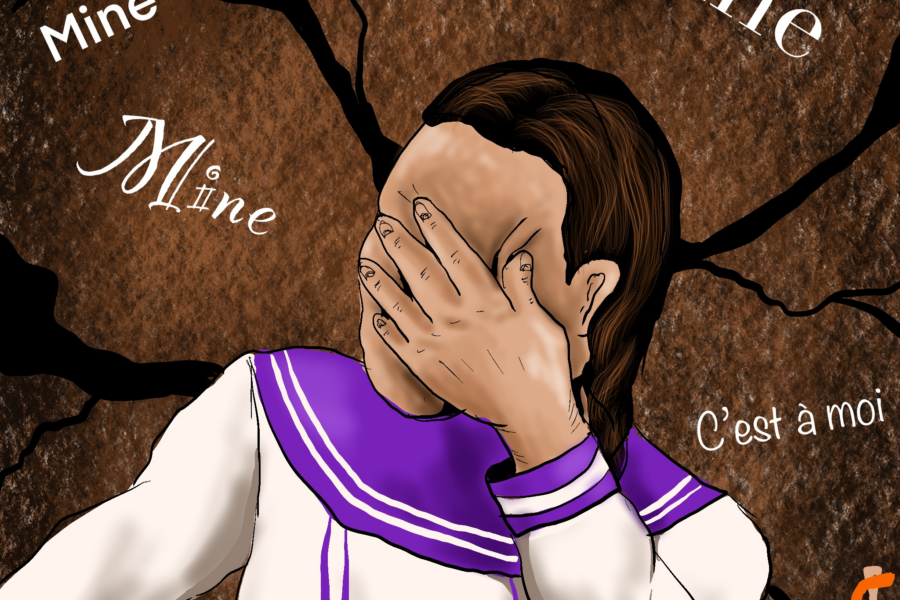
Donald Trump’s epically obnoxious text message over the weekend to the leader of Norway was wrong for virtually every reason, but right in one narrow respect: landing boats somewhere hundreds of years ago doesn’t make it yours.
Of course, he only said that to make the point that the territory at issue, Greenland, might as well belong to the United States instead of Denmark.
And no, we’re not getting two Scandinavian countries confused – the text was to Norway’s leader, not Denmark’s, because his real complaint was that he didn’t win the Nobel Peace Prize, his fixation of late.
Ironically, the most famous prize ever created to promote peace (which is awarded by a Norwegian committee, not by the Norwegian government) is currently having the opposite effect, with Trump, intoxicated by spite, lurching around the map looking for targets he thinks are easy, like any bully does.
Like everyone knows, it’s important to stand up to bullies, and while most of the past year has been a frustrating act among world powers that everything is normal enough, the Rubicon has been crossed so often someone must have built a bridge over it.
We’re as tired of writing about Trump as you are of reading about him, but the strange escalation over the past couple weeks when it comes to the Inuit territory of Greenland is impossible to ignore, and it even has world leaders saying out loud what we have long known about the myths that prop up the global hegemony.

No one is safe when the taboo on territorial encroachment is weakened. It’s hard to avoid the impression that the president of the United States is really, actually considering a hostile takeover of Greenland, which is a threat to all the world, Greenland first and foremost, with Canada pretty high on the list, too.
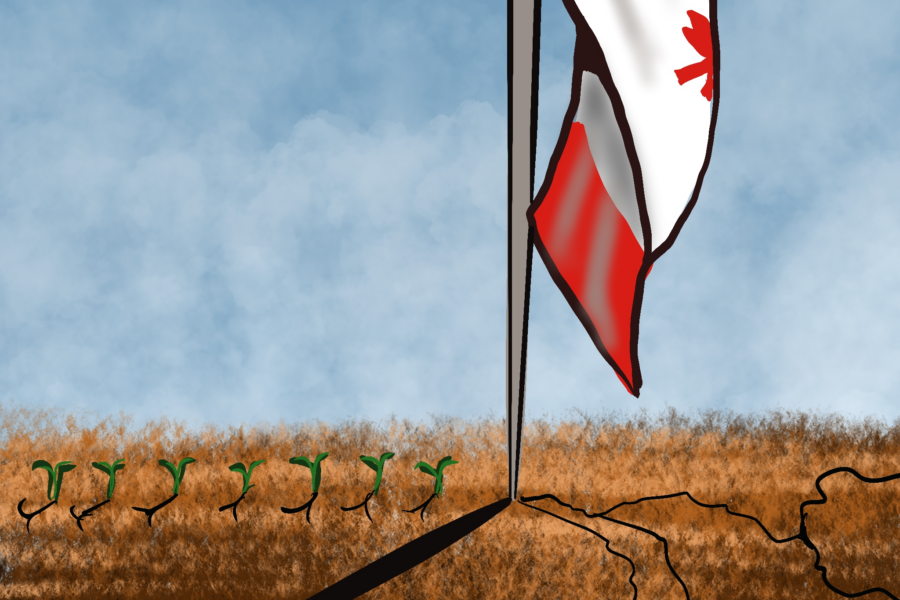
After all, on Tuesday morning, Trump posted AI slop on social media that showed Canada, alongside Greenland and Venezuela, awash in the American flag.
Many Americans might not understand why Greenland, which currently has a legally established path to independence, wouldn’t want to hop aboard the sinking ship of the United States, but the answer isn’t hard to understand.
Inuit Circumpolar Council chair Sara Olsvig, formerly a member of Danish Parliament as leader of a Greenlandic Inuit political party, said it best of late: “There’s no such thing as a better colonizer.”
It’s hard to see what Trump’s aiming for at all, if he even has a plan besides doing Putin’s bidding by sabotaging the NATO alliance.
As usual, he’s left everyone scratching their heads, first announcing tariffs over the refusal to cough up Greenland, then saying he won’t use force in the most unnerving I-might-use-force-like tone, all while accidentally calling it Iceland several times, then cancelling the tariffs and claiming there were concepts of a deal, while sidestepping questions on who will possess Greenland.

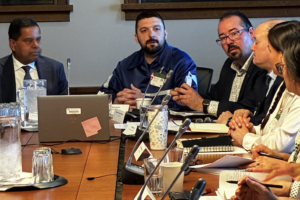
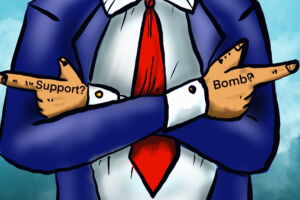


The situation is such that something felt different this week as world leaders convened in Switzerland for the Davos World Economic Forum. Canadian prime minister Mark Carney put it rather aptly, saying most clearly what everyone there was thinking and that we already knew: the world order that has dominated for a long time is not only ruptured, but it was a lie in the first place.
He got a standing ovation for saying what almost always goes unsaid, that the most powerful don’t constrain themselves with the same rules they expect others to follow to the T. He was suggesting that less powerful countries work together in the face of the US’s shenanigans. In his words, “If we’re not at the table, we’re on the menu.”
But as for that part of things, there were echoes of an alarming policy already well underway in Canada under his leadership – strengthening Canada’s economy by furnishing and expediting projects at such a rapid pace that meaningful consultation with Indigenous communities is impossible, not to mention the risks to the environment.
It’s kind of ironic considering the speech’s reflections on the meaning of sovereignty and territorial integrity.
Just look at his mention of energy (meaning oil) and critical minerals, which so often are located on Indigenous territories that have to fend off greedy mining companies and the government alike.
His observation that countries like Canada should not negotiate one-on-one with the US but instead band together can equally be applied to Indigenous nations who wield more power together than individually. And if Canada is acknowledging that the world order is based on a lie and citing sovereignty as a fundamental value, then it should take a good long look at whether it practices what it preaches.
Sign up for email updates from The Eastern Door
But this is Canada. It’s no surprise that Carney said, “On Arctic sovereignty, we stand firmly with Greenland and Denmark and fully support their unique right to determine Greenland’s future,” rather than pledging to respect Greenland’s unique right to determine that future.
But that right ought to be Greenland’s alone.
TED Staff