Don’t be fooled by AI
Another day, another fake news article on Facebook (which still bans real news outlets like ours, by the way).
Just now, we saw one about prime minister Mark Carney deftly confronting Trump’s press secretary. The commenters were very proud of their prime minister, a man Onkwehón:we have ample cause to be skeptical about. But the story was fake.
Sure, it’s easy enough to identify when you think about it. Why the heck were these two in the same room together, let alone engaged in a theatrical showdown? The dramatic yet insipid writing style (think “not this, but that”) was another giveaway that the whole thing was generated by artificial intelligence. But some people believed it.
And we’ve got more news for you: Donald Trump is not Jesus. Okay, that was an easy one.
But what do peddlers of AI hope to gain? Your clicks? Your vote? Your social insurance number? All of the above?
It might seem silly or like it doesn’t matter, but it does have implications when the man responsible for a policy that Indigenous leaders say will steamroll the duty to consult is winning popularity for something that didn’t even happen.
Of course, it’s not just AI-slop-masquerading-as-news that’s fake these days. It’s stories, songs, videos, Google results, and Macaulay Culkin reuniting with the Wet Bandits.
We don’t know how to tell you this, but even your birthday card may be suspect.

We’re journalists, so naturally we’re unhappy about artificial intelligence playing the role of the ink-stained wretch. And for the same reason, we’re even more distressed to see what’s being done to truth, which is the ultimate guiding light for any honest reporter.
There’s a famous essay by Harry Frankfurt - we know ChatGPT didn’t write it because it’s from 1986 - that argues bullshit is more dangerous than lies because bullshit has no regard for the truth.
It’s hard to think of an idea that better sums up the times. Is what I’m reposting true? Is it false? For more and more folks these days, it seems like the answer is, “who cares?”
But what is the agenda of those who summarize, criticize, and proselytize from a bully pulpit (keyword: bully) with words and arguments that are not their own?
Are you being informed or misled? And why?
Maybe their intentions are good, maybe not, but we know from experience there is no substitute for sitting down and working out your thoughts yourself, not simply looking for the words to confirm what you already think, or want others to think, and mangling the facts in the process.
Does critical thinking happen when you ask ChatGPT to write you a Facebook post about why something is bad? Surely not. (And if it’s the thought that counts, AI-written birthday wishes are not it.)
Even more alarming is the idea that many youth are accustomed to delegating their critical thinking to ChatGPT at a time when those skills are still developing and are more needed than ever.






What’s more, AI is trained on content that represents a Eurocentric perspective, and has been proven to have racial biases, including in medicine and all kinds of other critically important fields AI is being rushed into. (One scary example: a recent Superior Court of Quebec judgement is believed to have been written by a chatbot, since it cites Supreme Court cases that don’t exist.)
Some youth, growing up in a confusing era, are also turning to AI for emotional help, using it as a therapist and best friend rolled into one.
Then there’s the question of art and culture. Putting aside that AI art is boring, are we being truthful about what we’re creating if we feed our unformed ideas - say plot points for a fiction narrative or a few chords for a song - through a machine, and taking a hollow satisfaction from what comes out the other end, claiming it as our own?
Sure, there was a time when many thought that sampling music wasn’t “real” art, either. But in creating something new from what already exists, the human being whose critical and artistic judgment facilitated a piece of music built on samples has more in common with an ancient history of creative expression than having a robot do the thinking for you.
Not to mention, those samples could be traced, identified, and bring new acclaim to their authors.
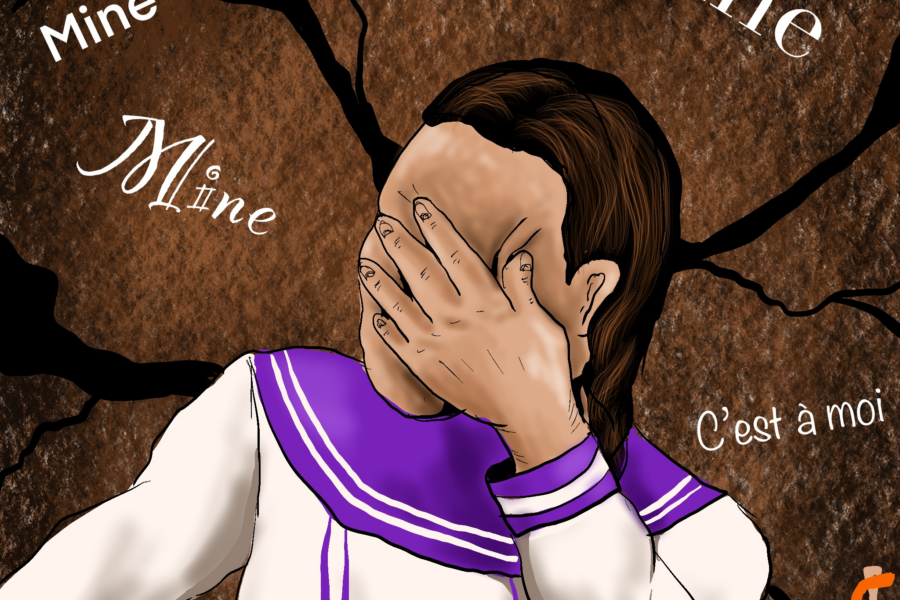
In art and news alike, there’s a big elephant in the room when it comes to generative AI, and that’s theft. AI was trained on articles, books, songs, you name it, that real writers and artists produced, claiming it without compensation or even asking permission or even granting the pathetic reward of “exposure.”
Indigenous communities understand this pattern too well.
Think about what happens on a smaller scale, too. Nothing is more frustrating than when a greedy settler slaps on some Indigenous-ish features, or even steals designs outright, to sell to gullible white masses, undermining real Indigenous artists who have sacrificed for their craft and are only now beginning to get respect for what they make.
Sign up for email updates from The Eastern Door
AI has not only made this theft easier, but artificial intelligence is confusing, homogenizing, and degrading Indigenous cultures at a time when Indigenous communities are working so tirelessly and passionately to preserve and enrich them.
It’s a pivotal moment for cultural transmission, and the arts are a fundamental aspect, and that includes artists getting credited and paid. Translators are desperately needed, no matter how far the technology gets.
Google Translate is not the answer in saving our languages.
We’re not here to say it’s all doom and gloom. The transcription software we use at TED is made possible by AI, and that means we spend less time doing menial grunt work and more time building stories that matter. This is the potential upside. But the day AI is asking the questions, choosing the quotes, and writing the news will be the day we close up shop, because that’s not why we’re in the business.
There’s always been bullshit in this world, but there’s way more of it than ever, because it’s that much easier to produce, and people’s tolerance for it is rising, even if they may not know it.
Marcus Bankuti, managing editor
Steve Bonspiel, editor/publisher