New commitments from Hydro Quebec
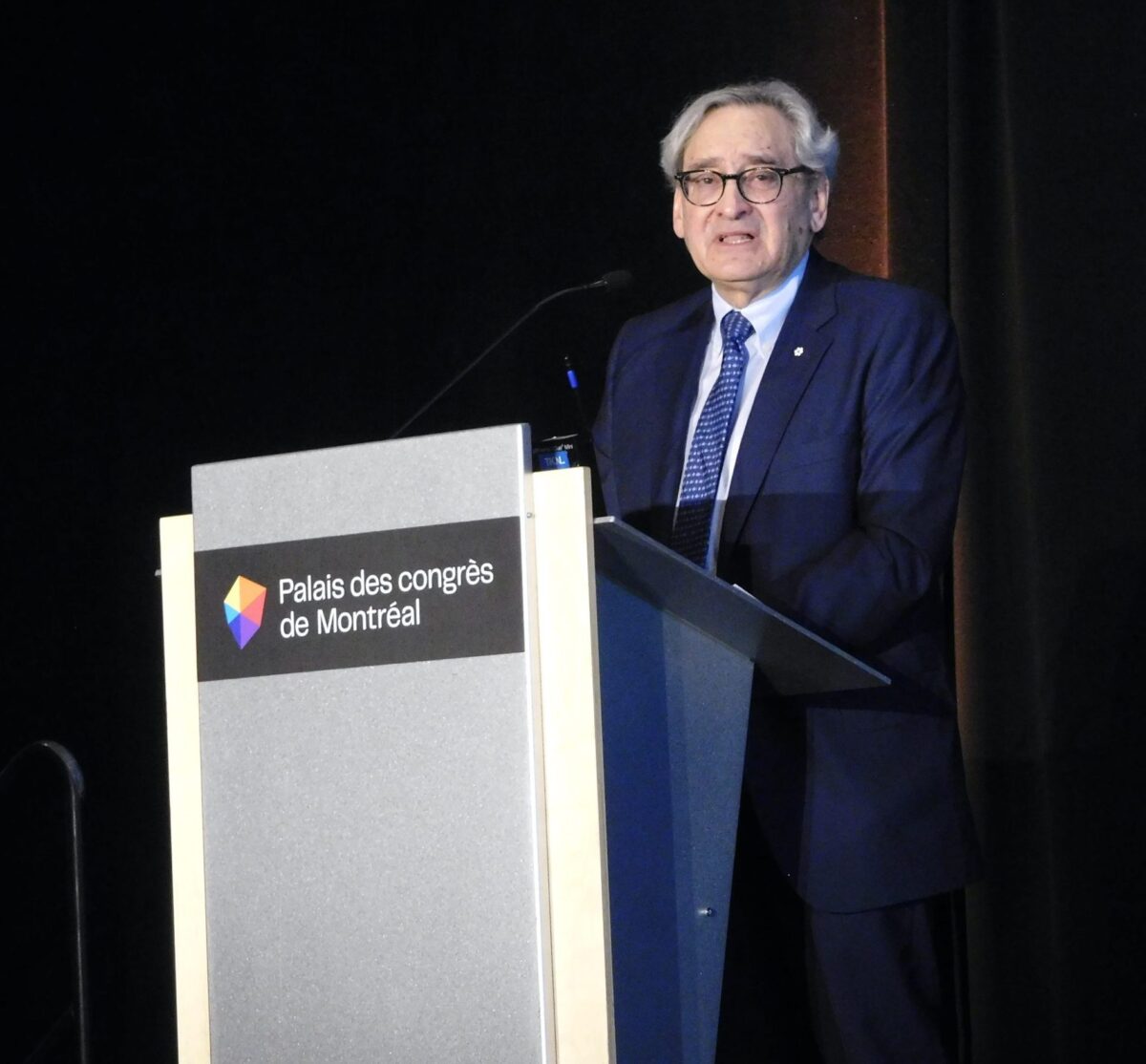
Hydro Quebec CEO Michael Sabia said he’s worried about how First Nation and Inuit businesses will cope in the face of tariffs imposed by Donald Trump’s government. Just this week, the US president announced a 25 percent tariff on Canadian steel and aluminum.
“The Indigenous economy stands to be hit hard by tariffs, particularly for businesses in construction, retail, manufacturing, and natural resources, which account for 30 percent of Indigenous employment,” Sabia warned Wednesday while at an economic reconciliation summit in downtown Montreal.
The Crown corporation has committed this year to upping its investments in First Nation and Inuit-based energy infrastructure projects, something he said he hopes will offset some of the anxiety businesses owners and workers are feeling.
“We are committed to mitigating the impacts of the tariffs, providing employment opportunities and leveraging the energy-based business ecosystem,” he said that morning while speaking to a room gathered at the Montreal Convention Centre.
Hydro Quebec has committed $14 million toward its business investments this year, he said, up from $8 million the prior year.
The CEO also promised to increase the crown corporation’s purchases from Indigenous-owned businesses from $1 billion to $1.5 billion over the course of 2025 to 2029, and to increase their number of Indigenous construction workers from 10 to 15 per cent.
“For wind power alone, that means 800 to more than 1,000 jobs,” Sabia said.

A fund of $50 million has also been set aside to pay toward Hydro Quebec sponsored scholarships, training and other professional supports aimed at Indigenous youth, including those still in high school, he said.
The CEO said Hydro Quebec also wants to do more to support First Nation and Inuit equity stakes in their energy projects, whether that be through loan guarantees or other means.
Sabia shared the commitments in front of a room of over a hundred gathered for the summit, which included business leaders from across the province.
“First Nations, we have a really young demographic, and I think we have so much potential there,” said Francis Verreault-Paul, the newly elected leader of the Assembly of First Nations Quebec-Labrador (AFNQL), after hearing the announcements. “I’m very hopeful for the future.”
He said the crown corporation has taken on a new direction since the leadership of former CEO Sophie Brochu.
“Let’s keep that relationship with Hydro Quebec. It hasn’t always been an easy one,” he said. “Mr. Sabia, and just prior to him, Madame Brochu, made some pretty big commitments to First Nations. So it’s good to see - now just implement them.”
He said the AFNQL will also be following along to see if Hydro Quebec is reaching the goals it set out for itself through its economic reconciliation action plan. The AFNQL collaborated toward its realization, Verreault-Paul added.




“I think that’s going to help us, give us some leverage. Does it go far enough? Well, we’ll see,” the new leader said.
Over the course of last year, Hydro Quebec signed 11 new agreements with First Nation and Inuit communities, Sabia mentioned Wednesday.
That includes the one it signed last April with the Mohawk Council of Kahnawake (MCK) facilitating the co-ownership of the new Hertel-New York Interconnection Transmission Line, with the MCK holding a minority stake in.
MCK grand chief Cody Diabo was invited to attend and speak at the summit, but said he couldn’t make the time to attend. In part because the council table was holding strategy sessions over Trump’s tariffs the same day, he told The Eastern Door.
Alexandre Bacon, president of the Ashukan Institute, was among those behind the summit’s organizing. The same institute was consulted by Hydro Quebec while it was drafting its economic reconciliation plan, a process that involved visiting First Nation and Inuit communities all across the province for their input on the plan, Bacon said.
This year’s summit brought together roughly 300 attendees, which included business leaders from corporations, elected band council chiefs, political leaders like Canadian senator Michèle Audette, and entrepreneurs.
“The main purpose is to have the participants going back home after the summit with a better idea of the most promising ways to implement reconciliation,” said Bacon, an Innu from the community of Mashteuiatsh.
Sign up for email updates from The Eastern Door
While the three-day event mainly centered on panel discussions and networking, it also served as a means for attendees to provide input to Ashukan Institute about how it can better track the progress of economic reconciliation, he said.
Markers of this kind of reconciliation include corporate and government agreements with communities, data on employment, and figures regarding the number of Indigenous-owned businesses across the country.
“What we realized through the last year is that it’s very hard to find reliable data and information about where we are currently at in terms of the economic reconciliation, the data is very hard to gather. So that’s part of the part of the problem,” said Bacon, referencing an ongoing project of theirs. “It’s very much up to corporations and governments to share that information.”